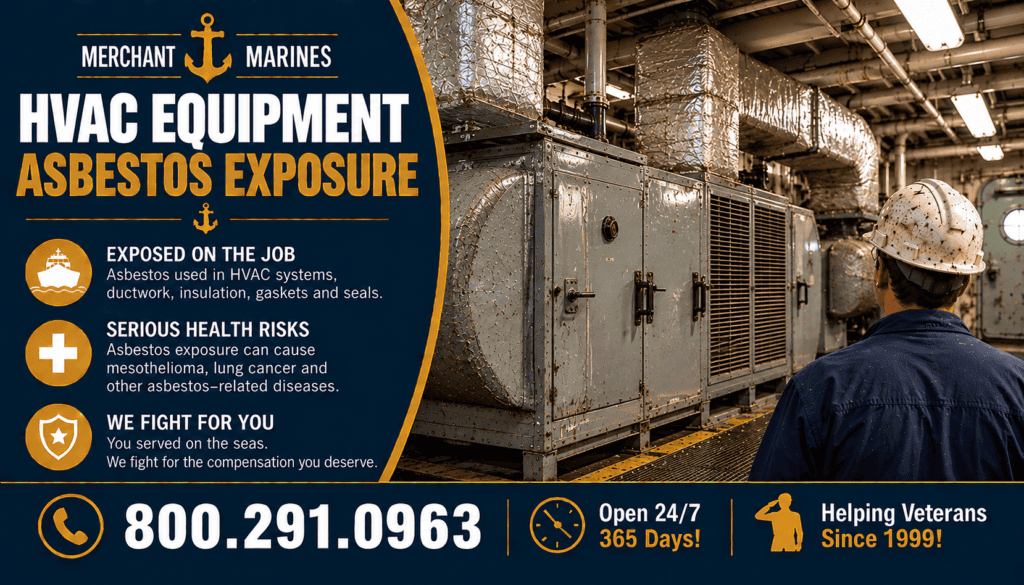
⚓ Merchant Marine HVAC Equipment Asbestos Exposure
Merchant Marine HVAC (heating, ventilation, and air conditioning) systems aboard U.S. merchant vessels were major sources of asbestos exposure throughout much of the 20th century. Asbestos-containing insulation, lagging, fireproofing, duct materials, and components were installed in ventilation systems because of asbestos’s heat resistance and durability in harsh marine environments.
Ventilation systems did more than hold asbestos — they spread microscopic asbestos fibers throughout ships’ living and working spaces. When insulation aged, cracked, or was disturbed during maintenance and repairs, fibers entered the airstream. These fibers circulated through crew quarters, mess halls, engine rooms, and enclosed compartments, where sailors and workers inhaled them.
Decades later, many former Merchant Mariners and shipboard personnel are being diagnosed with mesothelioma, asbestos-related lung cancer, and asbestosis linked to asbestos exposure from HVAC systems aboard ships. If you or a loved one served aboard U.S.-flag vessels and were exposed to asbestos through HVAC equipment, you may qualify for compensation.
⚙️ Why Asbestos Was Used in HVAC Systems
Merchant Marine vessels relied on asbestos in HVAC equipment for key reasons:
-
🌀 Heat-resistant duct insulation protected against steam and hot air
-
🔥 Asbestos lagging was applied to ventilation piping to resist heat and corrosion
-
🧱 Fireproofing materials were installed in ducts near engine spaces
-
🛠 Gaskets, seals, and packing contained asbestos fibers
-
⚡ Insulation blankets and thermal wraps surrounded blowers and heaters
These materials were common on ships built between the 1930s and 1980s, when asbestos use was widespread in marine construction.
👨🔧 How HVAC Asbestos Exposure Happened
Merchant Marine sailors and HVAC technicians were exposed when:
🔩 Routine Maintenance
Replacing insulation, scraping lagging, or opening vent housings without proper protection released asbestos fibers.
🛠 Repairs at Sea
Generators and ventilation systems required emergency fixes in enclosed compartments where fibers gathered in the air.
🧰 Dry Dock Overhauls
Comprehensive overhauls and HVAC upgrades exposed workers to high concentrations of fibers as insulation and fireproofing were cut or removed.
🌬 Ventilation Circulation
HVAC systems actively moved contaminated air throughout ships, carrying fibers into living and working spaces.
Even crew members who never directly handled asbestos materials could be exposed by breathing contaminated air.
👷 Who Was Most at Risk
Personnel with the greatest likelihood of HVAC asbestos exposure included:
-
⚓ Marine engineers and HVAC technicians
-
🧰 Maintenance and repair crews
-
🔌 Electricians servicing ventilation controls
-
🛳 Engine room and utility space crew members
-
👨✈️ Crew working or living near ventilation outlets
📍 Where Asbestos Exposure Occurred
Typical shipboard locations where HVAC asbestos exposure happened:
-
📦 Engine rooms where duct insulation broke down
-
🛏 Crew quarters and berthing areas where hot or dusty air circulated
-
🍽 Mess halls and communal spaces served by ventilation systems
-
⚙ Utility tunnels and mechanical walkthroughs
-
🔧 Maintenance shops and HVAC repair bays
Because ventilation systems ran continuously during voyages, exposure was often ongoing and cumulative.
⚠️ Health Risks Linked to HVAC Asbestos Exposure
Asbestos exposure from HVAC systems has been strongly linked to:
-
🔹 Mesothelioma
-
🔹 Asbestos-related lung cancer
-
🔹 Asbestosis (lung scarring)
-
🔹 Pleural plaques and thickening
These diseases can take 20–50 years or more to develop after exposure to asbestos fibers — often long after service ended.
⚖️ Legal Options After HVAC Asbestos Exposure
If you served aboard Merchant Marine ships and were exposed to asbestos through HVAC systems and later developed mesothelioma, lung cancer, or another asbestos disease, you may qualify to pursue compensation.
🚢 VA Benefits for Veterans
Merchant Marine veterans may be eligible for veterans benefits if their diagnosis is connected to asbestos exposure during service.
⚖️ Lawsuits & Trust Fund Claims
While you generally cannot sue the U.S. military or ship operators directly, you can file legal claims against companies that manufactured the asbestos-containing products that caused your exposure. Compensation may include losses such as:
-
Medical expenses
-
Lost wages
-
Pain and suffering
-
Wrongful death awards for family members
An experienced maritime asbestos attorney can help trace where and how exposure occurred and pursue legal claims.
❓ Frequently Asked Questions
❔ Did Merchant Marine ships really use asbestos in HVAC systems?
Yes. Asbestos was widely used in duct insulation, fireproofing, lagging, and thermal wraps on HVAC equipment through the 1980s.
❔ How did HVAC systems spread asbestos?
Asbestos fibers loosened from insulation were moved throughout ships by ventilation airflow, exposing crew in cabins, mess halls, and workspaces.
❔ Can claims still be filed decades later?
Yes. Because asbestos diseases have long latency periods, legal claims can be filed even decades after exposure and diagnosis.
❔ Who is eligible for compensation?
Merchant Mariners, veterans, shipyard workers, and family members in wrongful death cases may all have avenues for compensation depending on their exposure history and diagnosis.
🆓 Free Case Evaluation – Merchant Marine HVAC Equipment Asbestos Exposure
If you or a loved one worked around HVAC systems aboard Merchant Marine ships and later developed mesothelioma or another asbestos-related disease, you may qualify for financial compensation.
📞 Call 800-291-0963 today for a free, confidential case evaluation.
✔ No upfront legal fees
✔ Nationwide asbestos law support
✔ Help with VA benefits and legal claims