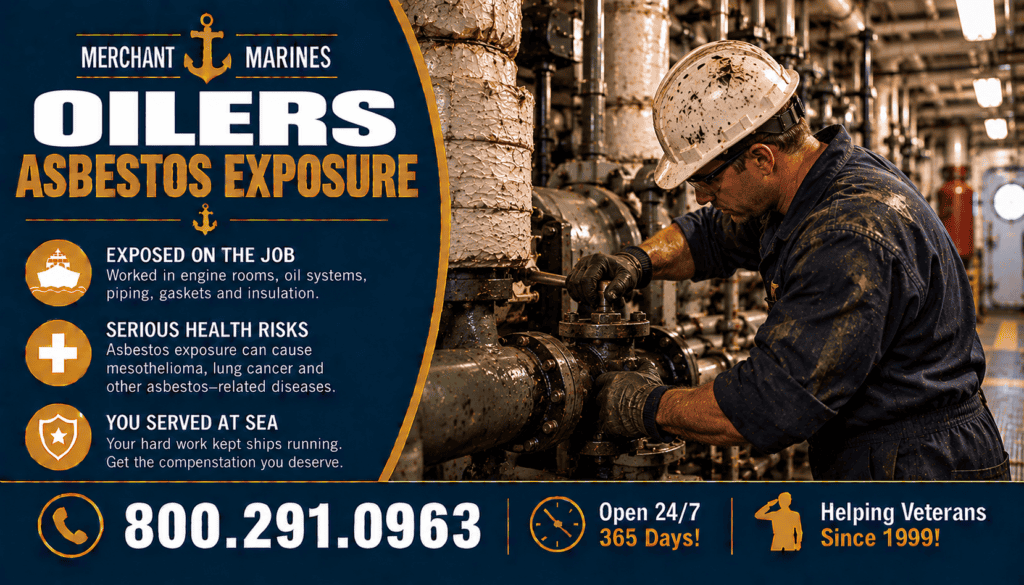
Merchant Marine Oiler Asbestos Exposure
⚠️ Asbestos Risks for Merchant Marine Oilers
The Oiler is one of the most critical ratings in the Merchant Marine engine department. Oilers work directly on the machinery that powers commercial ships—freighters, tankers, bulk carriers, break-bulk vessels, container ships, passenger liners, tugboats, and government-contracted merchant vessels.
From the 1940s through the late 1990s, these ships relied heavily on asbestos-containing materials (ACM) in nearly every mechanical system: boilers, steam lines, turbines, pumps, generators, reduction gears, exhaust systems, and engine-room insulation. Merchant Marine Oilers performed hands-on lubrication, monitoring, and servicing of these systems for hours each day, often working in confined compartments filled with airborne asbestos fibers.
Because Oilers were constantly:
-
circulating through engine spaces
-
checking bearings and machinery
-
walking beneath insulated piping
-
working near hot boiler systems
-
cleaning up around high-heat components
they are among the highest-exposed maritime occupations, surpassed only by Wipers and Firemen/Watertenders.
Many Oilers later developed mesothelioma, asbestos lung cancer, pleural disease, and asbestosis, caused by daily exposure to deteriorating insulation and repair debris.
🛠️ Typical Duties of a Merchant Marine Oiler
⚙️ Lubricating Engines & Mechanical Systems
Oilers are responsible for:
-
lubricating bearings
-
oiling pumps, gears, and moving parts
-
maintaining proper lubrication flow
-
wiping running machinery
-
monitoring oil levels and pressures
These tasks put Oilers inches away from:
-
asbestos-wrapped piping
-
ACM pump gaskets
-
insulated casings on turbines and generators
Every lubrication round exposed them to airborne fibers.
🔥 Working in the Engine Room, Fire Room & Boiler Flats
Oilers spend most of their day in:
-
engine rooms
-
auxiliary machinery spaces
-
fire rooms
-
boiler platforms
These compartments contained heavy asbestos use in:
-
boiler refractory
-
heat shields
-
steam-line lagging
-
insulation blankets
-
exhaust coverings
Heat and vibration continually shed fibers around Oilers.
🛠 Monitoring Equipment & Performing Machinery Rounds
Oilers conduct hourly checks of:
-
temperatures
-
pressures
-
lubricating systems
-
bearing conditions
-
pump functionality
Machinery rounds required Oilers to duck under asbestos-wrapped lines, lean against insulated casings, and examine equipment surrounded by ACM.
🧹 Cleaning Up After Machinery Work
After engineers completed:
-
valve packing work
-
pump gasket changes
-
boiler access maintenance
-
turbine repairs
Oilers often swept, wiped, and cleaned asbestos debris. Much of this residue came directly from:
-
pipe insulation
-
boiler refractory
-
gasket materials
-
asbestos cloth and tape
🚢 Assisting During Shipyard Repairs
During drydock, Oilers frequently:
-
supported boiler tear-outs
-
helped clear lagging piles
-
cleaned debris from engine room decks
-
worked near insulation removal teams
Shipyard asbestos exposure levels were some of the highest documented in maritime history.
🔧 Supporting Firemen & Engineers
Oilers commonly assisted with:
-
pump overhauls
-
valve stem repacking
-
condenser cleaning
-
generator maintenance
-
lube oil purifier work
Most of these components were insulated with ACM.
🧱 Asbestos Exposure Risks for Merchant Marine Oilers
1. Pipe Insulation
The number one source of exposure.
Engine rooms were covered with:
-
steam-line insulation
-
hot-water insulation
-
high-pressure pipe lagging
Heat caused this material to deteriorate and release fibers into the air 24/7.
2. Turbine & Pump Gaskets
Machinery used:
-
asbestos gaskets
-
asbestos packing
-
high-heat flange seals
-
insulation board
Oilers worked directly on or next to these components while they were vibrating, rotating, and shedding fibers.
3. Boiler Room Debris
Boiler spaces contained:
-
refractory brick made with asbestos
-
asbestos cement
-
firebox insulation
-
ACM rope packing
Cracked materials continuously produced dust, which Oilers inhaled during boiler rounds.
4. Generator & Auxiliary Machinery ACM
Insulation on:
-
reduction gears
-
auxiliary pumps
-
generators
-
lube-oil heaters
-
air compressors
broke down due to heat, movement, and moisture.
5. Airborne Fibers from Lagging Removal
When:
-
boilers were opened
-
steam lines were rewrapped
-
gaskets were removed
-
repair work occurred
Oilers were often assigned to clean up contaminated areas.
6. Contaminated Engine Room Airflow
Ventilation systems blew asbestos fibers throughout:
-
catwalks
-
engine flats
-
purifier rooms
Oilers breathed this air during every watch.
7. Bilge Contamination
Asbestos fragments accumulated in bilges over decades.
Oilers cleaning these spaces stirred up deep layers of ACM residue.
📊 Why Asbestos Claims Are Strong for Merchant Marine Oilers
1. Highest-intensity exposure next to Wipers and Firemen
Engine rooms contain the densest asbestos concentration aboard ship.
2. Daily, prolonged work in contaminated areas
Oilers completed long watches in the same enclosed spaces.
3. Strong documentation
Marine engineering logs thoroughly record ACM on:
-
pumps
-
valves
-
boilers
-
turbines
-
piping
4. Repeated maintenance of asbestos components
Gaskets, packing, and insulation were constantly replaced.
5. Recognized high-probability occupation
Oilers are officially categorized as a high-risk maritime asbestos rating.
📂 How Merchant Marine Oilers Prove Asbestos Exposure
📄 Merchant Mariner Credentials & Sea Service Records
Confirm service as:
-
Oiler
-
QMED Oiler
-
Junior Engineer trainee
-
Engine department rating
📘 Engine Room Construction Plans & Blueprints
Identify asbestos in:
-
steam lines
-
machinery insulation
-
boiler rooms
-
pump systems
🛠 Shipyard & Overhaul Logs
Show:
-
lagging removal
-
boiler refractory replacement
-
gasket and packing changes
-
machinery insulation tear-outs
👥 Witness Statements
Engineers, Wipers, Firemen, and other Oilers often confirm:
-
visible lagging debris
-
asbestos dust on catwalks
-
gasket residue during repairs
-
heavy insulation fallout
💼 Real Examples of Compensation for Merchant Marine Oilers
📌 Case 1 — Oiler on Tanker
Daily lubrication rounds near hot insulated lines.
Compensation: $4.2M
📌 Case 2 — Oiler on Freighter
Exposed during boiler overhauls and valve packing changes.
Compensation: $3.9M
📌 Case 3 — Oiler in Shipyard Repair Periods
Swept insulation debris from major tear-outs.
Compensation: $4.5M
💙 Benefits Available to Merchant Marine Oilers
💵 Asbestos Trust Funds
More than $30 billion remains available for exposed workers.
⚖ Legal Claims Against Product Manufacturers
Not against the Merchant Marine or U.S. government.
❤️ Survivor Claims
Families of deceased Oilers may also qualify.
❓ Frequently Asked Questions
🟦 Is Oiler one of the highest-risk asbestos jobs at sea?
Yes. Engine room roles—including Oilers—had some of the heaviest exposure levels.
🟦 Does cleaning machinery after repairs count as exposure?
Absolutely. Cleaning asbestos debris is a major exposure source.
🟦 Can I still file if I never personally handled insulation?
Yes—just working near deteriorating ACM is enough to qualify.
📞 Get Help Identifying Your Asbestos Exposure as a Merchant Marine Oiler
If you served as an Oiler aboard a pre-1980 merchant ship, you were exposed to asbestos from insulation, boilers, turbines, gaskets, and daily engine-room operations. Specialists can identify the ACM materials on your vessels and pursue financial compensation.
📞 Call 800.291.0963 for a free Merchant Marine exposure review.