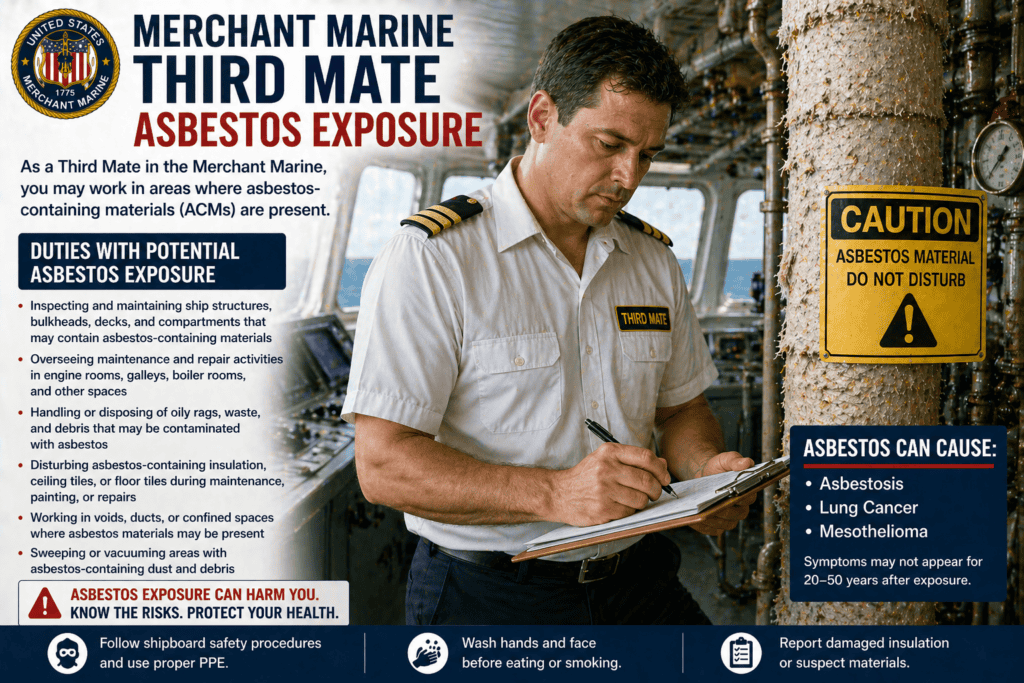
Merchant Marine Third Mate Asbestos Exposure
⚠️ Asbestos Risks for Merchant Marine Third Mates
The Third Mate—also called Third Officer, 3/M, or Junior Deck Officer—served as the ship’s primary safety officer and a designated navigation watchstander aboard Merchant Marine vessels from the WWII era through the 1980s. While deck officers were not stationed full-time inside the engine room, Third Mates still faced significant asbestos exposure while performing safety inspections, navigation duties, emergency equipment checks, and vessel-wide patrols.
Merchant ships during this time were constructed with asbestos in:
-
fireproof doors
-
emergency gear lockers
-
bulkhead panels
-
bridge electrical boards
-
insulated passageways
-
communication systems
-
deck machinery
-
heating and ventilation systems
These materials deteriorated over decades of vibration, heat changes, and moisture. As the officer responsible for inspecting safety systems and performing ship-wide rounds, the Third Mate repeatedly walked through compartments containing friable, airborne asbestos fibers.
This page outlines your duties, the most common asbestos exposure sources, real cases, and how Third Mates today prove exposure for trust fund and maritime compensation claims.
🛠️ Typical Duties of a Merchant Marine Third Mate
🧭 Navigation Watchstanding
Third Mates maintained:
-
bridge watch on the 8–12 or 12–4 watch
-
radar and navigation systems
-
logbooks and course changes
-
communication with engine room and captain
-
lookout and collision-avoidance duties
Many bridge communication and radar consoles were built with asbestos-backed electrical panels, exposing officers during equipment checks.
🧯 Safety Officer Responsibilities
The Third Mate served as the ship’s primary safety officer, supervising:
-
fire drills
-
abandon-ship drills
-
safety locker inspections
-
lifeboat and raft readiness
-
firefighting gear condition
-
emergency lighting and electrical boards
Firefighting gear, including:
-
fire-resistant suits
-
fire blankets
-
heat-shield panels
contained asbestos for decades.
Inspecting this gear routinely disturbed fibers.
🚪 Fire Door & Emergency Gear Inspections
Ships used asbestos extensively in:
-
fireproof doors
-
emergency exit frames
-
watertight bulkheads
-
hatch covers
-
fire hose racks
-
emergency lockers
The Third Mate inspected these weekly as part of safety rounds—often brushing against crumbling ACM insulation.
🚶 Passageway, Deck & Compartment Rounds
Third Mates were required to conduct:
-
daily ship rounds
-
safety audits
-
structural inspections
-
watertight integrity checks
These patrols took them through:
-
passageways lined with asbestos insulation
-
cargo holds with ACM tile or gasket materials
-
deck machinery with asbestos brake linings
-
ventilation spaces circulating asbestos fibers
📦 Cargo Gear & Rigging Oversight (on some vessels)
Third Mates supervised or assisted with:
-
lifting equipment
-
winches
-
cranes
-
cargo-handling machinery
Much of this equipment contained:
-
asbestos brake pads
-
friction materials
-
high-heat gaskets
Even when not repairing equipment, standing nearby exposed them to airborne fibers released by deck crews.
📘 Administrative and Safety Documentation
Third Mates maintained:
-
safety reports
-
inspection logs
-
muster lists
-
fire control plans
These tasks required them to move throughout the ship, including older sections where asbestos materials were deteriorating.
🧱 Asbestos Exposure Risks for Merchant Marine Third Mates
1. ACM Fire Doors & Fireproof Bulkheads
Fire doors contained:
-
asbestos sheets
-
heat-resistant backing
-
asbestos cement cores
Hinges, seals, and linings degraded over time, releasing asbestos dust whenever the door was opened or inspected.
2. Emergency Gear Containing Asbestos
Third Mates inspected:
-
fire-resistant suits
-
asbestos fire blankets
-
hose stations
-
emergency lighting boards
-
damage control lockers
All were historically manufactured with asbestos for fire protection.
3. Bridge Electrical Panels & Navigation Equipment
Electrical boards, radio equipment, and radar units used:
-
asbestos-backed arc chutes
-
asbestos insulation sheets
-
heat-resistant ACM wiring
Opening access panels during inspections exposed Third Mates directly.
4. Insulated Passageways & Corridor Bulkheads
Many WWII–1980s ships used:
-
pipe insulation
-
asbestos wallboard
-
ACM ceiling tiles
-
thermal barrier cloth
Daily rounds caused Third Mates to inhale fibers disturbed by vibration and foot traffic.
5. Interaction With Crew Working in High-Risk Areas
Even when not performing maintenance, Third Mates stood near:
-
deck machinery
-
mooring equipment
-
cranes
-
winches
Friction-based asbestos components shed dust constantly.
6. Ventilation & Air Circulation Systems
Ventilation distributed asbestos from:
-
deteriorating lagging
-
insulation behind bulkheads
-
engine-room fibers carried through ducting
The whole ship was affected—not only machinery spaces.
7. Shipyard Overhauls & Inspections
During dry-dock periods, Third Mates often participated in:
-
safety inspections
-
emergency equipment testing
-
ship readiness checks
Shipyards removed and replaced large amounts of insulation, blanketing the vessel in asbestos dust.
📊 Why Third Mates Have Strong Asbestos Claims
1. Safety officers entered every compartment
This provides comprehensive exposure across the vessel.
2. Firefighting equipment was heavily asbestos-based
Fire blankets, suits, and panels were major exposure points.
3. Bridge electrical equipment contained ACM
This is well-documented and strengthens claims.
4. Exposure occurred daily, not occasionally
Routine rounds and safety checks created continuous risk.
📂 Evidence Used to Prove Third Mate Asbestos Exposure
⚓ Merchant Mariner Documentation
-
License showing 3/M rating
-
Discharge certificates
-
Ship service records
📘 Fire Control Plans & Safety Logs
These confirm:
-
fire door inspections
-
emergency locker inspections
-
equipment checks
🛠 Historical Ship Blueprints
Blueprints list:
-
ACM fireproofing materials
-
asbestos paneling
-
electrical insulation products
👨✈️ Witness Statements
Common testimony comes from:
-
Chief Mates
-
Bosuns
-
Able Seamen
-
Safety officers
💼 Example Compensation Results
📌 Case 1 — Third Mate on 1960s Cargo Ships
Exposure from fire doors and electrical panels.
Compensation: $3.8M
📌 Case 2 — Navigation Officer on Tankers
Asbestos from bridge equipment and passageways.
Compensation: $3.5M
📌 Case 3 — Third Mate on WWII-era Vessels
Safety gear and bulkhead insulation exposure.
Compensation: $3.6M
💙 Benefits Available to Third Mates
💵 Asbestos Trust Funds
More than $30 billion remains available.
⚖ Maritime Product Liability Claims
Filed against manufacturers—not the Merchant Marine.
❤️ Survivor Benefits
Spouses and dependents may qualify.
❓ Frequently Asked Questions
🟦 Did bridge electrical systems contain asbestos?
Yes—many radar and communication panels used asbestos insulation.
🟦 Was simply opening a fire door enough for exposure?
Yes—deteriorated ACM linings shed fibers continuously.
🟦 Do I need to remember specific ACM products?
No—ship records and safety manuals provide the necessary evidence.
📞 Get Help Identifying Your Third Mate Asbestos Exposure
Merchant Marine Third Mates experienced ship-wide asbestos exposure through safety inspections, emergency equipment checks, navigation operations, and daily rounds.
📞 Call 800.291.0963 for a free case review.