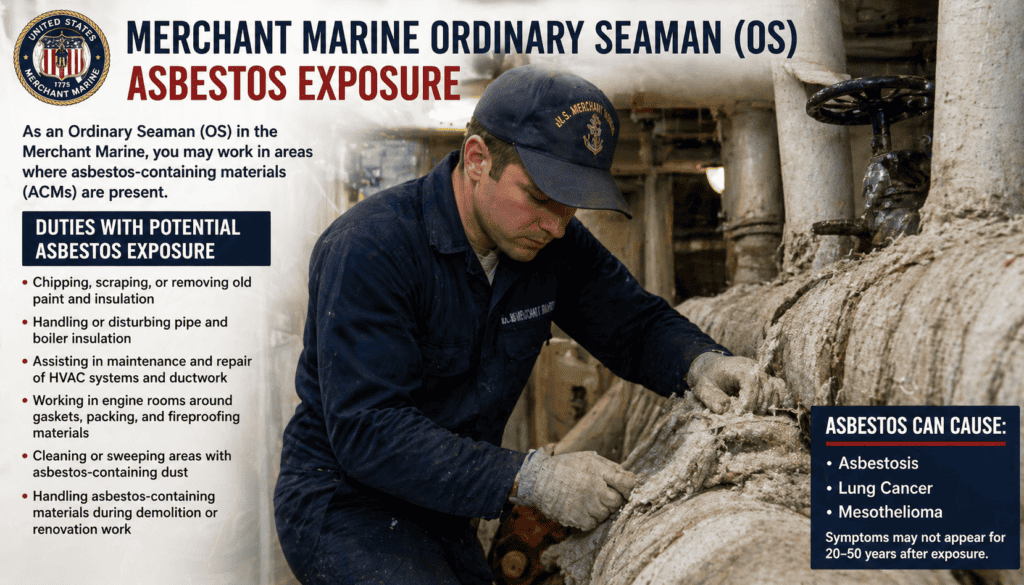
Merchant Marine Ordinary Seaman (OS) Asbestos Exposure
⚠️ Asbestos Risks for Merchant Marine Ordinary Seamen (OS)
Ordinary Seamen (OS) are the entry-level merchant mariner position aboard commercial cargo ships, tankers, passenger liners, bulk carriers, and auxiliary vessels. From the 1940s through the late 1980s, the U.S. Merchant Marine operated ships that were heavily constructed with asbestos in insulation, fireproofing, deck materials, boiler rooms, engine rooms, cargo spaces, refrigeration systems, piping, and housing areas. Because OS personnel perform the vast majority of physical labor aboard ship—scraping, painting, cleaning, sweeping, and working in confined areas—they were consistently exposed to airborne asbestos fibers every day at sea.
Merchant Marine vessels used asbestos extensively in:
-
pipe insulation and lagging
-
boilers and heat exchangers
-
cargo-hold flooring
-
fireproof bulkhead coverings
-
engine room components
-
exhaust systems
-
brake linings and friction parts
-
electrical panels and wiring insulation
Ordinary Seamen performed tasks in nearly all of these areas, creating persistent asbestos exposure. Many OS veterans later developed mesothelioma, lung cancer, pleural disease, or asbestosis due to the heavy asbestos contamination aboard mid-century U.S. merchant ships.
🛠️ Typical Duties of a Merchant Marine Ordinary Seaman (OS)
🔧 Deck Maintenance & General Ship Upkeep
Ordinary Seamen perform hands-on physical work vital to maintaining ship operations. Responsibilities include:
-
chipping, scraping, and repainting bulkheads and deck surfaces
-
cleaning passageways, ladders, and cargo handling areas
-
washing down decks and removing corrosion
-
assisting with shipboard repairs
-
removing rust and paint using grinders and scrapers
Since older ship surfaces often had asbestos-containing paint backings, insulation nearby, and ACM joint compound, scraping or chipping could easily release fibers into the air.
⚓ Cargo Handling & Hold Maintenance
OS crew members assist with:
-
loading and unloading cargo
-
entering cargo holds to clean or prepare the space
-
sweeping cargo areas
-
checking hold conditions during voyage
Cargo holds frequently contained:
-
asbestos flooring
-
ACM adhesives
-
pipe insulation overhead
-
asbestos wrap around refrigeration or steam lines
Working in enclosed spaces increased exposure concentration dramatically.
🧹 Cleaning & Housekeeping Duties
Daily tasks include:
-
sweeping and mopping passageways
-
cleaning crew quarters
-
removing debris from engineering access areas
-
clearing ventilation screens and ducts
-
washing down machinery casings
These areas were surrounded by asbestos pipe lagging, deck tiles, insulation boards, and fireproof panels that shed dust during normal ship vibration.
🛠 Assisting Engineering, Deck & Repair Crews
While OS personnel are not full oilers or firemen, they often help engineering crew with:
-
carrying materials
-
assisting during repairs
-
holding lights or tools
-
cleaning up debris
Engineering spaces—especially engine rooms and boiler rooms—were the highest asbestos-concentration locations aboard any Merchant Marine vessel.
🧱 Asbestos Exposure Risks for Ordinary Seamen (OS)
🔥 1. Paint Scraping on ACM Surfaces
Ordinary Seamen often scraped or chipped paint on:
-
deck surfaces
-
frames and bulkheads
-
overhead beams
-
machinery casings
Older paint layers were bonded to asbestos-containing backings or applied directly onto ACM panels. Scraping disturbed these materials, creating airborne fibers.
🚢 2. Dust from Insulation in Passageways
Nearly every passageway on older merchant ships contained:
-
insulated steam pipes
-
hot-water lines
-
refrigeration lines
-
vent ducting
These pipes were wrapped in asbestos lagging that deteriorated over time. Simply sweeping or brushing against these surfaces released fibers.
📦 3. Cargo Hold ACM Flooring & Pipe Wrap
Cargo holds frequently included:
-
asbestos tile flooring
-
ACM mastic
-
insulation around refrigeration coils
-
asbestos cloth around steam pipes
-
millboard panels
Working in these enclosed spaces caused OS workers to inhale concentrated asbestos dust.
⚓ 4. Prolonged Work in Enclosed Spaces
Enclosed shipboard environments increased exposure levels. OS duties often required:
-
extended time in cargo holds
-
crawling into confined maintenance spaces
-
working below deck where ventilation was minimal
These areas trapped airborne asbestos fibers for long periods.
🛠 5. Engineering & Boiler Room Proximity
While OS personnel did not operate machinery, they frequently entered:
-
lower passageways
-
machinery access corridors
-
pump rooms
-
fire rooms
-
boiler spaces
These compartments featured massive amounts of thermal insulation that aged and crumbled over decades of heat cycles.
🌀 6. Contaminated Ventilation Systems
Older merchant ships circulated asbestos fibers through:
-
air ducts
-
ventilation blowers
-
exhaust fans
-
crew-quarter ventilation
-
common passageway airflow
This allowed fine asbestos dust to travel throughout the ship—even into “clean” areas.
📈 Why Ordinary Seamen Have Strong Asbestos Claims
1. High-intensity hands-on work
OS personnel worked directly on surfaces, materials, and equipment surrounded by ACM.
2. Multilevel exposure across the entire vessel
Deck, cargo, engineering, and passageway environments all contained asbestos.
3. Enclosed shipboard spaces trap fibers
This magnified airborne concentration significantly.
4. Long voyages
Weeks or months at sea led to prolonged, uninterrupted exposure.
5. Ship records clearly document ACM use
Merchant Marine vessels built before 1980 contained asbestos in hundreds of components.
📂 How Merchant Marine OS Personnel Prove Asbestos Exposure
📄 Seafaring Documents
Useful records include:
-
ship discharge certificates
-
Merchant Mariner Documents (MMD)
-
Coast Guard service records
-
shipping articles
These records help establish exposure periods.
📘 Vessel Blueprints & Technical Manuals
Confirm asbestos-containing materials in:
-
insulation systems
-
propulsion and boiler components
-
cargo refrigeration equipment
-
deck and flooring materials
🧰 Maintenance Logs & Overhaul Records
Merchant ships often underwent repairs at:
-
shipyards
-
foreign ports
-
U.S. maritime facilities
These logs show where asbestos removal or installation occurred.
👥 Witness & Crew Statements
Shipmates often confirm the presence of:
-
insulation debris
-
repair work
-
visible deteriorated lagging
-
paint scraping
These statements support claims.
💼 Real Compensation Examples for Merchant Marine OS Veterans
📌 Case 1 — OS on Bulk Freighter
Scraping paint and working in cargo hold.
Compensation: $3.8M
📌 Case 2 — OS on Tanker Vessel
Exposure in engine passageways and living quarters.
Compensation: $3.5M
📌 Case 3 — OS During Shipyard Overhaul
Heavy dust from insulation removal.
Compensation: $4.2M
📌 Case 4 — OS on WWII-Era Vessel
Historic asbestos saturation throughout the ship.
Compensation: $4.0M
💙 Benefits Available to Merchant Marine Veterans
🎖 VA Disability Benefits (Limited Eligibility)
Merchant Mariners who served during wartime periods may qualify for benefits.
💵 Asbestos Trust Funds
Over $30 billion remains available.
⚖ Legal Claims
Claims are filed against product manufacturers—not the U.S. government.
❤️ Dependents’ Survivor Benefits
Families may also qualify for legal compensation.
❓ Frequently Asked Questions
🟦 Are Merchant Marine OS roles known for high asbestos exposure?
Yes—OS workers were some of the most exposed personnel aboard any U.S. merchant vessel.
🟦 Does exposure count if I only scraped paint or cleaned?
Absolutely—scraping and sweeping were major asbestos release activities.
🟦 Can family members file a claim after death?
Yes—legal claims remain available.
📞 Get Help Identifying Your Asbestos Exposure as a Merchant Marine Ordinary Seaman (OS)
If you served as an Ordinary Seaman on pre-1980 vessels, you were almost certainly exposed to asbestos. Specialists can identify your ship, confirm exposure sources, and pursue compensation.
📞 Call 800.291.0963 for a free Merchant Marine exposure review.