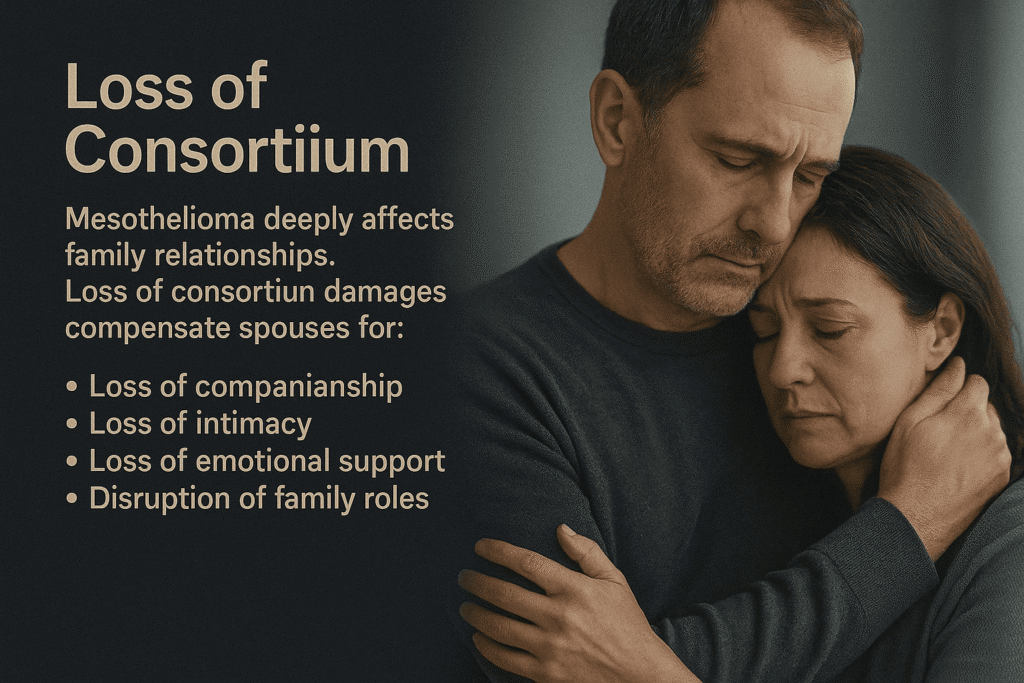
Loss of Consortium in Mesothelioma Claims
How Families Are Compensated for Emotional and Relational Losses
Mesothelioma does not affect only the person diagnosed—it deeply affects the entire family. The emotional, relational, and practical impact of this aggressive cancer can reshape marriages, strain family structures, and permanently change how daily life functions. When asbestos exposure results in mesothelioma, the law recognizes the suffering of family members, particularly spouses, through a category of compensation known as loss of consortium.
Loss of consortium damages compensate spouses for the emotional and relational harm caused by their partner’s illness. These damages reflect the reality that mesothelioma alters far more than physical health: it affects intimacy, companionship, emotional connection, and the ability to share life together in the same way.
The following article explains what loss of consortium includes, how it is evaluated, and why it plays a meaningful role in mesothelioma lawsuits.
❤️ What Is Loss of Consortium?
Loss of consortium refers to the damages awarded to a spouse—or, in some states, a long-term partner—for the harm mesothelioma causes to the marital or family relationship. These damages recognize the human impact of the disease on the victim’s closest relationships.
Loss of consortium typically compensates for:
-
Loss of companionship
-
Loss of intimacy
-
Loss of emotional support
-
Disruption of family roles and stability
These losses are deeply personal and cannot be measured through financial documents. Instead, courts evaluate testimony, expert opinions, and real-life examples of how mesothelioma has affected the family unit.
🤝 Loss of Companionship
Companionship is one of the core elements of a marital relationship—and mesothelioma disrupts it dramatically. Spouses often describe how the disease changes their shared life:
-
Fewer shared activities
-
Reduced social outings
-
Changes in daily routines
-
Emotional withdrawal caused by fatigue or pain
Mesothelioma patients may become physically limited, emotionally strained, or less able to participate in family life. The absence of shared moments, conversations, and connection is significant and legally recognized.
📑 Evidence Courts Consider
-
Spouse testimony
-
Family journals or written reflections
-
Therapist or counselor observations
-
Accounts from adult children
Loss of companionship is emotional in nature but is one of the most well-documented aspects of consortium claims.
💞 Loss of Intimacy
Intimacy—whether physical, emotional, or relational—is often affected early in the mesothelioma journey. Physical limitations, pain, fatigue, and emotional distress can make intimacy difficult or impossible.
Spouses frequently testify that the loss of closeness is one of the most painful aspects of the disease. This includes:
-
Decreased physical affection
-
Reduced emotional closeness
-
Inability to maintain the romantic aspects of the marriage
-
Fear or anxiety interfering with connection
Courts acknowledge these losses as legitimate and compensable, especially when supported by professional evaluations or testimony.
📑 Evidence Courts Consider
-
Testimony from both partners
-
Medical records showing pain, fatigue, or breathing issues
-
Psychological evaluations
-
Statements describing changes in marital closeness
Because these losses are deeply personal, courts carefully weigh testimony and context.
🧡 Loss of Emotional Support
A healthy relationship involves mutual emotional support—encouragement, comfort, companionship, and shared responsibilities. Mesothelioma often reverses or disrupts this dynamic.
The victim may no longer be able to:
-
Participate equally in decision-making
-
Offer the same emotional reliability
-
Support their spouse during difficult times
-
Provide stability in the home
Spouses often carry a heavier emotional burden as they shift into caretaker roles. This can increase stress, anxiety, and emotional exhaustion.
📑 Evidence Courts Consider
-
Counseling reports
-
Testimony describing emotional changes
-
Notes from therapists or support groups
-
Statements from close family or friends
This category is especially important in long-term marriages where emotional partnership has been a defining strength.
🏠 Disruption of Family Roles
Mesothelioma uniquely disrupts traditional family responsibilities. A spouse who once handled financial matters, childcare, or home maintenance may no longer be able to do so.
Common disruptions include:
-
Increased household duties for the healthy spouse
-
Loss of shared parenting roles
-
Removal of the patient from family decision-making
-
Emotional strain on the entire family
-
A shift from partner to full-time caregiver
These role changes are physically and emotionally demanding and legally recognized as recoverable damages.
📑 Evidence Courts Consider
-
Testimony from the spouse or adult children
-
Documentation of caregiving duties
-
Occupational or functional assessments
-
Statements reflecting the burden shift within the home
Disruption of family roles often forms a major part of loss-of-consortium awards, especially in advanced cases.
📊 How Courts Evaluate Loss of Consortium
Because consortium damages reflect emotional and relational loss—not financial costs—they require careful evaluation. Courts rely on multiple forms of evidence to understand the full impact.
👩❤️👨 Spouse Testimony
The spouse’s own words are the most powerful evidence. Judges and juries listen closely to descriptions of:
-
How the marriage has changed
-
The emotional toll of caregiving
-
Loss of intimacy or companionship
-
Stress on daily life and future plans
📘 Medical and Psychological Records
Records showing:
-
Physical pain
-
Anxiety
-
Depression
-
Fatigue
-
Functional decline
help courts connect the medical condition to relational losses.
📝 Journals, Letters, and Personal Notes
Families sometimes keep notes:
-
Reflecting their emotional struggles
-
Tracking the loss of normal routines
-
Describing the slow decline of relationship roles
These carry strong evidentiary value.
👨👩👧 Family Member Observations
Adult children or close relatives may describe:
-
Changes in household dynamics
-
Emotional shifts
-
Day-to-day struggles
-
Loss of family stability
Their testimony helps illustrate the full picture.
📚 Expert Testimony
Life-care planners, therapists, and psychologists may explain:
-
How chronic illness affects couples
-
The emotional burden on spouses
-
Expected future relational impacts
Their insights help quantify the intangible.
⚖ Why Loss of Consortium Matters
These damages serve two important purposes:
1. They Acknowledge the True Human Cost of Mesothelioma
The suffering extends far beyond the patient. Families lose companionship, partnership, stability, and emotional connection.
2. They Hold Negligent Companies Accountable
Since asbestos exposure was preventable, loss of consortium damages reinforce corporate responsibility for the suffering families endure.
📞 Free Case Evaluation — Call 800-291-0963
If mesothelioma has affected your marriage or family, you may qualify for significant loss of consortium compensation in addition to other damages.
Call now for a free, confidential case evaluation. There are no fees unless you win.
Your family’s emotional suffering matters—and you deserve justice.