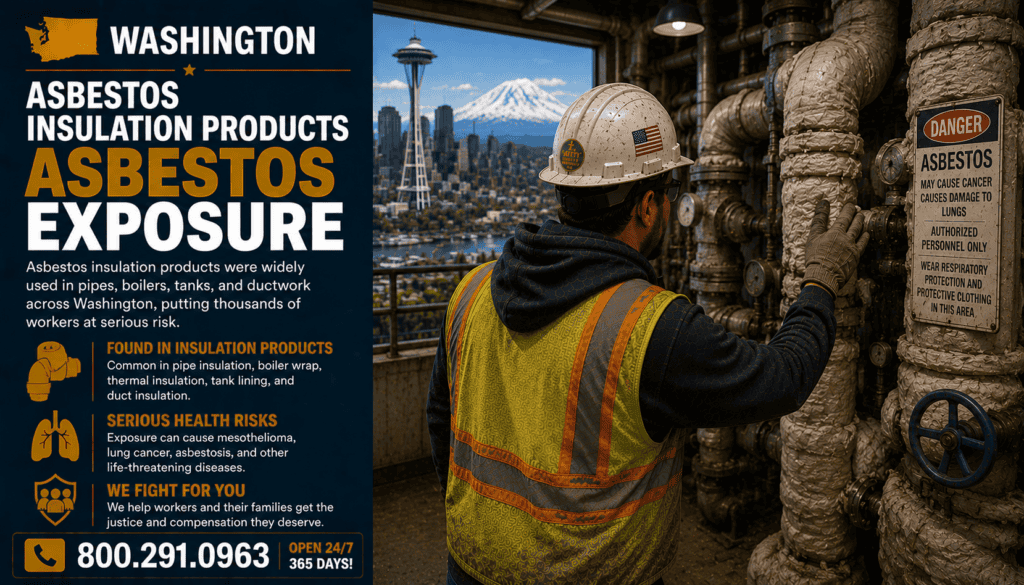
🧤 Washington Asbestos Insulation Products
For much of the 20th century, asbestos was a primary ingredient in thermal insulation, fireproofing, and heat-resistant products used throughout Washington State. Manufacturers relied on asbestos because it was durable, inexpensive, resistant to fire, and capable of protecting equipment and building systems from extreme temperatures.
Asbestos insulation products were installed in homes, factories, power plants, shipyards, schools, hospitals, military installations, government buildings, warehouses, and commercial properties. They were commonly applied around pipes, boilers, turbines, furnaces, ducts, walls, ceilings, and industrial machinery.
Exposure occurred when insulation was installed, cut, torn, repaired, removed, or allowed to deteriorate over time. Aging insulation often became friable, meaning the material could crumble under light pressure and release microscopic asbestos fibers into the air.
Workers and building occupants frequently inhaled these fibers without understanding the danger. Many Washington residents and former employees are now being diagnosed with mesothelioma, asbestos-related lung cancer, asbestosis, and other illnesses linked to insulation product exposure.
Additional workplace risks are discussed in our guides to Washington industrial asbestos exposure and asbestos products used in Washington construction.
📞 If you were exposed to asbestos insulation in Washington, call 800-291-0963 for a confidential case evaluation.
⚠️ How Asbestos Exposure Occurred from Insulation Products
Asbestos insulation exposure commonly occurred during:
🧤 Installation and fitting that required workers to cut, shape, tear, or trim insulation materials
🔧 Maintenance and repair work that disturbed damaged insulation around pipes, boilers, ducts, and machinery
🏗️ Renovation and demolition projects that released fibers from insulation hidden inside walls, ceilings, and mechanical spaces
🧱 Aging and deterioration that caused insulation to crack, crumble, and shed fibers over time
🧹 Cleanup and removal work that re-aerosolized settled asbestos dust
🔥 Equipment shutdowns and overhauls that required workers to remove insulation from high-temperature systems
Workers could also be exposed when replacing valves, repairing steam pipes, opening equipment housings, or accessing electrical and mechanical systems covered by asbestos insulation.
Insulation work frequently occurred around Washington boiler equipment containing asbestos and Washington power generation equipment.
Because asbestos fibers are microscopic and lightweight, exposure often occurred without visible warning signs or immediate symptoms.
🏗️ Common Asbestos Insulation Products Used in Washington
Asbestos insulation products commonly used throughout Washington included:
🧤 Pipe insulation and boiler lagging
🔥 Spray-applied fireproofing and thermal insulation
🧱 Insulating blocks, cement, boards, and panels
🧰 Thermal wraps, blankets, cloth, and tapes
⚙️ Insulated gaskets, equipment coverings, and valve jackets
🏭 Loose-fill and blown-in insulation materials
🚢 Marine insulation used around shipboard pipes, boilers, engines, and bulkheads
🏢 Acoustic ceiling materials and fire-resistant wall insulation
🔌 Electrical insulation used around wiring, control panels, and high-temperature components
Pipe insulation was often molded into sections and secured around steam, hot-water, and industrial process lines. Boiler lagging was wrapped around equipment to retain heat and protect nearby workers and structures.
Spray-applied insulation and fireproofing could release substantial amounts of asbestos dust during application, repair, scraping, or removal. Loose-fill materials were especially hazardous because fibers could become airborne with minimal disturbance.
Many of these products were also used around Washington industrial machinery containing asbestos and throughout older factories described in our Washington manufacturing asbestos exposure guide.
Disturbing these products released asbestos fibers directly into workers’ breathing zones and surrounding spaces.
👷 Who Was Exposed to Asbestos Insulation Products?
Exposure affected a wide range of individuals, including:
Insulators and insulation installers
Pipefitters, plumbers, and steamfitters
HVAC technicians and sheet-metal workers
Power plant and boiler technicians
Shipyard and maritime workers
Electricians and maintenance mechanics
Construction and demolition workers
Custodial and facility maintenance staff
Factory and industrial employees
Residents and occupants of older buildings
Insulators often experienced some of the heaviest exposure because they directly cut, handled, installed, and removed asbestos-containing materials.
Pipefitters and plumbers disturbed insulation while repairing steam lines, valves, pumps, and mechanical systems. Learn more about this occupational risk in our Washington pipefitters mesothelioma guide.
Power plant employees worked around insulated boilers, turbines, generators, and steam systems. Their exposure risks are discussed in our Washington power plant workers mesothelioma guide.
Construction workers and maintenance crews were also exposed while cutting through insulated walls, replacing damaged materials, and renovating older buildings. Additional information is available on our Washington construction workers mesothelioma page.
Secondhand exposure occurred when asbestos fibers were carried home on contaminated work clothing, boots, hair, tools, and personal vehicles.
🏭 Asbestos Insulation in Washington Industrial Facilities
Industrial facilities throughout Washington relied on asbestos insulation to control heat and protect equipment from fire.
Common exposure areas included:
Boiler rooms
Turbine halls
Mechanical rooms
Utility tunnels
Pipe chases
Furnace areas
Equipment rooms
Maintenance shops
Manufacturing floors
Ship engine rooms
Workers often removed damaged insulation to access equipment and then installed replacement materials after repairs were completed. Dry insulation could break apart during handling, releasing fibers into confined spaces.
Industrial employees may have encountered overlapping exposure from Washington industrial asbestos products used in gaskets, packing, machinery, boilers, and construction materials.
🚢 Asbestos Insulation in Washington Shipyards and Maritime Facilities
Washington’s shipyards, ports, naval facilities, and maritime industries made extensive use of asbestos insulation.
Ships contained insulated:
Steam pipes
Boilers
Engines
Pumps
Valves
Turbines
Bulkheads
Decks
Electrical systems
Ventilation ducts
Shipyard workers frequently removed old insulation during repairs and vessel overhauls. Confined engine rooms and below-deck spaces allowed airborne fibers to accumulate, increasing the risk of heavy exposure.
Workers at Washington maritime facilities may have experienced the conditions described in our Washington shipyard and port asbestos exposure guide.
Naval personnel, civilian shipyard employees, contractors, insulators, machinists, pipefitters, and maintenance crews could all be exposed when asbestos insulation was cut, stripped, replaced, or damaged.
🏢 Asbestos Insulation in Schools, Hospitals, and Public Buildings
Asbestos insulation was also installed throughout Washington schools, hospitals, courthouses, offices, municipal facilities, and other public buildings.
These structures often contained asbestos around:
Heating pipes
Boilers
Ventilation ducts
Mechanical systems
Ceilings and walls
Fireproofed steel beams
Electrical equipment
Maintenance tunnels
Teachers, healthcare workers, office employees, custodians, contractors, and building occupants could be exposed when insulation deteriorated or was disturbed during maintenance and renovation.
More information about these risks is available in our Washington public and government buildings asbestos exposure guide.
📍 Washington Asbestos Insulation Exposure Locations
Asbestos insulation exposure occurred statewide, including facilities located in:
Seattle — Commercial buildings, hospitals, schools, power facilities, industrial plants, and shipyards
Tacoma — Shipyards, factories, port facilities, power plants, and public buildings
Everett — Manufacturing plants, aerospace facilities, schools, hospitals, and municipal buildings
Spokane — Schools, hospitals, industrial facilities, public buildings, and utility systems
Bellingham — Maritime facilities, industrial plants, commercial buildings, and older structures
Workers in Seattle may have encountered asbestos insulation throughout King County.
Everett-area workers and residents may have experienced exposure throughout Snohomish County, while eastern Washington exposure occurred at buildings and facilities throughout Spokane County.
Asbestos insulation was present at many known Washington asbestos exposure sites, including mills, factories, power plants, shipyards, military facilities, schools, hospitals, warehouses, and office buildings.
These locations remain central to Washington asbestos insulation exposure investigations.
⚖️ How a Washington Asbestos Attorney Can Help Insulation Exposure Victims
A Washington asbestos attorney helps insulation exposure victims pursue compensation while managing the legal process.
An attorney can:
✔ Identify asbestos-containing insulation products and manufacturers
✔ Review job duties, employment records, building locations, and exposure histories
✔ Investigate pipe insulation, boiler lagging, fireproofing, equipment coverings, and other asbestos materials
✔ Collect medical documentation related to an asbestos disease diagnosis
✔ File available Washington asbestos trust fund claims
✔ Pursue lawsuits against insulation manufacturers, suppliers, distributors, contractors, and other responsible parties
✔ Manage filings, negotiations, and deadlines under the Washington mesothelioma statute of limitations
Workers and building occupants diagnosed with asbestos-related lung cancer may also qualify to pursue Washington asbestos lung cancer lawsuits.
When someone has died from mesothelioma or another asbestos-related disease following insulation exposure, eligible family members may have legal options through a Washington wrongful death mesothelioma lawsuit.
You do not need to know the exact insulation brand or manufacturer before seeking help. Attorneys can often investigate exposure through employment records, building age, equipment histories, job duties, renovation documents, coworker testimony, and historical product information.
📞 Call 800-291-0963 to speak with a Washington asbestos attorney today.
❓ Washington Asbestos Insulation Products FAQs
Can insulation exposure from decades ago still qualify?
Yes. Mesothelioma and other asbestos-related diseases often develop 20–50 years after exposure.
What if I do not know which insulation products were used?
Attorneys can often identify likely products by reviewing job duties, building age, equipment types, renovation dates, and historical insulation use.
Can residents pursue claims for insulation exposure in homes?
In certain situations, residents exposed to asbestos insulation in homes, apartments, schools, or other buildings may have legal options depending on how the exposure occurred.
Can family members exposed through work clothing qualify?
Family members diagnosed with an asbestos-related disease after repeated secondhand exposure may have legal options, depending on the circumstances.
What if the building or facility has closed?
Historical employment records, construction documents, maintenance records, permits, coworker statements, and other evidence may still help establish exposure.
What does an asbestos attorney cost?
Nothing upfront. Most asbestos attorneys work on a contingency fee basis, meaning no legal fee is owed unless compensation is recovered.
🧠 What You Should Do Next
📞 Call 800-291-0963 for a confidential Washington asbestos insulation case evaluation.
📋 Gather your job titles, employer names, building or facility locations, insulation work performed, and approximate exposure dates.
📍 Review known Washington asbestos exposure sites to help identify possible insulation exposure locations.
⚖️ Speak with an attorney before filing deadlines expire. Acting promptly helps protect your right to pursue compensation.
🧤 Washington Asbestos Insulation Case Evaluation
If you worked with or around asbestos insulation products in Washington and were later diagnosed with mesothelioma, asbestos-related lung cancer, asbestosis, or another asbestos-related disease, you may qualify to pursue compensation—even if the exposure occurred decades ago.
📞 Call 800-291-0963
✔ No upfront costs
✔ Confidential case review
✔ Help identifying insulation-related asbestos exposure
✔ Assistance pursuing lawsuits and asbestos trust fund claims
✔ No legal fee unless compensation is recovered