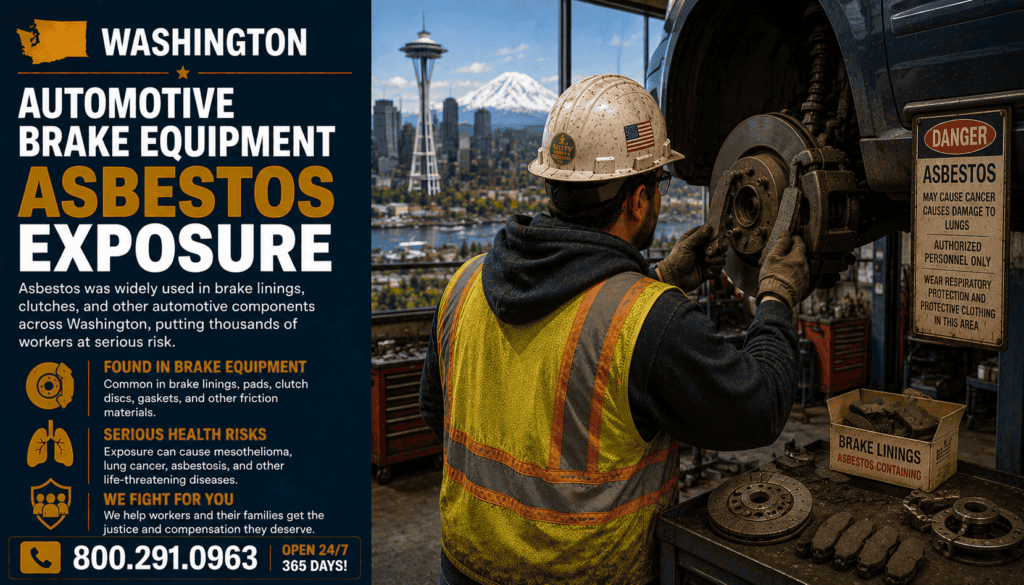
🚗 Washington Automotive Brake Equipment Asbestos Exposure
For much of the 20th century, asbestos was a key ingredient in automotive brake equipment because of its heat resistance, durability, and ability to withstand friction. Brake pads, brake shoes, clutch components, drum linings, and other friction materials commonly contained asbestos fibers.
Auto mechanics, brake technicians, factory workers, fleet maintenance employees, and repair crews were exposed during routine brake service, inspections, repairs, and replacements. Grinding brake shoes, sanding pads, blowing out brake drums, and replacing worn components released asbestos fibers directly into the air.
Many workers inhaled these fibers repeatedly in enclosed repair bays, fleet garages, dealerships, maintenance yards, and automotive manufacturing facilities. Asbestos dust could remain suspended in the air or settle on tools, workbenches, floors, clothing, and vehicle interiors.
Workers often encountered materials described in our Washington automotive asbestos products and Washington industrial asbestos products guides.
Today, former Washington workers are being diagnosed with mesothelioma, asbestos-related lung cancer, asbestosis, and other serious illnesses linked to long-term automotive brake equipment exposure.
📞 If you worked around automotive brake equipment in Washington and were exposed to asbestos, call 800-291-0963 for a confidential case evaluation.
⚠️ How Asbestos Exposure Occurred from Automotive Brake Equipment
Brake equipment asbestos exposure commonly occurred during:
🚗 Brake pad and brake shoe replacement that released asbestos dust from worn friction materials
🔧 Grinding and sanding brake components, creating fine airborne fibers
💨 Compressed-air blowouts that re-aerosolized asbestos dust accumulated inside brake drums and assemblies
⚙️ Clutch and drum servicing that disturbed asbestos-containing friction materials
🧹 Sweeping and cleaning automotive facilities, exposing workers to residual asbestos dust
🧰 Handling, storing, and installing replacement brake parts containing asbestos
Workers could also be exposed when removing brake drums, inspecting worn linings, resurfacing components, and cleaning tools or shop equipment.
Because asbestos fibers are microscopic and easily airborne, exposure often occurred without visible dust clouds or immediate warning signs.
🏗️ Asbestos-Containing Components in Automotive Brake Equipment
Washington automotive brake systems commonly contained asbestos in:
🚗 Brake pads and brake shoes
⚙️ Brake drum linings and clutch facings
🧰 Friction materials and bonding compounds
🔥 Heat shields, insulating plates, and thermal barriers
🏭 Industrial brake components used in fleet vehicles and heavy machinery
🚚 Truck, bus, construction-equipment, and municipal-vehicle brake systems
🧱 Dust residue settled on shop floors, benches, tools, and vehicle surfaces
Automotive facilities may also have contained building materials described in our Washington asbestos products used in construction guide.
Fleet garages and industrial repair facilities often used asbestos-containing machinery, equipment, insulation, and replacement parts discussed in our Washington industrial machinery asbestos exposure guide.
Disturbing these components released asbestos fibers directly into workers’ breathing zones and surrounding work areas.
👷 Workers Most at Risk from Brake Equipment Asbestos Exposure
Workers exposed to asbestos from automotive brake equipment included:
Auto mechanics and brake technicians
Fleet maintenance workers
Bus and truck maintenance crews
Railroad and industrial vehicle mechanics
Military vehicle mechanics
Automotive manufacturing workers
Heavy-equipment mechanics
Dealership service technicians
Municipal fleet employees
Parts handlers and shop laborers
Brake technicians often experienced direct exposure while grinding, sanding, fitting, and replacing asbestos-containing brake components.
Fleet maintenance crews serviced buses, trucks, emergency vehicles, utility vehicles, and municipal equipment that frequently used asbestos-containing friction materials.
Railroad mechanics could encounter similar friction materials while repairing locomotives and rail equipment. More information is available in our Washington railroad workers asbestos exposure guide.
Factory workers involved in manufacturing automotive parts may also have experienced exposure described in our Washington factory workers asbestos exposure and Washington manufacturing asbestos exposure guides.
Secondhand exposure also occurred when asbestos dust was carried home on contaminated work clothing, boots, gloves, tools, and personal vehicles.
📍 Washington Automotive Brake Asbestos Exposure Locations
Brake equipment asbestos exposure occurred statewide, including facilities in:
Seattle — Auto repair shops, dealerships, municipal garages, transit facilities, and fleet-maintenance operations
Tacoma — Industrial vehicle facilities, trucking operations, repair garages, and port-related maintenance yards
Everett — Fleet service centers, automotive repair shops, aerospace-support vehicles, and industrial garages
Spokane — Automotive service garages, truck-repair facilities, municipal shops, and dealership service centers
Auburn — Truck fleets, warehouses, distribution centers, rail-adjacent industries, and maintenance yards
Workers in Seattle and Auburn may have encountered asbestos-containing brake equipment throughout King County.
Everett-area mechanics and fleet workers may have experienced exposure throughout Snohomish County, while workers in eastern Washington may have encountered asbestos-containing brake products throughout Spokane County.
Brake equipment was also serviced at factories, rail yards, military facilities, construction companies, utility operations, and other known Washington asbestos exposure sites.
These cities and facilities remain central to Washington automotive brake asbestos exposure investigations.
⚖️ How a Washington Asbestos Attorney Can Help Brake Exposure Victims
A Washington asbestos attorney helps brake-exposed workers pursue compensation while managing the legal process.
An attorney can:
✔ Identify brake-related asbestos exposure sources
✔ Review employment records, job duties, repair-shop histories, and work locations
✔ Research brake, clutch, and friction-product manufacturers
✔ Collect medical documentation related to an asbestos disease diagnosis
✔ File available Washington asbestos trust fund claims
✔ Pursue lawsuits against brake manufacturers, automotive parts companies, distributors, suppliers, and other responsible parties
✔ Manage filings, negotiations, and deadlines under the Washington mesothelioma statute of limitations
Mechanics and other workers diagnosed with asbestos-related lung cancer may also qualify to pursue Washington asbestos lung cancer lawsuits.
When a brake worker has died from mesothelioma or another asbestos-related disease, eligible family members may have legal options through a Washington wrongful death mesothelioma lawsuit.
You do not need to remember the exact brake manufacturer or product before seeking help. Attorneys can often investigate exposure through employment histories, repair-shop records, vehicle types, parts invoices, coworker statements, and known asbestos-containing brake products.
📞 Call 800-291-0963 to speak with a Washington asbestos attorney today.
❓ Washington Automotive Brake Asbestos Exposure FAQs
Can brake exposure from decades ago still qualify?
Yes. Mesothelioma and other asbestos-related diseases often develop 20–50 years after asbestos exposure.
Do mechanics need proof of asbestos exposure?
No. Attorneys can often identify likely exposure through job duties, brake-service history, vehicle types, repair-shop records, and known asbestos-containing products.
What if I worked at many repair shops?
Working at multiple repair shops may identify additional asbestos products, manufacturers, employers, and potential sources of compensation.
What if I do not remember the brake brand?
You may still have legal options. Parts records, vehicle histories, shop invoices, coworker statements, and industry information may help identify likely asbestos-containing products.
Can family members exposed through work clothing qualify?
Family members who developed an asbestos-related disease after secondhand exposure may have legal options, depending on the facts of the case.
What does an asbestos attorney cost?
Nothing upfront. Most asbestos attorneys work on a contingency fee basis, meaning no legal fee is owed unless compensation is recovered.
🧠 What You Should Do Next
📞 Call 800-291-0963 for a confidential Washington automotive brake asbestos case evaluation.
📋 Gather your job titles, repair-shop names, employers, vehicle types, brake work performed, and approximate employment dates.
📍 Review known Washington asbestos exposure sites to help identify possible automotive or fleet-maintenance exposure locations.
⚖️ Speak with an attorney before filing deadlines expire. Acting promptly helps protect your right to pursue compensation.
🚗 Washington Automotive Brake Asbestos Case Evaluation
If you worked around automotive brake equipment in Washington and were later diagnosed with mesothelioma, asbestos-related lung cancer, asbestosis, or another asbestos-related disease, you may qualify to pursue compensation—even if the exposure occurred decades ago.
📞 Call 800-291-0963
✔ No upfront costs
✔ Confidential case review
✔ Help identifying brake-equipment asbestos exposure
✔ Assistance pursuing lawsuits and asbestos trust fund claims
✔ No legal fee unless compensation is recovered