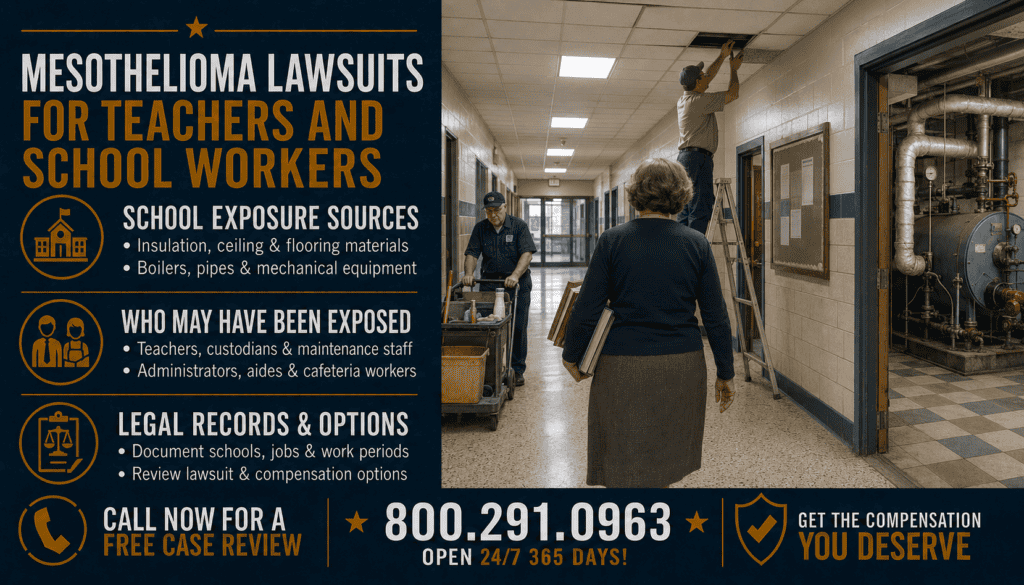
📚 Mesothelioma Lawsuits for Teachers and School Workers
Discover legal remedies for educators exposed to asbestos in aging classrooms and school heating systems.
Across the United States, thousands of school buildings constructed before the 1980s still contain aging asbestos materials. Teachers, custodians, maintenance staff, aides, and administrative personnel often spent decades inside classrooms with deteriorating ceiling tiles, floor tiles, pipe insulation, boiler rooms, and ventilation systems that slowly released asbestos fibers into the air. Because exposure happens gradually and invisibly, many educators never realized they were at risk.
Today, former school employees are being diagnosed with mesothelioma, lung cancer, and other asbestos-related diseases linked to long-term exposure inside aging educational buildings. Fortunately, federal laws and legal precedents provide multiple pathways for teachers and school workers to pursue compensation — even if exposure happened decades ago.
This article explains where asbestos existed in schools, how exposure occurred, how attorneys prove these claims, and which legal options help educators and their families recover financial compensation.
For help now, call 800.291.0963.
🏫 How Teachers and School Staff Were Exposed to Asbestos
From the 1940s through the 1980s, asbestos was used in nearly every component of school buildings.
Common asbestos-containing materials found in schools include:
-
Ceiling tiles
-
Floor tiles (especially 9×9 vinyl tiles)
-
Pipe and boiler insulation
-
HVAC duct insulation
-
Steam lines around classrooms and hallways
-
Wallboard, plaster, and joint compound
-
Fireproofing sprays
-
Soundproof panels in music and drama rooms
-
Chalkboards with asbestos backing
-
Older desks, cabinets, and stage materials
-
Roofing, siding, and exterior insulation
-
Kilns and pottery-room materials
Why exposure was especially common in schools
-
Aging infrastructure – Many U.S. schools are more than 50 years old, meaning asbestos materials have cracked, crumbled, or deteriorated.
-
Poor ventilation – Many classrooms lack proper airflow, allowing fibers to accumulate.
-
Maintenance delays – Repairs, renovations, or daily maintenance often disturbed asbestos without proper containment.
-
High-traffic areas – Students and staff moving through hallways stirred up settled dust.
-
Heating systems – Boilers and steam pipes beneath classrooms often shed fibers as insulation aged.
Because teachers often stayed in the same room daily for years, exposure was long-term and repetitive.
👩🏫 School Employees at Highest Risk of Asbestos Exposure
While all school workers faced some degree of exposure, certain job roles were at significantly higher risk due to their proximity to asbestos-containing materials.
High-risk positions include:
-
Teachers and classroom aides
-
Special education instructors
-
Music, science, and art teachers
-
Librarians and computer-lab staff
-
Custodians and janitorial staff
-
HVAC mechanics and maintenance crews
-
Coaches who taught in older gyms
-
School nurses (often stationed near boiler rooms or mechanical spaces)
-
Administrators assigned to older offices
-
Bus drivers exposed during mechanic work or in aging garages
Custodians and maintenance workers were often exposed the most, due to frequent contact with floor tiles, tiles above drop ceilings, damaged insulation, and boiler rooms.
🧪 How Attorneys Prove Asbestos Exposure in Schools
Schools are rich sources of historical documentation, making it easier for attorneys to reconstruct exposure.
1. Building blueprints and architectural plans
These often list:
-
Asbestos-containing insulation
-
Floor tiles and wallboard
-
HVAC duct coverings
-
Boiler-room materials
2. Maintenance and repair logs
These record:
-
Tile replacements
-
Pipe insulation repairs
-
Boiler servicing
-
Renovation projects (a major source of fiber release)
3. AHERA inspection reports
Since the 1986 Asbestos Hazard Emergency Response Act (AHERA), schools must inspect for asbestos every 3 years and maintain detailed documentation.
These reports show:
-
Exactly which areas contain asbestos
-
Past abatement or removal projects
-
Unrepaired or deteriorating materials
4. Custodial and maintenance testimony
Maintenance workers confirm:
-
What materials were disturbed
-
Where repairs occurred
-
Whether proper protective equipment was ever used
5. Teacher and staff interviews
Co-workers can testify about:
-
Dust falling from ceiling tiles
-
Crumbling insulation in classrooms
-
Renovation work conducted during school hours
6. Medical evidence
Attorneys compile:
-
Pathology reports
-
Imaging scans
-
Biopsies
-
Occupational-history summaries
Everything together helps create a strong, well-documented exposure timeline.
⚖️ Legal Options for Teachers and School Workers
Teachers and school staff typically qualify for several legal pathways depending on where and how exposure occurred.
1. Asbestos Product-Liability Lawsuits
Educators can pursue claims against the companies that manufactured asbestos-containing:
-
Ceiling tiles
-
Insulation
-
Floor tiles
-
HVAC components
-
Boiler parts
-
Wallboard or plaster
-
Fireproofing sprays
Schools purchased products from dozens of manufacturers who later admitted their materials contained asbestos.
2. Asbestos Trust Fund Claims
Many asbestos companies went bankrupt and set up trust funds to compensate victims.
Trust claims:
-
Do not require going to court
-
Provide quicker payouts
-
Allow multiple claims against multiple companies
3. Premises-liability claims (in some states)
Some cases allow claims directly against school districts when:
-
Negligence caused exposure
-
Repairs disturbed asbestos without proper protection
-
Schools violated AHERA inspection rules
4. Workers’ compensation
Custodians, maintenance workers, and some public-school employees may qualify for workers’ comp benefits.
5. Wrongful-death lawsuits
Families can file claims if a teacher or school worker passed away from mesothelioma or lung cancer.
Your attorney will determine which combination of legal options provides the strongest case.
💰 Compensation Available for School-Related Asbestos Exposure
Teachers and school workers diagnosed with mesothelioma are eligible for significant compensation.
Common forms of financial recovery include:
-
Medical expenses
-
Lost income and reduced earning capacity
-
In-home caregiving
-
Transportation for treatment
-
Pain and suffering
-
Loss of consortium
-
Funeral and burial costs
-
Wrongful-death damages
-
Punitive damages (in cases of negligence or failure to warn)
Because multiple asbestos products were used in each school building, many educators qualify for multiple settlements from multiple defendants.
📜 Why Teacher and School Worker Claims Are Especially Strong
Several factors make these cases easier to prove than many other exposure histories:
-
Schools were heavily documented through AHERA, maintenance logs, and facility plans
-
Exposure was long-term and repetitive
-
Most schools used asbestos across many building systems
-
Teachers and custodians often spent decades in the same building
-
Renovations frequently disturbed asbestos without adequate protection
-
Medical records strongly link mesothelioma to asbestos exposure
The result: juries and trust funds frequently acknowledge education-industry cases as highly credible.
🕰️ Statute of Limitations for Educator Claims
Most states require asbestos lawsuits to be filed within:
-
1–3 years after diagnosis, or
-
1–3 years after death for families filing wrongful-death claims
Because school records are easier to locate the sooner the case begins, it’s crucial not to wait.
📌 What Teachers and School Staff Should Do Now
If you worked at a school and have been diagnosed with mesothelioma or another asbestos disease:
Take these steps right away:
-
List every school building where you worked
-
Note the years spent in each classroom or department
-
Request copies of AHERA reports for those buildings
-
Gather pay stubs, contracts, or school IDs
-
Contact co-workers who remember renovation work or damaged materials
-
Collect all medical records related to your diagnosis
-
Speak with an asbestos-focused attorney as soon as possible
The more detailed your work timeline, the stronger your case.
📞 Get Legal Help for School and Educator Asbestos Exposure
Teachers dedicated their lives to helping students — yet many were unknowingly put in harm’s way by aging buildings filled with asbestos. If you or a loved one now faces a diagnosis of mesothelioma, you may be entitled to substantial financial compensation.
Our team specializes in:
-
AHERA-report analysis
-
School-building exposure reconstruction
-
Identifying asbestos-containing materials
-
Filing multi-defendant lawsuits
-
Trust-fund compensation
-
Wrongful-death claims for families
Call 800.291.0963 today to speak with a legal specialist who understands school-based asbestos exposure.