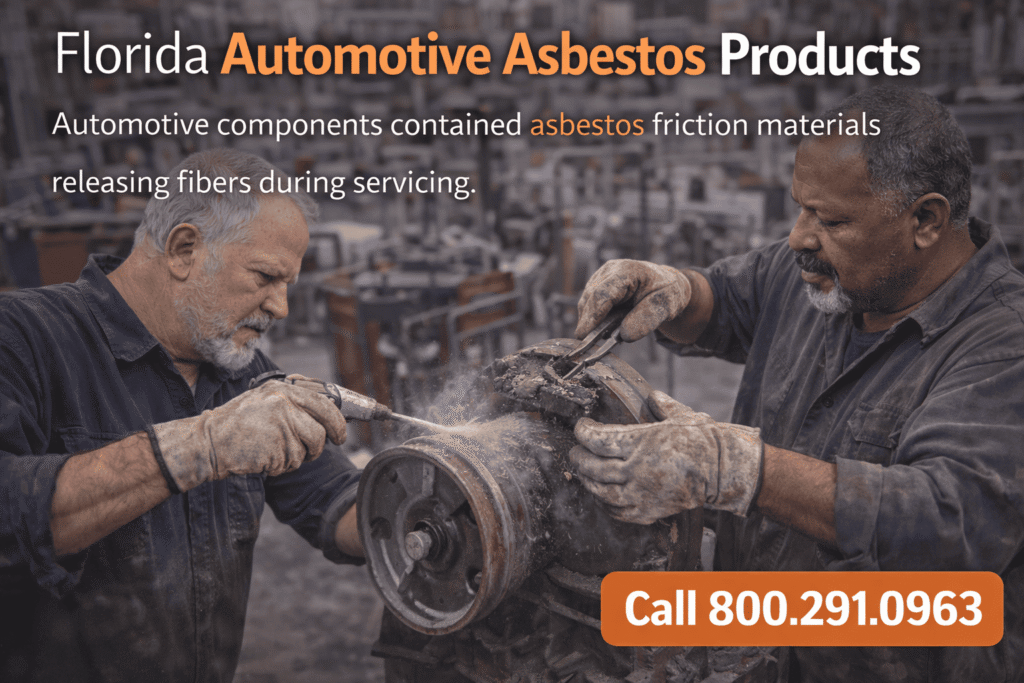
🚗 Florida Automotive Asbestos Products
Florida automotive asbestos products exposure affected mechanics, service technicians, transportation workers, and vehicle owners for decades. Asbestos was widely used in automotive components because it resisted extreme heat, friction, and wear. Brake pads, brake linings, clutches, gaskets, seals, and heat shields commonly contained asbestos fibers designed to improve performance and durability.
Exposure occurred when automotive asbestos products were manufactured, installed, serviced, repaired, ground, or replaced. Routine brake jobs, clutch replacements, and engine repairs released microscopic asbestos fibers into garages, service bays, and repair shops. Many Florida auto mechanics and transportation workers inhaled these fibers daily without protective equipment, later developing mesothelioma and other asbestos-related diseases decades after exposure.
Why Asbestos Was Used in Automotive Products
Automotive systems generate intense heat and friction, especially braking and drivetrain components. Asbestos was considered ideal for controlling these conditions.
Automotive manufacturers relied on asbestos because it:
-
Withstood extreme heat from braking systems
-
Reduced friction and mechanical wear
-
Improved durability and performance
-
Prevented fires and component failure
-
Met automotive safety standards of the time
Florida’s growing population, tourism industry, commercial trucking, public transportation systems, and military vehicle use increased asbestos exposure risks statewide.
Common Asbestos-Containing Automotive Products in Florida
Asbestos exposure occurred across many vehicle components.
Brake Pads and Brake Linings
Brake components released asbestos fibers during grinding, sanding, and replacement.
Clutches and Friction Materials
Clutch discs contained asbestos that became airborne during servicing.
Gaskets and Seals
Engine and exhaust gaskets released fibers when scraped or replaced.
Heat Shields and Insulation
Asbestos heat shields protected components from high temperatures.
Automotive Manufacturing and Parts Handling
Workers handling new and replacement parts were also exposed.
Florida Workers Most Affected by Automotive Asbestos Exposure
Automotive asbestos exposure affected many occupations.
Auto Mechanics and Technicians
Performed frequent brake and clutch repairs releasing asbestos dust.
Fleet and Transportation Workers
Maintained buses, trucks, and service vehicles containing asbestos parts.
Military Vehicle Mechanics
Worked on asbestos-containing vehicles at Florida military installations.
Auto Parts Manufacturing and Distribution Workers
Handled asbestos-containing automotive components.
DIY Vehicle Owners
Home repairs released asbestos fibers into garages and homes.
How Florida Automotive Exposure Occurred
Exposure occurred during routine vehicle maintenance rather than rare accidents.
Common exposure scenarios included:
-
Grinding and sanding brake components
-
Replacing clutches and transmission parts
-
Scraping asbestos gaskets and seals
-
Blowing out brake dust with compressed air
-
Cleaning contaminated tools and workspaces
-
Handling old automotive parts
Asbestos fibers remained airborne for long periods, especially in enclosed garages.
Secondary Asbestos Exposure From Automotive Work
Mechanics and vehicle workers carried asbestos fibers home on clothing, shoes, and tools. Family members inhaled fibers when contaminated clothing was handled or washed.
Secondary exposure caused asbestos-related illnesses in spouses and children who never worked directly with automotive products.
Health Risks Linked to Florida Automotive Asbestos Exposure
Long-term automotive asbestos exposure causes severe illnesses.
Mesothelioma
Mesothelioma is a rare, aggressive cancer almost exclusively caused by asbestos exposure.
Lung Cancer
Automotive asbestos exposure significantly increases lung cancer risk.
Asbestosis
Asbestosis causes permanent lung scarring and progressive breathing difficulties.
Symptoms typically appear 20–50 years after exposure, delaying diagnosis and treatment.
Why Florida Automotive Asbestos Exposure Matters in Legal Claims
Automotive exposure is a common foundation for Florida mesothelioma lawsuits and asbestos trust fund claims. Many auto manufacturers knew asbestos products were dangerous but continued using them.
Even if manufacturers declared bankruptcy, asbestos trust funds may still provide compensation. Work histories, service records, expert testimony, and historical product data help establish exposure decades later.
How a Florida Asbestos Lawyer Helps Automotive Exposure Victims
Asbestos lawyers experienced with automotive exposure understand how asbestos was used across vehicle systems.
A lawyer can help by:
-
Identifying asbestos-containing automotive products
-
Linking exposure to specific manufacturers
-
Determining eligibility for trust fund claims
-
Filing Florida mesothelioma lawsuits
-
Managing deadlines and legal filings
Most asbestos cases are handled on a contingency-fee basis, meaning no upfront legal fees.
Frequently Asked Questions About Florida Automotive Asbestos Products
Can auto mechanics file claims?
Yes. Mechanics face significant exposure risk.
Are DIY vehicle repairs covered?
Yes. Non-occupational exposure may qualify.
What if the vehicle was serviced decades ago?
Past exposure still supports claims.
Do I need product names?
No. Lawyers can identify products through records.
Is there a filing deadline?
Yes. Florida statutes of limitations apply.
📞 Free Case Evaluation – Florida Automotive Asbestos Products
If you were exposed to asbestos automotive products in Florida and later diagnosed with mesothelioma or another asbestos-related disease, legal options may still be available.
✔️ Free, confidential case evaluation
✔️ No upfront legal fees
✔️ National asbestos law firm experience
✔️ Help identifying automotive exposure sources
✔️ Assistance with lawsuits and trust fund claims
📲 Call 800-291-0963 today to discuss your legal options
or complete the secure form below for a case review.