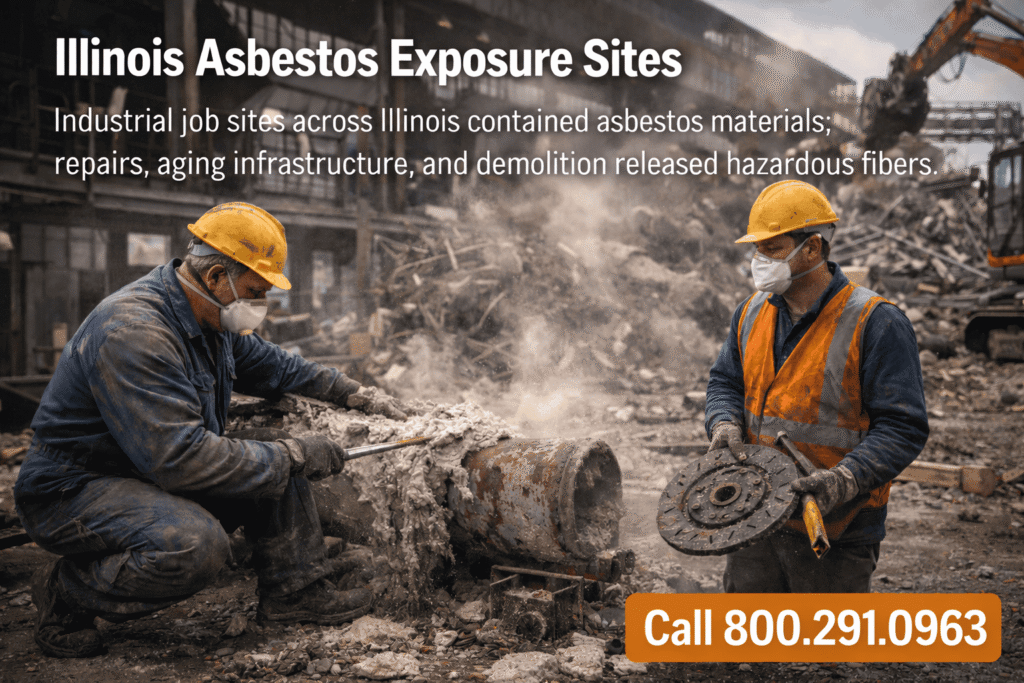
🏭 Illinois Asbestos Exposure Sites
Illinois has a long and complex industrial history that left thousands of workers, contractors, and residents exposed to asbestos across job sites statewide. From factories and power plants to rail yards, shipyards, construction zones, and public buildings, asbestos-containing materials were widely used for insulation, fireproofing, and durability. For decades, exposure occurred silently as materials aged, deteriorated, or were disturbed during routine operations, maintenance, renovations, and demolition projects. Many Illinois workers inhaled asbestos fibers without knowing the danger, leading to life-threatening illnesses years later.
Asbestos exposure sites in Illinois were not limited to one industry or geographic area. Urban centers, river ports, industrial corridors, and rural facilities all relied on asbestos-based products. Today, these exposure sites are closely examined in Illinois mesothelioma lawsuits to identify where and how victims encountered asbestos and which manufacturers or companies may be legally responsible.
Where Asbestos Exposure Occurred at Illinois Job Sites
Asbestos exposure sites throughout Illinois shared common risk factors: aging infrastructure, high-heat industrial operations, mechanical systems, and enclosed work environments. Asbestos was commonly found in pipe insulation, boilers, turbines, electrical panels, floor tiles, roofing materials, cement products, and fireproofing sprays.
When these materials were cut, drilled, sanded, removed, or allowed to deteriorate, microscopic asbestos fibers were released into the air. Workers inhaled these fibers during normal job duties, often without protective equipment or warnings. Over time, repeated exposure dramatically increased the risk of asbestos-related diseases.
Common Illinois asbestos exposure sites included:
-
Industrial manufacturing plants
-
Power generation facilities
-
Railroad yards and repair shops
-
Shipyards and river port facilities
-
Commercial and residential construction sites
-
Schools, courthouses, and government buildings
-
Military installations and infrastructure projects
Many of these sites operated for decades before asbestos hazards were widely recognized or regulated.
High-Risk Illinois Industries and Work Environments
Industrial and Manufacturing Facilities
Illinois factories and industrial plants used asbestos extensively to protect machinery from heat, friction, and chemical exposure. Equipment insulation, gaskets, packing materials, and fireproofing contained asbestos that released fibers during production and maintenance. Workers often spent entire careers in these environments, leading to cumulative exposure.
Power Plants and Utilities
Coal-fired, gas, and municipal power plants across Illinois relied heavily on asbestos insulation in boilers, turbines, generators, steam lines, and electrical systems. Maintenance shutdowns, retrofits, and emergency repairs created especially dangerous conditions where asbestos dust filled enclosed plant areas.
Railroads and Transportation Facilities
Railroad systems in Illinois used asbestos brakes, insulation, locomotives, railcars, and engine components. Rail yards and repair shops exposed workers during brake replacements, engine servicing, and infrastructure maintenance. Poor ventilation increased exposure levels.
Construction and Renovation Sites
Construction workers encountered asbestos in drywall, joint compound, insulation, roofing materials, cement products, flooring, and fireproofing. Renovation and demolition projects released asbestos fibers hidden behind walls, ceilings, and mechanical systems, often decades after original construction.
Shipyards and River Ports
Illinois river ports and shipyard facilities used asbestos for vessel insulation, fireproofing, and mechanical systems. Ship repair, retrofits, and dockside maintenance disturbed asbestos materials in confined spaces, exposing shipbuilders, welders, mechanics, and dock workers.
Public and Government Buildings
Schools, courthouses, offices, hospitals, and municipal buildings constructed throughout the 20th century contained asbestos materials. Aging infrastructure, renovations, and deferred maintenance released fibers, exposing employees, contractors, and building occupants.
How Illinois Workers Were Exposed to Asbestos
Most Illinois workers did not work directly with asbestos products. Instead, exposure occurred indirectly during normal job tasks. Cutting into insulated pipes, opening electrical panels, repairing machinery, or removing old flooring could release invisible fibers into the air.
Asbestos fibers are extremely small and remain airborne for long periods. Once inhaled, they lodge in lung tissue and the lining of internal organs. The body cannot break down asbestos fibers, allowing damage to accumulate silently for decades.
Secondary exposure also occurred when workers carried asbestos fibers home on clothing, shoes, tools, and vehicles, exposing family members.
Health Risks Linked to Illinois Asbestos Exposure Sites
Asbestos exposure is directly linked to several serious and often fatal diseases. Symptoms typically appear 20 to 50 years after exposure, making early detection difficult.
Mesothelioma
Mesothelioma is a rare, aggressive cancer that affects the lining of the lungs, abdomen, or heart. It is almost exclusively caused by asbestos exposure. Many Illinois mesothelioma cases trace back to job sites where asbestos exposure occurred decades earlier.
Lung Cancer
Asbestos exposure significantly increases lung cancer risk, especially when combined with smoking. Illinois workers exposed at industrial and construction sites face elevated risks even years after leaving employment.
Asbestosis
Asbestosis is a chronic lung disease caused by scarring from asbestos fibers. It leads to breathing difficulties, reduced lung function, and increased vulnerability to infections.
Why Illinois Asbestos Exposure Sites Matter in Lawsuits
Identifying specific asbestos exposure sites is critical in Illinois mesothelioma lawsuits. These sites help attorneys determine:
-
Where exposure occurred
-
Which asbestos products were used
-
Which manufacturers supplied those products
-
Which companies failed to protect workers
Even if a company no longer exists, asbestos trust funds may still provide compensation. Many bankrupt manufacturers established trust funds specifically to pay victims harmed by their products.
How an Illinois Asbestos Lawyer Can Help
An experienced Illinois asbestos lawyer plays a crucial role in helping victims and families seek compensation. Legal teams specialize in reconstructing work histories, identifying exposure sites, and connecting diagnoses to asbestos-containing products.
A lawyer can help by:
-
Investigating Illinois job sites and exposure locations
-
Identifying asbestos manufacturers and suppliers
-
Filing Illinois mesothelioma lawsuits or trust fund claims
-
Handling all legal deadlines and paperwork
-
Negotiating settlements or taking cases to trial
-
Seeking compensation for medical costs, lost income, pain, and suffering
Most asbestos cases are handled on a contingency-fee basis, meaning there are no upfront legal fees and clients pay only if compensation is recovered.
Frequently Asked Questions About Illinois Asbestos Exposure Sites
What were the most common asbestos exposure sites in Illinois?
Factories, power plants, rail yards, construction sites, shipyards, and public buildings were common exposure locations statewide.
Can I file a claim if exposure happened decades ago?
Yes. Asbestos diseases have long latency periods, and Illinois law allows claims after diagnosis.
What if I worked at multiple job sites?
Multiple exposure sites can strengthen a claim and may increase available compensation.
Can family members file claims?
Yes. Families may pursue wrongful death claims or compensation for secondary exposure.
Do asbestos lawyers charge upfront fees?
No. Most asbestos lawyers offer free consultations and work on contingency.
📞 Free Case Evaluation – Illinois Asbestos Exposure Sites
If you or a loved one worked at an Illinois job site where asbestos exposure occurred and were later diagnosed with mesothelioma or another asbestos-related disease, you may have legal options right now.
✔️ Free, confidential case evaluation
✔️ No upfront legal fees
✔️ National asbestos law firms with Illinois experience
✔️ Help identifying exposure sites and responsible companies
✔️ Assistance pursuing lawsuits and asbestos trust fund claims
📲 Call 800-291-0963 today to speak with an experienced asbestos legal professional
or complete the secure form below to have your case reviewed.