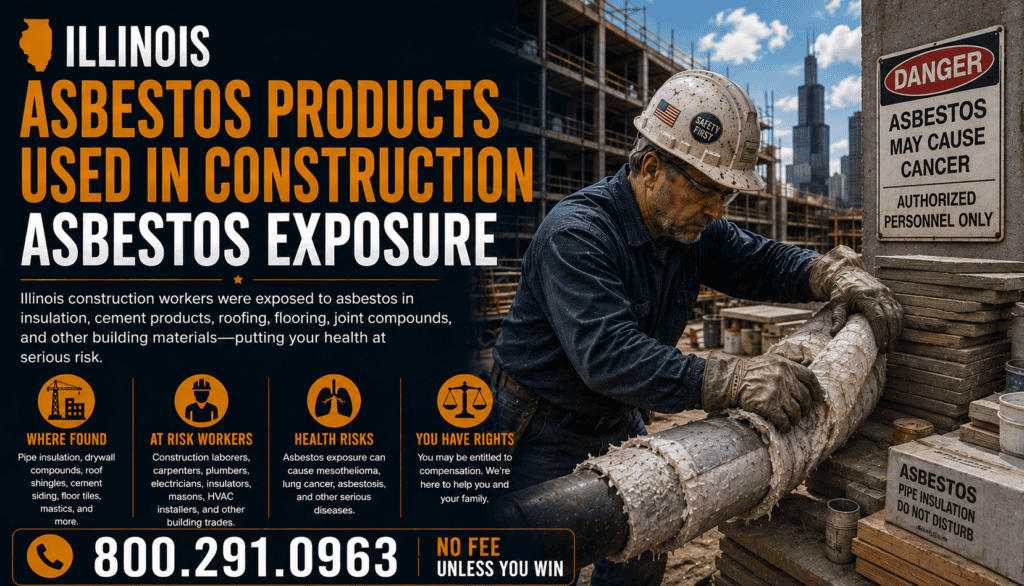
🏗️ Illinois Asbestos Products Used in Construction
For much of the twentieth century, asbestos was one of the most widely used construction materials in Illinois. Builders, contractors, architects, engineers, and manufacturers selected asbestos-containing products because they resisted heat, fire, moisture, chemicals, and wear while providing excellent insulation and long service life.
Before asbestos regulations were introduced, thousands of homes, schools, hospitals, office buildings, factories, power plants, military facilities, apartment complexes, and public buildings throughout Illinois were constructed using asbestos-containing materials. Carpenters, electricians, plumbers, pipefitters, drywall installers, roofers, insulation workers, laborers, demolition crews, HVAC technicians, and countless other construction professionals were routinely exposed while installing, cutting, drilling, sanding, repairing, renovating, or removing these products.
Many Illinois workers were exposed every day without realizing that microscopic asbestos fibers released from construction materials could remain airborne for hours. Decades later, many of these workers developed mesothelioma, asbestos lung cancer, and other asbestos-related diseases.
If you worked in construction anywhere in Illinois, you may also find our Illinois Asbestos Exposure Sites page helpful for identifying buildings, industrial facilities, and job sites where asbestos exposure commonly occurred.
🏢 Asbestos Construction Products Used Throughout Illinois
For nearly 100 years, asbestos-containing construction materials were used in almost every type of building project across Illinois.
These products were commonly installed in:
- Homes
- Apartment buildings
- Office buildings
- Schools
- Universities
- Hospitals
- Churches
- Government buildings
- Courthouses
- Manufacturing plants
- Steel mills
- Power plants
- Oil refineries
- Chemical plants
- Warehouses
- Military facilities
- Railroad buildings
- Hotels
- Shopping centers
- High-rise buildings
Whether constructing a new building or renovating an older structure, workers frequently handled materials containing asbestos.
🔥 Why Asbestos Was Used in Construction Products
Construction products had to withstand heat, fire, moisture, weather, and heavy daily use. Manufacturers relied on asbestos because it improved product performance while reducing maintenance and replacement costs.
Asbestos became one of the most common ingredients used in commercial and residential construction because it offered:
- Excellent fire resistance
- Heat insulation
- Thermal protection
- Electrical insulation
- Moisture resistance
- Chemical resistance
- High tensile strength
- Long service life
- Durability
- Low manufacturing cost
These characteristics led manufacturers to incorporate asbestos into thousands of construction materials used throughout Illinois.
🧱 Building Insulation Products
One of the largest sources of asbestos exposure involved insulation products installed throughout buildings.
Common asbestos-containing insulation products included:
- Pipe insulation
- Boiler insulation
- Block insulation
- Blanket insulation
- Loose-fill insulation
- Spray-applied insulation
- Cement insulation
- Mechanical insulation
- Tank insulation
- Duct insulation
- Elbow insulation
- Valve insulation
- Turbine insulation
- Generator insulation
- Refractory insulation
- Thermal blankets
- High-temperature insulation
- Steam pipe covering
- Pipe lagging
- Fireproof insulation
Workers frequently disturbed these products during repairs, remodeling projects, and equipment replacement.
🏠 Residential Construction Materials
Millions of Illinois homes built before the 1980s contained asbestos products.
Common residential materials included:
- Vinyl floor tile
- Asphalt floor tile
- Floor adhesives
- Vinyl sheet flooring
- Ceiling tiles
- Popcorn ceilings
- Joint compound
- Drywall compound
- Roofing shingles
- Roofing felt
- Cement siding
- Exterior siding panels
- Window caulking
- Wall insulation
- Furnace insulation
- Pipe insulation
- Door insulation
- Fireplace materials
- Wallboard
- Textured ceiling coatings
Home remodeling projects frequently disturbed these materials, exposing homeowners and contractors alike.
🏢 Commercial Construction Products
Commercial buildings often contained significantly more asbestos than residential structures because of stricter fire protection requirements.
Common commercial asbestos products included:
- Fireproof wall systems
- Suspended ceiling tiles
- Acoustic ceiling panels
- Spray fireproofing
- Structural fireproofing
- Elevator insulation
- Mechanical room insulation
- HVAC duct insulation
- Utility tunnel insulation
- Electrical insulation
- Pipe covering
- Boiler insulation
- Cement panels
- Fire doors
- Fire-resistant wallboard
- Expansion joints
- Structural coatings
- Soundproofing materials
- Fire blankets
- Mechanical gaskets
Large office buildings, hospitals, schools, and government facilities often contained hundreds of asbestos-containing products.
🏭 Industrial Construction Materials
Factories, power plants, refineries, and heavy industrial facilities used even larger quantities of asbestos-containing construction products.
Industrial construction commonly included:
- Steam pipe insulation
- High-pressure pipe covering
- Refractory brick
- Boiler block insulation
- Thermal cement
- Fireproof panels
- Heat-resistant gaskets
- Expansion joints
- Industrial flooring
- Cement products
- Pipe wrapping
- Mechanical insulation
- Valve insulation
- Pump insulation
- Furnace insulation
- Kiln insulation
- Industrial roofing
- Chemical-resistant insulation
- Tank insulation
- Turbine insulation
Workers constructing industrial facilities often experienced prolonged occupational asbestos exposure.
🏠 Roofing Products
Roofing materials represented another significant source of asbestos exposure throughout Illinois.
Common asbestos-containing roofing products included:
- Roofing shingles
- Roofing felt
- Built-up roofing
- Roof coatings
- Roof cement
- Flashing cement
- Roofing mastics
- Roof sealants
- Asphalt roofing products
- Roofing membranes
- Roof insulation boards
- Fiber cement roofing
- Ridge caps
- Roof patch materials
- Waterproofing compounds
Roofers frequently cut, nailed, removed, and replaced these materials during installation and repair projects.
🧱 Flooring Products
Millions of square feet of asbestos-containing flooring were installed throughout Illinois.
Common flooring products included:
- Vinyl asbestos tile
- Asphalt tile
- Sheet flooring
- Floor adhesives
- Floor mastics
- Flooring underlayment
- Cement backer board
- Transition materials
- Cove base adhesives
- Stair treads
- Industrial flooring
- Rubber flooring
- Decorative floor tiles
- Floor leveling compounds
- Waterproof flooring compounds
Removing old flooring often required scraping adhesives and breaking floor tiles, releasing asbestos fibers into the air.
👷 Construction Occupations with High Asbestos Exposure
Virtually every construction trade encountered asbestos-containing products.
Higher-risk occupations included:
- Carpenters
- Construction laborers
- Electricians
- Plumbers
- Pipefitters
- Steamfitters
- Boilermakers
- Roofers
- Drywall installers
- Insulation workers
- HVAC technicians
- Sheet metal workers
- Cement finishers
- Bricklayers
- Masons
- Painters
- Demolition workers
- Building engineers
- General contractors
- Construction supervisors
Many workers encountered asbestos products daily for decades while building, repairing, remodeling, or demolishing structures throughout Illinois.
👨👩👧 Secondary (Take-Home) Asbestos Exposure
Construction workers frequently carried asbestos fibers home on:
- Work clothing
- Coveralls
- Boots
- Gloves
- Hard hats
- Tool belts
- Tool bags
- Hand tools
- Personal vehicles
- Lunch boxes
Family members could unknowingly inhale asbestos fibers while:
- Washing dusty work clothes
- Shaking contaminated clothing
- Cleaning boots
- Handling work gloves
- Vacuuming vehicles
- Cleaning tool bags
- Greeting workers after shifts
Some spouses and children later developed mesothelioma despite never working in the construction industry.
Families researching legal options should also review our Illinois Mesothelioma Lawsuits page.
🧱 Common Asbestos-Containing Construction Products Used Throughout Illinois
For decades, Illinois construction workers installed, repaired, renovated, and removed thousands of asbestos-containing building materials. Asbestos was incorporated into nearly every phase of construction because it improved fire resistance, increased durability, reduced heat transfer, and extended the life of building products.
Whether workers were constructing new buildings or renovating older structures, disturbing these materials often released microscopic asbestos fibers into the air. Carpenters, electricians, plumbers, pipefitters, roofers, drywall installers, insulation workers, demolition crews, and maintenance personnel frequently worked around these products every day.
Common asbestos-containing construction materials included:
- Pipe insulation
- Boiler insulation
- Block insulation
- Spray-applied fireproofing
- Joint compound
- Drywall finishing compound
- Ceiling tiles
- Vinyl floor tile
- Sheet flooring
- Floor mastics
- Roofing shingles
- Roofing felt
- Cement siding
- Cement pipe
- Transite panels
- Fireproof wallboard
- Caulks
- Sealants
- Adhesives
- Expansion joints
Many of these products remained in Illinois buildings for decades before renovations, remodeling projects, or demolition disturbed them.
Workers who regularly installed or removed construction materials should also review our Illinois Construction Workers Mesothelioma page.
🌡️ Pipe Insulation and Mechanical Insulation
Pipe insulation represented one of the largest sources of occupational asbestos exposure throughout Illinois construction projects.
Common asbestos-containing insulation products included:
- Steam pipe insulation
- Hot water pipe insulation
- Pipe lagging
- Pipe covering
- Elbow insulation
- Valve insulation
- Flange insulation
- Boiler insulation
- Mechanical insulation
- Thermal blankets
Pipefitters, plumbers, steamfitters, and insulation workers frequently cut, removed, replaced, or repaired deteriorated insulation during construction and renovation projects.
🔥 Spray-Applied Fireproofing
From the 1940s through the early 1970s, spray-applied asbestos fireproofing was commonly installed on structural steel in commercial buildings.
Common applications included:
- Structural steel beams
- Roof decking
- Ceiling assemblies
- Mechanical rooms
- Utility tunnels
- Elevator shafts
- Parking garages
- High-rise buildings
- Schools
- Hospitals
Demolition crews and renovation contractors often encountered deteriorated spray fireproofing decades after installation.
🏠 Drywall, Joint Compound, and Wall Finishing Products
Many drywall finishing products manufactured before asbestos restrictions contained asbestos fibers.
Common products included:
- Joint compound
- Drywall mud
- Taping compound
- Texture compound
- Patch compound
- Wall repair products
- Plaster repair materials
- Finishing compound
- Skim coat materials
- Decorative wall textures
Drywall installers frequently generated asbestos dust while:
- Sanding joints
- Mixing dry compounds
- Repairing damaged walls
- Removing old drywall
- Renovating older buildings
🏢 Ceiling Tiles and Acoustic Materials
Acoustical ceiling systems were installed in countless Illinois commercial buildings, schools, hospitals, and offices.
Common asbestos-containing products included:
- Suspended ceiling tiles
- Acoustic ceiling panels
- Soundproof ceiling boards
- Lay-in ceiling tiles
- Ceiling adhesives
- Ceiling mastics
- Decorative ceiling panels
- Fire-rated ceiling systems
- Mechanical room ceiling panels
- Utility room ceiling tiles
Workers often disturbed these products during remodeling, electrical work, plumbing projects, and HVAC upgrades.
🧱 Floor Tile, Sheet Flooring, and Mastics
Millions of square feet of asbestos-containing flooring were installed throughout Illinois buildings.
Common flooring products included:
- Vinyl asbestos tile
- Asphalt floor tile
- Vinyl sheet flooring
- Floor adhesives
- Black mastic
- Flooring cement
- Cove base adhesive
- Stair treads
- Rubber flooring
- Underlayment materials
Removing old flooring frequently required scraping hardened mastics, breaking floor tiles, or grinding concrete surfaces, releasing asbestos fibers.
Workers who routinely removed flooring materials should also review our Illinois Flooring Workers Asbestos Exposure page.
🏠 Roofing Products
Roofing products commonly contained asbestos because of their ability to withstand extreme weather and heat.
Common roofing materials included:
- Asphalt shingles
- Roofing felt
- Built-up roofing
- Roof cement
- Roof coatings
- Flashing cement
- Roofing mastics
- Waterproof membranes
- Roof insulation board
- Fiber cement roofing
Roofers frequently encountered asbestos while:
- Cutting shingles
- Tearing off roofs
- Replacing flashing
- Installing roof insulation
- Removing old roofing materials
🧱 Cement Products and Transite Materials
Cement products reinforced with asbestos were widely used throughout Illinois construction projects.
Common products included:
- Cement siding
- Cement pipe
- Cement roofing panels
- Transite wall panels
- Transite pipe
- Cement boards
- Exterior panels
- Soffit panels
- Fascia boards
- Cement ducts
Carpenters, laborers, and demolition workers often cut, drilled, or broke these products, creating significant airborne asbestos dust.
🚪 Fire Doors, Fireproof Building Products, and Expansion Joints
Commercial buildings frequently incorporated asbestos-containing fire protection materials.
Common products included:
- Fire doors
- Fire-rated wallboard
- Fireproof panels
- Fire-resistant partitions
- Expansion joints
- Fire barriers
- Fire blankets
- Fireproof insulation
- Structural fireproofing
- Heat-resistant panels
Building renovations often disturbed these products years after they were installed.
🧴 Adhesives, Caulks, and Sealants
Many construction adhesives and sealants manufactured before the 1980s contained asbestos fibers.
Common products included:
- Floor mastics
- Roofing adhesives
- Construction adhesives
- Window caulking
- Expansion joint sealants
- Waterproofing compounds
- Pipe sealants
- Firestop materials
- Tile mastics
- Wall adhesives
Removing hardened adhesives during remodeling often required scraping, grinding, or sanding, which released asbestos fibers.
⚡ Electrical and HVAC Construction Materials
Electrical and HVAC systems also incorporated asbestos-containing materials.
Common products included:
- Electrical panel insulation
- Wire insulation
- Electrical arc shields
- HVAC duct insulation
- Air handling insulation
- Furnace insulation
- Duct wrapping
- Mechanical room insulation
- Equipment insulation
- Thermal barriers
Electricians and HVAC technicians routinely encountered these products while installing or modernizing building systems.
🚧 Building Renovation and Demolition Exposure
Renovation and demolition projects frequently created the highest levels of occupational asbestos exposure because older building materials were disturbed or removed.
Common demolition activities included:
- Interior demolition
- Wall removal
- Ceiling demolition
- Floor removal
- Roof tear-offs
- Mechanical equipment removal
- Pipe replacement
- Boiler replacement
- HVAC modernization
- Structural renovations
Many workers were unknowingly exposed while removing materials installed decades earlier.
📋 Documenting Construction Product Exposure
Many former construction workers cannot remember every asbestos-containing product they encountered during their careers. Fortunately, successful asbestos claims often rely on employment records, construction project histories, union records, building specifications, coworker testimony, and historical evidence documenting asbestos use in construction materials.
Helpful documentation may include:
- Employer records
- Employment dates
- Job titles
- Construction project names
- Building addresses
- Contractor records
- Union membership records
- Blueprints or project specifications
- Coworker statements
- Medical records
- Social Security employment history
Workers should focus on identifying the buildings where they worked, the type of construction projects they performed, and the materials they regularly installed, repaired, or removed rather than attempting to remember every manufacturer or individual product.
🩺 Asbestos-Related Diseases Linked to Illinois Construction Products Exposure
For decades, Illinois construction workers were routinely exposed to asbestos fibers while installing, repairing, remodeling, and removing asbestos-containing building materials. Pipe insulation, boiler insulation, joint compound, ceiling tiles, floor tile, roofing products, cement siding, spray-applied fireproofing, adhesives, and hundreds of other construction materials released microscopic asbestos fibers whenever they were cut, drilled, sanded, scraped, broken, or demolished.
Because asbestos-related diseases often develop slowly, many Illinois construction workers were not diagnosed until 20 to 50 years after their occupational exposure.
The most common asbestos-related diseases include:
- Mesothelioma
- Asbestos lung cancer
- Asbestosis
- Pleural plaques
- Pleural thickening
- Other asbestos-related respiratory diseases
Even workers who never directly installed asbestos products could inhale airborne fibers released by nearby demolition crews, insulation workers, drywall installers, pipefitters, roofers, electricians, plumbers, or laborers.
Anyone who worked around older construction materials should inform their healthcare provider about their occupational asbestos exposure if they develop persistent respiratory symptoms.
For additional medical information, visit our Mesothelioma Symptoms and Mesothelioma Diagnosis pages.
🎗️ Mesothelioma
Mesothelioma is a rare and aggressive cancer caused almost exclusively by asbestos exposure. The disease develops after microscopic asbestos fibers become trapped within the lining surrounding the lungs, abdomen, heart, or testes. Over many years, these fibers may trigger chronic inflammation that eventually develops into cancer.
Former Illinois workers diagnosed with mesothelioma often worked around asbestos-containing construction products as:
- Construction laborers
- Carpenters
- Electricians
- Plumbers
- Pipefitters
- Steamfitters
- Boilermakers
- Roofers
- Drywall installers
- Insulation workers
- HVAC technicians
- Sheet metal workers
- Cement finishers
- Bricklayers
- Masons
- Painters
- Demolition workers
- Building engineers
- General contractors
- Construction supervisors
Common symptoms include:
- Shortness of breath
- Persistent cough
- Chest pain
- Fatigue
- Unexplained weight loss
- Fluid around the lungs
Because these symptoms often resemble more common respiratory illnesses, mesothelioma is frequently diagnosed only after the disease has progressed.
🫁 Asbestos Lung Cancer
Long-term occupational asbestos exposure significantly increases the risk of developing lung cancer. Construction workers who spent years installing, repairing, renovating, or demolishing asbestos-containing building materials may have inhaled asbestos fibers throughout their careers.
Common symptoms include:
- Persistent cough
- Chest pain
- Wheezing
- Coughing up blood
- Shortness of breath
- Hoarseness
- Fatigue
- Unexplained weight loss
Workers who both smoked cigarettes and experienced occupational asbestos exposure generally face a substantially greater risk of developing lung cancer than workers exposed to either risk factor alone.
🌬️ Asbestosis
Asbestosis is a chronic lung disease caused by inhaling asbestos fibers over many years. Once trapped inside the lungs, these fibers create permanent scar tissue that gradually reduces lung function.
Common symptoms include:
- Progressive shortness of breath
- Dry cough
- Chest tightness
- Fatigue
- Reduced exercise tolerance
Although there is no cure for asbestosis, early diagnosis and ongoing medical treatment may help manage symptoms and improve quality of life.
👷 Construction Occupations with Increased Asbestos Product Exposure
Although nearly every construction trade encountered asbestos-containing materials, certain occupations experienced particularly heavy exposure because they routinely installed, repaired, removed, or disturbed these products.
Higher-risk occupations included:
- Construction laborers
- Carpenters
- Electricians
- Plumbers
- Pipefitters
- Steamfitters
- Boilermakers
- Roofers
- Drywall installers
- Insulation workers
- HVAC technicians
- Sheet metal workers
- Cement finishers
- Bricklayers
- Masons
- Painters
- Demolition workers
- Building engineers
- General contractors
- Construction supervisors
Employees working on residential homes, commercial buildings, industrial facilities, schools, hospitals, military installations, power plants, factories, and renovation projects often experienced repeated occupational asbestos exposure throughout their careers.
📋 Proving Exposure to Asbestos Construction Products
Many former construction workers cannot remember every asbestos-containing product they handled decades ago. Fortunately, successful asbestos claims often rely on employment records, contractor records, construction project histories, union records, blueprints, building specifications, coworker testimony, and historical evidence documenting the widespread use of asbestos-containing construction materials.
Helpful documentation may include:
- Employer records
- Employment dates
- Job titles
- Construction project names
- Building addresses
- Contractor records
- Union membership records
- Blueprints or project specifications
- Building renovation records
- Coworker statements
- Medical records
- Social Security employment history
Workers should focus on identifying the buildings where they worked, the construction projects they completed, and the types of building materials they regularly installed, repaired, or removed rather than attempting to remember every manufacturer or individual asbestos product.
Workers who routinely renovated or demolished older buildings should also review our Illinois Construction Workers Mesothelioma page because many construction trades experienced similar occupational asbestos exposure.
⚖️ Illinois Construction Product Mesothelioma Lawsuits
Former Illinois construction workers diagnosed with mesothelioma or another asbestos-related disease after working around asbestos-containing construction products may have legal options depending on where they worked, the building materials they handled, and their medical diagnosis.
Compensation may be available through:
- Mesothelioma lawsuits
- Asbestos bankruptcy trust fund claims
- Wrongful death lawsuits
- Other available legal remedies
Experienced asbestos attorneys can investigate employment histories, identify asbestos-containing construction products used throughout a worker’s career, and determine all available sources of compensation.
Learn more by visiting our Illinois Mesothelioma Lawsuits page.
💰 Asbestos Trust Fund Claims
Many manufacturers that produced asbestos-containing insulation, floor tile, roofing materials, joint compounds, drywall products, cement products, ceiling tiles, fireproofing materials, adhesives, caulks, sealants, pipe insulation, boiler insulation, and thousands of other construction products later established asbestos bankruptcy trust funds after filing for bankruptcy protection.
Depending on a worker’s employment history, compensation may be available through one or more asbestos trust funds.
Evidence commonly includes:
- Employment records
- Medical records
- Pathology reports
- Construction project records
- Contractor records
- Union records
- Building specifications
- Witness statements
An experienced asbestos attorney can determine which asbestos trust funds may apply based on an individual’s documented occupational asbestos exposure.
Learn more by visiting our Asbestos Trust Fund Claims page.
👨👩👧 Wrongful Death Claims
Families who lose a loved one to mesothelioma or another asbestos-related disease may be eligible to pursue a wrongful death claim.
Compensation may help cover:
- Medical expenses
- Funeral and burial costs
- Loss of financial support
- Loss of companionship
- Other damages permitted by law
Eligibility depends on the family’s circumstances, employment history, and applicable legal requirements.
Learn more by visiting our Wrongful Death Mesothelioma Lawsuit page.
❓ Frequently Asked Questions
Why were so many construction products made with asbestos?
Manufacturers used asbestos because it provided excellent fire resistance, heat insulation, durability, moisture resistance, and strength. These qualities made it an inexpensive and effective ingredient in thousands of residential, commercial, and industrial construction materials.
Which construction workers had the highest asbestos exposure?
Construction laborers, carpenters, electricians, plumbers, pipefitters, steamfitters, roofers, drywall installers, insulation workers, demolition workers, HVAC technicians, and sheet metal workers generally experienced the greatest occupational exposure.
Can workers develop mesothelioma without installing insulation?
Yes. Many workers developed mesothelioma after cutting, drilling, sanding, scraping, repairing, or demolishing asbestos-containing building materials, even if they never worked directly with insulation.
Can family members be exposed to asbestos from construction workers?
Yes. Spouses and children have developed mesothelioma after repeated exposure to asbestos fibers carried home on contaminated work clothing, boots, gloves, tool belts, tool bags, and personal vehicles.
Can retired construction workers still qualify for compensation?
Many workers diagnosed years after retirement may still have legal options. Eligibility depends on an individual’s diagnosis, work history, and applicable statutes of limitation.
📚 Additional Illinois Resources
You may also find these Illinois asbestos resources helpful:
- Illinois Construction Workers Mesothelioma
- Illinois Asbestos Exposure Sites
- Illinois Boiler Equipment Asbestos Exposure
- Illinois Equipment & Machinery Asbestos Exposure
- Mesothelioma Symptoms
- Mesothelioma Diagnosis
📞 Free Case Evaluation
If you or a loved one worked around asbestos-containing construction products in Illinois and has been diagnosed with mesothelioma, asbestos lung cancer, or another asbestos-related disease, you may qualify for financial compensation.
Our experienced asbestos legal team can review your:
- Employment history
- Construction work locations
- Medical diagnosis
- Potential asbestos exposure sources
- Available asbestos trust fund claims
- Legal options
📞 Call 800-291-0963
Why Families Contact Mesothelioma Help
- Free case evaluation
- Nationwide legal representation
- No upfront costs or attorney fees
- No fees unless compensation is recovered
- Help identifying asbestos exposure sources
- Assistance pursuing lawsuits and asbestos trust fund claims
Helping asbestos victims and their families seek justice since 1999.