Guide to Asbestos Trust Fund Claims - (800) 291-0963

Missouri Power Generation Equipment Asbestos Exposure

Missouri Power Generation Equipment Asbestos Exposure Mesothelioma

Missouri Power Generation Equipment Mesothelioma

Missouri Power Generation Equipment and Asbestos Exposure

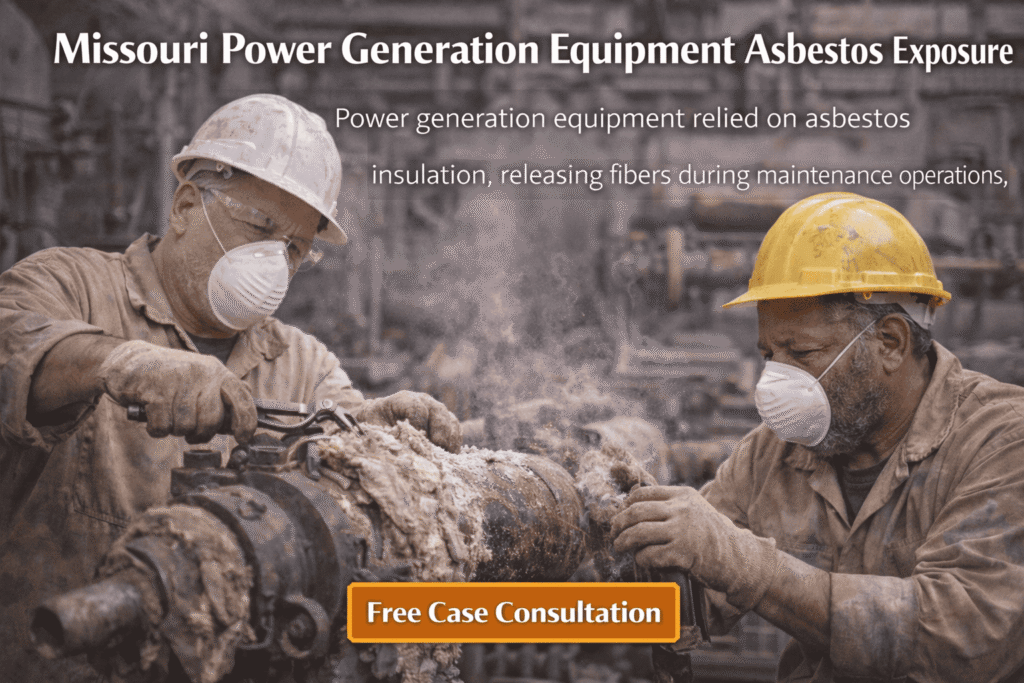
For much of the twentieth century, Missouri power plants, utility companies, industrial facilities, and municipal power stations relied on large power generation equipment to produce electricity and steam. Thousands of workers installed, operated, repaired, maintained, rebuilt, and replaced generators, turbines, transformers, switchgear, condensers, and other electrical equipment that contained asbestos insulation and heat-resistant components. While these systems powered homes and businesses across Missouri, many workers were unknowingly exposed to hazardous asbestos fibers throughout their careers.

Before the health risks of asbestos became widely known, equipment manufacturers used asbestos because it provided exceptional heat resistance, fire protection, electrical insulation, and durability. Generators, turbines, transformers, electrical panels, switchgear, heat exchangers, gaskets, packing materials, insulation, and steam system components frequently contained asbestos. As these materials aged or were disturbed during maintenance and repairs, microscopic asbestos fibers could become airborne and be inhaled by nearby workers.

Unlike many workplace injuries, asbestos-related diseases often take 20 to 50 years to develop after exposure. Today, many retired Missouri power generation equipment workers are being diagnosed with mesothelioma, asbestos lung cancer, asbestosis, and other serious illnesses linked to years of occupational asbestos exposure.

If you or a loved one worked around power generation equipment in Missouri and later developed an asbestos-related disease, you may have legal options available. Learn more by visiting our Missouri Asbestos Exposure Lawsuits resource center.


⚡ Why Asbestos Was Used in Power Generation Equipment

For decades, power generation equipment operated under extreme temperatures, high pressure, heavy electrical loads, and continuous operation. Manufacturers required materials capable of protecting equipment while improving efficiency and reducing fire hazards. Asbestos became one of the industry’s preferred materials because it was durable, inexpensive, and highly resistant to heat and electricity.

Power generation equipment manufacturers commonly used asbestos because it provided:

  • Excellent heat resistance
  • Superior fire protection
  • Thermal insulation
  • Electrical insulation
  • Resistance to high temperatures
  • Chemical resistance
  • Long service life
  • Lower maintenance costs

Because of these qualities, asbestos was incorporated into thousands of power generation components used throughout Missouri. Generator insulation, turbine insulation, transformer components, switchgear, electrical panels, gaskets, packing materials, heat exchangers, steam piping, expansion joints, heat shields, and fireproofing materials commonly contained asbestos for many decades.

As these materials deteriorated, cracked, or were removed during maintenance, asbestos fibers could become airborne and expose workers throughout the facility.


🏭 Missouri Facilities Where Power Generation Equipment Asbestos Exposure Occurred

Power generation equipment was installed in countless facilities across Missouri where electricity or steam was produced. Workers responsible for operating, maintaining, repairing, or rebuilding this equipment frequently encountered asbestos-containing materials throughout their careers.

Power generation equipment was commonly found in:

  • Coal-fired power plants
  • Natural gas power plants
  • Nuclear power plants
  • Municipal utility plants
  • Industrial powerhouses
  • Manufacturing facilities
  • Chemical plants
  • Oil refineries
  • Paper mills
  • Universities
  • Military installations
  • Utility substations

Employees routinely repaired generators, serviced turbines, rebuilt transformers, maintained switchgear, replaced insulation, and repaired steam systems that frequently contained asbestos products.

To learn more about industrial facilities where exposure occurred, visit our Missouri Industrial Asbestos Exposure page.


🔧 Common Sources of Asbestos Exposure for Power Generation Equipment Workers

Power generation equipment workers frequently encountered asbestos while installing, servicing, rebuilding, or replacing electrical and mechanical equipment. Workers did not have to manufacture asbestos products themselves to be exposed. Routine maintenance often disturbed aging insulation, gaskets, packing materials, and heat-resistant components, releasing asbestos fibers into the air.

Common sources of occupational exposure included:

  • Generators
  • Turbines
  • Transformers
  • Switchgear
  • Electrical panels
  • Heat exchangers
  • Steam piping
  • Pipe insulation
  • Gaskets
  • Packing materials
  • Heat shields
  • Fireproofing materials
  • Expansion joints
  • Condensers
  • Circuit breakers
  • Mechanical seals
  • Electrical insulation
  • Cooling equipment

Repeated exposure during years of equipment maintenance and repair significantly increased the risk of developing asbestos-related diseases later in life.


⚙️ High-Risk Power Generation Equipment Work Areas

Although asbestos-containing materials could be found throughout power generation facilities, certain work areas historically presented a greater opportunity for occupational exposure because they required frequent equipment maintenance, repairs, and system overhauls.

Higher-risk work areas included:

  • Turbine rooms
  • Generator rooms
  • Electrical control rooms
  • Switchgear rooms
  • Mechanical rooms
  • Boiler rooms
  • Equipment rooms
  • Powerhouses
  • Utility tunnels
  • Maintenance shops
  • Transformer areas
  • Steam system maintenance departments

Workers assigned to these areas routinely disturbed aging asbestos-containing materials while inspecting, repairing, rebuilding, or replacing power generation equipment.

👷 Missouri Power Generation Equipment Occupations With the Highest Asbestos Exposure

Missouri power plants, utility companies, industrial facilities, and municipal generating stations relied on thousands of skilled workers to install, operate, maintain, repair, rebuild, and replace power generation equipment. Many of these employees worked daily around asbestos-containing insulation, generators, turbines, transformers, switchgear, steam systems, and electrical equipment without knowing the long-term health risks.

Power generation equipment occupations that historically experienced higher asbestos exposure included:

  • Power Plant Operators
  • Stationary Engineers
  • Turbine Mechanics
  • Generator Mechanics
  • Electricians
  • Industrial Electricians
  • Electrical Maintenance Technicians
  • Instrumentation Technicians
  • Boiler Operators
  • Boiler Mechanics
  • Pipefitters
  • Steamfitters
  • Millwrights
  • Maintenance Mechanics
  • HVAC Technicians
  • Mechanical Contractors
  • Utility Maintenance Workers
  • Welders
  • Laborers
  • Plant Engineers

Many power generation equipment workers spent decades maintaining electrical and mechanical systems before learning that the materials surrounding them frequently contained asbestos.


🔨 Equipment Maintenance and Repair Created Frequent Asbestos Exposure

Routine maintenance was one of the most common ways Missouri power generation equipment workers encountered asbestos. Generators, turbines, transformers, steam systems, and electrical equipment required regular inspections, rebuilding, insulation replacement, and repairs to remain reliable and efficient.

Common maintenance activities included:

  • Generator overhauls
  • Turbine rebuilding
  • Transformer repairs
  • Switchgear maintenance
  • Gasket replacement
  • Packing replacement
  • Valve repairs
  • Pump repairs
  • Steam pipe repairs
  • Heat exchanger maintenance
  • Electrical equipment servicing
  • Preventive maintenance

Removing deteriorated insulation, scraping gasket material, replacing packing, or rebuilding equipment frequently released asbestos fibers into the surrounding work environment where nearby employees could also be exposed.


⚙️ Power Generation Equipment That Commonly Contained Asbestos

For decades, manufacturers incorporated asbestos into numerous power generation components because of its ability to withstand extreme heat, pressure, and electrical demands. Workers routinely handled or worked around these products while installing, repairing, rebuilding, and maintaining power generation equipment.

Common asbestos-containing power generation equipment included:

  • Generators
  • Turbines
  • Transformers
  • Switchgear
  • Electrical panels
  • Circuit breakers
  • Heat exchangers
  • Steam piping
  • Pipe insulation
  • Gaskets
  • Packing materials
  • Valves
  • Pumps
  • Expansion joints
  • Mechanical seals
  • Condensers
  • Heat shields
  • Electrical insulation
  • Fireproofing materials
  • Cooling equipment

As these products deteriorated or were removed during repairs, asbestos dust could spread throughout turbine rooms, generator rooms, maintenance departments, and power generation facilities.


🚧 Utility Contractors and Equipment Service Companies

Many Missouri utilities and industrial facilities hired outside contractors to install new power generation equipment, perform major overhauls, modernize electrical systems, and complete scheduled maintenance outages. Contractors often worked at numerous facilities throughout their careers, increasing their cumulative asbestos exposure.

Contractors commonly included:

  • Electrical contractors
  • Mechanical contractors
  • Industrial maintenance companies
  • Turbine service contractors
  • Generator repair specialists
  • Utility contractors
  • Pipefitting contractors
  • Steam system contractors
  • Welding contractors
  • Equipment installation contractors

Whether employed directly by a utility company or by an outside contractor, these workers frequently encountered the same asbestos-containing equipment and materials.


👨‍👩‍👧 Secondary (Take-Home) Asbestos Exposure

Power generation equipment workers often returned home wearing clothing contaminated with asbestos dust after repairing generators, rebuilding turbines, replacing insulation, or servicing steam systems. Before employers understood the dangers of asbestos, contaminated clothing was commonly taken home for laundering.

Family members could be exposed by:

  • Washing contaminated work clothes
  • Shaking out dusty uniforms
  • Cleaning work boots
  • Handling work gloves
  • Carrying lunch boxes and tools
  • Riding in contaminated personal vehicles
  • Greeting workers after their shift

Medical researchers now recognize that secondary asbestos exposure has caused mesothelioma in some spouses and family members of power generation equipment workers.


⚡ Years of Occupational Exposure Increased Health Risks

Unlike a single workplace accident, asbestos exposure often occurred repeatedly over many years. Power generation equipment workers could inhale asbestos fibers during routine inspections, preventive maintenance, equipment repairs, plant shutdowns, and major system overhauls throughout an entire career.

Workers generally faced greater risks if they:

  • Rebuilt generators
  • Maintained turbines
  • Serviced transformers
  • Repaired switchgear
  • Replaced insulation
  • Worked in turbine rooms
  • Participated in plant outages
  • Worked for decades before asbestos regulations changed

Many former Missouri power generation equipment workers did not develop symptoms until years after retirement, making it difficult to connect their illness to occupational asbestos exposure that occurred decades earlier.


🩺 Asbestos Diseases Affecting Missouri Power Generation Equipment Workers

Many former Missouri power generation equipment workers developed asbestos-related diseases decades after working around generators, turbines, transformers, switchgear, steam systems, and other electrical and mechanical equipment. Because asbestos illnesses often have a long latency period, workers may not develop symptoms until 20 to 50 years after their occupational exposure occurred.

Former power generation equipment workers have been diagnosed with:

  • Mesothelioma
  • Asbestos Lung Cancer
  • Asbestosis
  • Pleural Plaques
  • Pleural Thickening
  • Pleural Effusions

Early symptoms may include:

  • Persistent cough
  • Chest pain
  • Shortness of breath
  • Fatigue
  • Unexplained weight loss
  • Difficulty breathing
  • Fluid around the lungs

If you worked around power generation equipment in Missouri and later developed one of these illnesses, be sure to tell your physician about your history of occupational asbestos exposure.


⚖️ Can Missouri Power Generation Equipment Workers File an Asbestos Lawsuit?

Many former power generation equipment workers and their families have successfully pursued compensation after receiving a diagnosis of mesothelioma or another asbestos-related disease. Depending on your work history and the asbestos-containing products you were exposed to, you may qualify to pursue compensation from asbestos trust funds, product manufacturers, contractors, or other responsible parties.

Compensation may help pay for:

  • Medical expenses
  • Lost wages
  • Reduced earning capacity
  • Pain and suffering
  • Travel for medical treatment
  • Home health care
  • Funeral expenses
  • Wrongful death damages

To learn more about your legal rights, visit our Missouri Asbestos Exposure Lawsuits resource center.


📋 Information That May Help Support Your Claim

Even if asbestos exposure occurred decades ago, documentation of your employment history and medical diagnosis may help establish an occupational asbestos claim.

Helpful records may include:

  • Employment records
  • Union records
  • Social Security earnings history
  • Medical records
  • Pathology reports
  • Imaging studies
  • Coworker statements
  • Job descriptions
  • Equipment maintenance records
  • Dates and locations of employment

Many former power generation equipment workers no longer have all of these records. Experienced asbestos attorneys can often help locate historical employment information and identify asbestos-containing equipment used throughout your career.


⏳ Missouri Time Limits for Filing an Asbestos Claim

Missouri law limits the amount of time individuals have to file asbestos-related claims. In many situations, the filing deadline begins when an asbestos-related disease is diagnosed rather than when workplace exposure originally occurred.

Because every case is unique, speaking with an experienced asbestos attorney soon after diagnosis can help preserve your legal rights and determine which compensation options may still be available.

Families who have lost a loved one to mesothelioma may also qualify to pursue a wrongful death claim.


❓ Frequently Asked Questions

How long after asbestos exposure can mesothelioma develop?

Mesothelioma typically develops 20 to 50 years after occupational asbestos exposure, which is why many retired power generation equipment workers are diagnosed years after leaving the workforce.

Which power generation equipment workers experienced the greatest asbestos exposure?

Workers who installed, repaired, rebuilt, maintained, or serviced generators, turbines, transformers, switchgear, steam systems, electrical equipment, and mechanical systems generally experienced the highest occupational exposure.

Where was asbestos commonly found in power generation equipment?

Asbestos was commonly used in generator insulation, turbine insulation, transformers, switchgear, electrical panels, heat exchangers, steam piping, gaskets, packing materials, valves, expansion joints, condensers, heat shields, and other heat-resistant components.

Can family members develop asbestos diseases?

Yes. Secondary, or take-home, asbestos exposure has been linked to mesothelioma in some spouses and family members who were exposed to asbestos fibers carried home on contaminated work clothing.

Is compensation still available today?

Many individuals diagnosed with mesothelioma or another asbestos-related disease continue to qualify for compensation through asbestos trust funds or civil litigation, depending on the facts of their case.


🔗 Related Missouri Asbestos Exposure Resources

Continue learning about occupational asbestos exposure throughout Missouri by exploring these related resources:


📞 Free Case Evaluation – Missouri Power Generation Equipment Mesothelioma

If you or a loved one worked around power generation equipment in Missouri and were later diagnosed with mesothelioma or another asbestos-related disease, legal help may still be available.

✔️ Free, confidential case evaluation
✔️ No upfront legal fees
✔️ Nationwide asbestos law support

📲 Call 800-291-0963 today to discuss your options.


Find Out If You Qualify Today!

25 Years Working With Diagnosed Mesothelioma Victims!

Our Mesothelioma lawyers work on a contingency fee basis.

This means NO MONEY OUT OF POCKET EXPENSES by the asbestos victims or their families. You will find the contingency fees to be among the lowest in the country.

Talk to a real live person!
Contact a mesothelioma lawyer today for a free, no-obligation case evaluation. 

Call (800) 291-0963 to find out if you have a valid claim.

Free Mesothelioma Case Evaluation

Get Answers From Expert Mesothelioma Attorneys