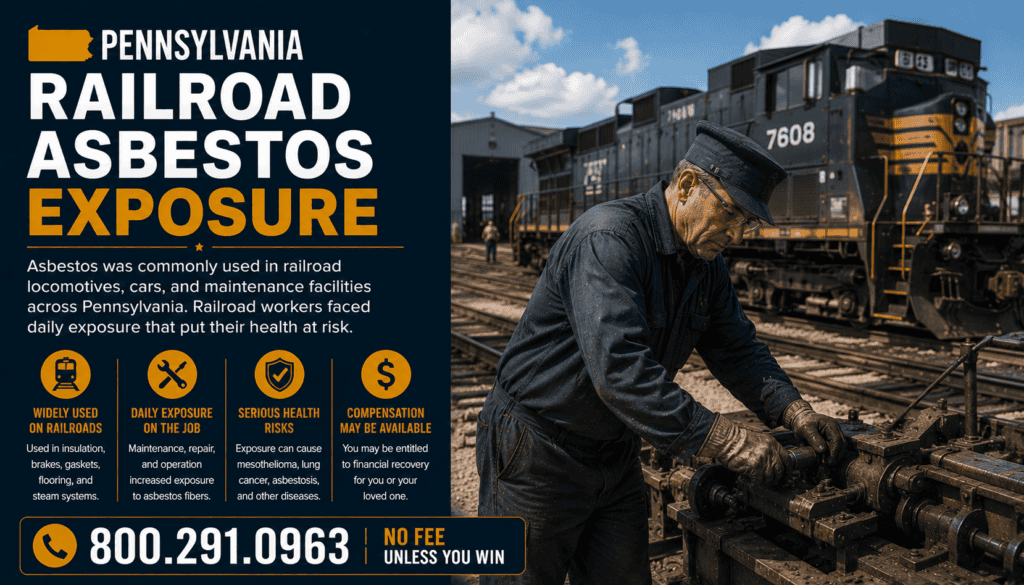
🚆 Pennsylvania Railroad Asbestos Exposure
Pennsylvania railroad asbestos exposure affected thousands of workers employed in rail yards, locomotive repair shops, maintenance facilities, passenger terminals, and rail corridors throughout the state. For decades, railroad companies relied on asbestos because it resisted heat, reduced friction, and provided durable insulation for locomotives, railcars, braking systems, steam equipment, and maintenance buildings.
As these materials aged, wore down, or were disturbed during repairs, they could release microscopic asbestos fibers into the air. Railroad workers often inhaled this contaminated dust repeatedly over many years without proper warnings, respiratory protection, or safe handling procedures.
Because asbestos-related diseases may not develop until decades after exposure, former railroad employees may only now be learning that their work history contributed to mesothelioma, lung cancer, asbestosis, or another serious illness. People seeking broader information can review the main guide to Pennsylvania asbestos exposure lawsuits.
🧱 Why Asbestos Was Widely Used by Pennsylvania Railroads
Railroad equipment operated under extreme conditions. Engines, boilers, braking systems, pipes, and mechanical parts generated intense heat while enduring vibration, pressure, and constant wear.
Pennsylvania railroads used asbestos because it:
- 🔥 Resisted extreme heat from engines, boilers, and brakes
- ⚙️ Reduced friction in mechanical components
- 🧱 Insulated locomotives, railcars, pipes, and buildings
- 🛢️ Withstood vibration, pressure, and harsh operating conditions
- 💰 Helped reduce maintenance and replacement costs
These qualities made asbestos common throughout railroad equipment and facilities. Many of the same materials were also used in factories, power plants, steel mills, and other Pennsylvania industrial asbestos exposure settings.
🏭 Common Sources of Railroad Asbestos Exposure
Railroad employees could encounter asbestos in locomotives, passenger cars, freight equipment, maintenance buildings, repair products, and industrial machinery.
🚆 Locomotives and Engines
Steam locomotives and some diesel equipment contained asbestos insulation around boilers, steam pipes, turbines, valves, gaskets, and engine compartments.
Workers who opened, repaired, or removed these materials could release asbestos fibers into confined work areas. Exposure was especially likely during locomotive overhauls, boiler repairs, and the removal of deteriorated insulation.
The use of asbestos around boilers and steam systems was not limited to railroads. Similar hazards were found in Pennsylvania boiler equipment and power-generating machinery.
🛠️ Brake Systems
Brake shoes, brake pads, linings, and other friction products commonly contained asbestos. Routine wear created dust that collected around wheels, axles, and brake assemblies.
Removing worn parts, grinding replacement brakes, or cleaning accumulated dust could release concentrated asbestos fibers into a worker’s breathing area. Similar risks affected mechanics who handled asbestos-containing automotive brake equipment.
🚃 Railcars and Passenger Cars
Passenger coaches, freight cars, cabooses, and specialty railcars often contained asbestos in:
- Wall panels
- Flooring
- Ceiling materials
- Pipe insulation
- Heating systems
- Fireproofing products
- Electrical components
These materials could become dangerous when they cracked, deteriorated, or were disturbed during repairs and remodeling.
🧱 Maintenance Shops and Rail Yards
Railroad repair facilities often contained asbestos pipe insulation, boiler insulation, roofing products, ceiling tiles, electrical insulation, and fireproofing.
Workers in these facilities could be exposed even when they were not handling asbestos directly. Fibers released by one repair task could spread throughout an enclosed shop and expose everyone nearby.
Many railroad shops are among the types of Pennsylvania asbestos exposure sites where workers encountered aging insulation, machinery, and building materials.
🧰 Railroad Equipment and Tools
Cutting, drilling, sanding, grinding, welding, and removing asbestos-containing parts generated airborne dust. Compressed air and dry sweeping could then spread those fibers throughout the work area.
Asbestos was also used in gaskets, packing, pumps, valves, motors, compressors, and other forms of Pennsylvania industrial machinery.
🛠️ How Pennsylvania Railroad Asbestos Exposure Occurred
Exposure most often happened during the maintenance, repair, inspection, rebuilding, or demolition of railroad equipment and facilities.
High-risk activities included:
- Replacing and grinding brake components
- Overhauling steam or diesel locomotives
- Removing pipe and engine insulation
- Replacing asbestos gaskets and packing
- Welding or cutting near insulated equipment
- Repairing boilers, valves, and steam lines
- Renovating railroad stations and maintenance buildings
- Cleaning accumulated dust from engines and railcars
- Demolishing outdated railroad structures
Many railroad shops were enclosed and poorly ventilated. Asbestos dust could remain suspended in the air or settle on work surfaces, machinery, clothing, and tools.
Workers could disturb these fibers again while sweeping floors, cleaning equipment, or beginning another repair. The same pattern of repeated exposure affected workers in many Pennsylvania manufacturing facilities.
👷 Pennsylvania Railroad Workers Most at Risk
Many railroad occupations involved repeated contact with asbestos-containing equipment or contaminated work areas.
🚆 Mechanics and Machinists
Mechanics and machinists repaired locomotives, engines, boilers, brakes, pumps, valves, and other mechanical systems. Their work often required removing old insulation, gaskets, and friction materials.
🔧 Maintenance-of-Way Workers
Maintenance-of-way employees repaired tracks, bridges, buildings, heavy equipment, and railroad infrastructure. They could encounter asbestos during construction, renovation, equipment maintenance, and demolition.
🧰 Carpenters and Electricians
Carpenters worked on passenger cars, stations, offices, and maintenance buildings containing asbestos wallboard, flooring, ceiling materials, and fireproofing.
Electricians serviced wiring, motors, electrical panels, and equipment near asbestos insulation. These hazards are also discussed in the guide to Pennsylvania electricians and asbestos exposure.
⚙️ Engineers and Firemen
Locomotive engineers and firemen spent long hours inside engine compartments and cabs near asbestos-insulated boilers, steam lines, and mechanical equipment.
Even when they did not remove asbestos themselves, deteriorating insulation and nearby maintenance work could contaminate the air they breathed.
🏭 Shop and Rail Yard Workers
Shop and yard employees performed inspections, repairs, cleaning, rebuilding, loading, and general maintenance. Dust generated elsewhere in the facility could expose workers throughout the shop.
The related guide to Pennsylvania railroad workers and asbestos exposure provides additional information about the occupations, tasks, and equipment associated with railroad work.
🔩 Pipefitters and Boiler Workers
Pipefitters, boilermakers, and steam-system workers handled insulated piping, boilers, valves, and pumps. Removing pipe covering or opening insulated equipment could release large amounts of asbestos.
Former workers can learn more about Pennsylvania pipefitters and mesothelioma and the risks associated with asbestos-insulated steam systems.
🏠 Secondary Asbestos Exposure to Railroad Families
Railroad workers often returned home carrying asbestos fibers on their clothing and personal belongings. Family members could inhale these fibers even though they never worked for a railroad.
Asbestos dust could travel home on:
- Work shirts and pants
- Jackets and coveralls
- Boots and shoes
- Gloves
- Hair and skin
- Tools and equipment bags
- Vehicle seats and floorboards
A spouse or family member could be exposed while shaking out dusty clothing, doing laundry, cleaning the home, or having close contact with the worker.
This is known as secondary, household, or take-home asbestos exposure. It has been linked to mesothelioma and other asbestos-related diseases in workers’ spouses and children.
🩺 Health Risks From Pennsylvania Railroad Asbestos Exposure
Once asbestos fibers are inhaled, some may become lodged in the lungs or the thin tissue surrounding the lungs and other organs. The body has difficulty removing these durable fibers.
Over time, exposure can cause inflammation, scarring, cellular damage, and serious disease.
🧬 Mesothelioma
Mesothelioma is a rare cancer most often affecting the lining around the lungs. It may also develop in the abdominal lining or, less commonly, around the heart or testicles.
Occupational asbestos exposure is the primary known cause of mesothelioma.
🫁 Asbestos-Related Lung Cancer
Asbestos exposure can cause lung cancer. The risk is especially high among workers who also smoked, although nonsmokers can also develop asbestos-related lung cancer.
People diagnosed with lung cancer after occupational exposure may have legal options through Pennsylvania asbestos lung cancer lawsuits.
🫀 Asbestosis
Asbestosis is a chronic lung disease caused by asbestos-related scarring. It may cause shortness of breath, coughing, chest tightness, and reduced lung function.
📉 Pleural Disease
Asbestos exposure can also cause pleural plaques, pleural thickening, or fluid around the lungs. These conditions are not always cancerous, but they may indicate significant past exposure.
Symptoms often do not appear until 20 to 50 years after the original exposure. Former railroad workers should tell their doctor about their complete work history, even when the exposure occurred many decades ago.
⚖️ Legal Responsibility for Railroad Asbestos Exposure
Many companies manufactured and supplied asbestos-containing railroad products without giving workers adequate warnings about the health risks.
Depending on the facts of the case, potentially responsible parties may include:
- Asbestos product manufacturers
- Brake and friction product companies
- Locomotive and railroad equipment manufacturers
- Insulation suppliers
- Industrial equipment companies
- Maintenance contractors
- Building owners
- Other companies responsible for exposing workers to asbestos
A claim may require identifying the products used at a particular railroad, shop, yard, locomotive facility, or work location.
Former coworkers, employment records, union records, repair documents, product catalogs, invoices, and historical job-site information may help establish where and how exposure occurred.
Some railroad equipment and facilities also used Pennsylvania industrial asbestos products such as insulation, gaskets, packing, panels, and fireproofing.
🚉 Federal Railroad Laws and Asbestos Claims
Railroad cases can differ from ordinary workplace injury claims because certain employees may have rights under federal railroad laws.
The Federal Employers’ Liability Act, commonly called FELA, may allow qualifying railroad employees to pursue compensation when an employer’s negligence contributed to an occupational disease or injury.
A railroad asbestos case may also involve claims against manufacturers of asbestos-containing products. The correct legal approach depends on:
- The worker’s job duties
- The railroad or railroads involved
- The years of employment
- Where exposure occurred
- The products and equipment involved
- The date of diagnosis
- The worker’s current state of residence
Because several legal systems may apply, each railroad exposure history should be reviewed individually.
🏦 Asbestos Trust Funds for Railroad Workers
Many asbestos companies later filed for bankruptcy after facing large numbers of claims. As part of the bankruptcy process, some companies established asbestos trust funds to compensate current and future victims.
A former Pennsylvania railroad worker may qualify for trust fund compensation after proving exposure to products connected to a particular trust.
Trust claims may require:
- Medical documentation
- Employment history
- Exposure dates
- Job-site information
- Product identification
- Statements from coworkers or other witnesses
A worker may qualify for more than one trust fund if several asbestos products contributed to the exposure.
The guide to Pennsylvania asbestos trust fund claims explains how these claims may provide compensation without requiring a traditional trial.
💰 Compensation Options for Pennsylvania Railroad Workers
A person diagnosed with mesothelioma or another asbestos-related disease may have several possible sources of compensation.
Potential claims include:
- 🏛️ Mesothelioma lawsuits
- 🚉 Federal railroad claims
- 🏦 Asbestos trust fund claims
- 👨👩👧 Wrongful death lawsuits
- 📄 Claims against asbestos product manufacturers
Compensation may help pay for:
- Medical treatment
- Travel for specialized care
- Lost wages
- Reduced future earnings
- Pain and suffering
- In-home care
- Funeral expenses
- Financial support for surviving family members
The amount and type of compensation available depend on the worker’s diagnosis, exposure history, responsible companies, and applicable filing deadlines.
Families who lost a loved one may also be able to pursue a Pennsylvania mesothelioma wrongful death lawsuit.
⏳ Pennsylvania Statute of Limitations for Railroad Claims
Pennsylvania law limits the amount of time available to file asbestos-related claims.
Because mesothelioma and other asbestos diseases have long latency periods, the filing period generally does not begin on the date of exposure. It may instead begin when the disease is diagnosed or when the injured person reasonably should have known that the illness was related to asbestos.
Wrongful death cases may have a different deadline that begins after the person’s death.
The guide to the Pennsylvania mesothelioma statute of limitations explains why prompt case review is important.
Waiting too long can prevent an otherwise valid claim from moving forward.
⚖️ How a Pennsylvania Asbestos Lawyer Can Help
Railroad asbestos cases often involve employment that occurred decades ago, several work locations, and products made by multiple companies.
An asbestos lawyer can help by:
- Reviewing the worker’s complete railroad history
- Identifying likely exposure locations
- Researching locomotives, brakes, insulation, and equipment
- Locating former coworkers and witnesses
- Identifying responsible asbestos companies
- Determining whether federal railroad laws apply
- Evaluating asbestos trust fund eligibility
- Preparing lawsuits and trust claims
- Managing filing deadlines and required documents
- Coordinating claims involving multiple companies
Most mesothelioma lawyers offer free consultations and handle cases on a contingency-fee basis. This generally means there are no upfront legal fees, and attorney fees are paid only if compensation is recovered.
❓ Pennsylvania Railroad Asbestos Exposure FAQs
Are Pennsylvania railroad workers still at risk today?
Yes. Older locomotives, railcars, stations, maintenance facilities, and railroad buildings may still contain asbestos. Workers may be exposed when these materials are damaged, renovated, removed, or demolished.
Can brake work expose railroad employees to asbestos?
Yes. Older railroad brake shoes, pads, and linings often contained asbestos. Removing, sanding, grinding, or cleaning these components could release hazardous fibers.
Can working for only one railroad qualify as asbestos exposure?
Yes. A worker does not need to have worked for several railroads. Exposure at one railroad, repair shop, yard, or locomotive facility may be enough to support a claim when the evidence connects the work to asbestos-containing products.
Do federal laws apply to railroad asbestos claims?
They may. Some railroad employees may have rights under the Federal Employers’ Liability Act or other federal laws. Claims against asbestos manufacturers may also be available.
Can family members file claims for household exposure?
Yes. A spouse or other family member who developed an asbestos-related disease after exposure to fibers brought home by a railroad worker may have legal options.
Can a family file a wrongful death claim?
Surviving relatives may be able to file a wrongful death claim after losing a loved one to mesothelioma or another asbestos-related disease. Filing deadlines apply.
Can a railroad worker qualify for asbestos trust funds?
Yes. Eligibility depends on whether the worker was exposed to products connected to companies that established asbestos trusts.
Is legal help necessary?
It is possible to investigate some exposure information independently, but railroad asbestos cases can involve several employers, manufacturers, trust funds, and filing rules. Experienced legal guidance may help identify all available claims.
📞 Free Case Evaluation – Pennsylvania Railroad Asbestos Exposure
If you or a loved one were exposed to asbestos while working on Pennsylvania railroads and were later diagnosed with mesothelioma or another asbestos-related disease, legal options may still be available.
✔️ Free, confidential case evaluation
✔️ No upfront legal fees
✔️ Nationwide asbestos law support
📲 Call 800-291-0963 today to discuss your options.