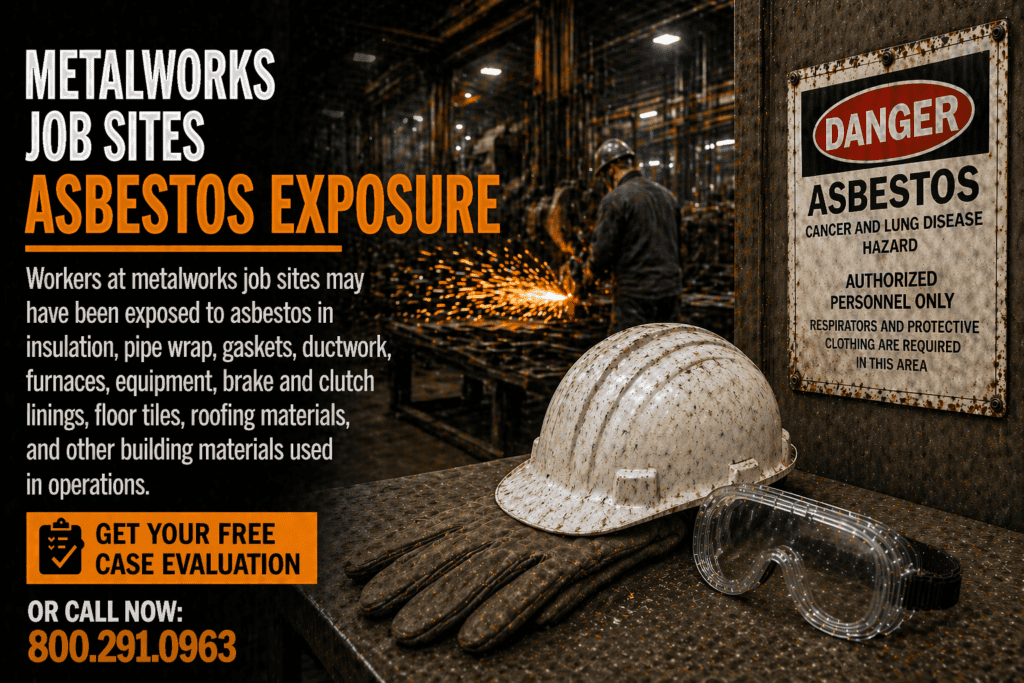
Metalworks Asbestos Exposure Lawsuit
For much of the 20th century, metalworking facilities—including fabrication plants, stamping shops, machining centers, and tool-and-die shops—relied heavily on asbestos for insulation, fireproofing, and machinery components. The heat-intensive nature of metal shaping made asbestos a standard material—but long-term use led to devastating health consequences.
Metalworkers who operated or serviced heavy equipment were frequently exposed to asbestos in insulation, gaskets, friction parts, and protective clothing. Exposure occurred during routine repairs, upgrades, and even simple proximity to degraded materials. Many facilities lacked ventilation or proper protective equipment.
🛠️ Metalworks Job Sites – What You’ll Learn From This Page:
⚙️ Metalworks facilities used asbestos to insulate machinery, valves, and gaskets, especially in high-heat settings.
🔧 Workers replacing gaskets, seals, or pipe joints disturbed asbestos fibers, often during shutdowns or routine servicing.
🌫️ Dust was released from insulation wrapped around cutting and shaping machines, especially in poorly ventilated bays.
🧰 Machinery maintenance and retrofits spread asbestos particles, exposing welders, operators, and repair techs.
💰 Metalworkers with asbestos-related illness may be eligible for compensation from trust funds or lawsuits.
Number of People Exposed to Asbestos in Metalworks in the U.S.
Metal fabrication and machining relied on asbestos insulation until safety regulations phased it out.
| Exposure Category | Estimated Number of People Exposed |
|---|---|
| Occupational Exposure (Operators, millwrights, machinists) | Approximately 470,000 workers exposed |
| Secondary Exposure (Family via dusty gear) | Estimated 70,000 exposed |
| Environmental Exposure (Shops, repair areas) | Around 105,000 people exposed |
👉 Total Estimated Exposure:
Over 645,000 people in the U.S. were exposed at metalworks job sites.
🧰 Facts About Metalworks Employees
• Metalworking employs over 160,000 people in the U.S. today, with hundreds of thousands more having worked in the industry since the 1940s.
• Asbestos Exposure: Common from 1930s–1980s, especially in fabrication and repair departments.
• Asbestos-Related Disease Risk: High due to regular repair of insulated machinery and gasket systems.
• Studies show metalworkers faced high exposure, particularly in maintenance and heat-related tasks.
• Similar Occupations: Millwrights, machinists, sheet metal workers, welders, tool-and-die makers
🏭 History of Asbestos Use on Job Sites
Metal fabrication plants, stamping facilities, and welding shops all used asbestos in equipment insulation, machinery seals, brake linings, and thermal shielding. Because of intense heat and fire risk, asbestos was used liberally.
Insulated ovens, hot presses, boilers, and even individual tools contained asbestos. Over time, these materials broke down—especially during repairs—releasing fibers into the air. Many workers were never told of the danger and worked without respirators or warnings.
⚠️ Mesothelioma Risk for Metalworkers
Dozens of medical studies have confirmed an elevated risk of asbestos-related disease among metal industry workers:
• Maintenance and repair crews had the highest risk, especially when working in tight, poorly ventilated mechanical rooms.
• A federal review revealed that machinists and toolmakers were among the top industrial jobs linked to mesothelioma.
• Friction-based tools, heat shields, and gaskets broke down over time, releasing invisible airborne asbestos fibers.
Symptoms often appear decades later—long after exposure occurred—making early diagnosis rare and difficult.
🔩 Asbestos Products Used in Metalworks Facilities
Asbestos-containing materials were everywhere in metalworks shops—from protective gear to mechanical components. Replacing, sanding, or grinding these products released dangerous dust into the air.
🔥 Insulated Machinery and Furnaces
Used to heat-treat and mold metal; asbestos-lined shells and walls released fibers during maintenance.
🚿 Pipe Insulation
Steam and water lines wrapped in asbestos; cutting or sealing pipes released microscopic particles.
🧱 Refractory Blocks and Cement
Lined heat-intensive machinery and melting ovens; crumbled or fractured under extreme heat cycles.
🧰 Gaskets and Packing Materials
Used to seal dies, presses, and steam joints; asbestos fibers released during repairs and replacements.
🧤 Protective Clothing
Workers wore asbestos aprons, gloves, and sleeves; daily wear caused fibers to break off and circulate.
🚿 Sprayed Fireproofing
Sprayed on metal beams and structural surfaces; cracked under vibration and equipment stress.
⚡ Insulated Electrical Panels
Used to line control boxes and switching cabinets; dust released during drilling or wiring tasks.
♨️ Press Linings and Brake Pads
Contained asbestos for friction control; sanding and operation created hazardous airborne dust.
🧵 Thermal Cloth and Wraps
Wrapped around heated machinery and clamps; worn fabric released fibers during movement.
🚜 Crane and Hoist Brakes
Used asbestos linings; repairs and operation produced friction dust containing asbestos.
🩹 Bonding Compounds and Adhesives
Used in assembly lines; sanding or scraping old material released airborne particles.
🧱 Acoustic and Wall Panels
Installed in welding booths and control rooms; drilling and modification released fibers.
🛠️ How Metalworkers Were Exposed
Metalworkers encountered asbestos in everyday operations, not just repairs. Even routine handling of machinery or wearing contaminated gear caused exposure in enclosed industrial environments.
🔧 Machinery Maintenance Crews
Serviced presses, die-cutting machines, and heat-treated equipment; disturbed insulation and gaskets daily.
♨️ Boiler Operators and Steam Fitters
Handled asbestos-wrapped pipes and valves; exposure occurred during inspections and cleanouts.
🛠️ Fabricators and Sheet Metal Workers
Cut and shaped metal near asbestos-lagged ducts and equipment; exposure occurred during grinding.
🔩 Pipefitters and Plumbers
Worked on pressurized systems with asbestos insulation; cutting and threading pipes released dust.
🏗️ Welders and Torch Operators
Used asbestos blankets and shields; daily use wore down material, spreading fibers into air.
⚡ Electricians
Modified asbestos-backed control panels and wiring trays; exposure occurred during rewiring jobs.
🌀 Machinists and Toolmakers
Ran grinders and mills near asbestos-lined housings; dust from brake linings and seals spread easily.
🔥 Die-Setters and Press Technicians
Used asbestos heat pads on machinery; friction, vibration, and breakdown caused exposure.
⚙️ Millwrights and Industrial Mechanics
Disassembled and rebuilt machinery containing asbestos gaskets and lagging.
🌬️ HVAC and Duct Crews
Installed and serviced ducts with asbestos sealing wrap; cutting joints released hazardous fibers.
🧍 Supervisors and Foremen
Oversaw machine operation and repairs; inhaled fibers during walk-throughs or safety checks.
📦 Laborers and Cleanup Staff
Swept up debris around gasket scrapings and pipe insulation; rarely wore protection.
⚒️ Types of Metalworks With Asbestos Exposure
🔥 Blacksmith Shops
Used forges and anvils to shape metal by hand. Asbestos-insulated hoods, gloves, and quench tanks exposed workers during daily heating and hammering processes.
🏗️ Sheet Metal Shops
Formed and cut thin metal sheets for ducts and enclosures. Asbestos insulation lined presses and cutting machines; exposure occurred during stamping, bending, and repairs.
🛠️ Tool & Die Workshops
Built metal molds and tooling for manufacturing. Asbestos lined kilns, presses, and ovens; dust released during heat treatments, machining, and part removal.
⚙️ Machine Shops
Machined parts from raw metal stock. Lathes, grinders, and equipment used asbestos pads and brake systems—fibers released during daily operation and routine maintenance.
🔩 Metal Fabrication Plants
Constructed structural and custom metal components. Welders, cutters, and fitters encountered asbestos gloves, blankets, and gaskets that broke down during handling and cleanup.
🧯 Heat Treating Facilities
Strengthened metals through thermal cycling. Furnaces, ovens, and quenching tanks used asbestos insulation; exposure occurred while loading parts and repairing high-temp linings.
💡 Foundry Support Shops
Worked alongside casting operations. Maintained molds, linings, and refractory items—often using asbestos-based products that released fibers during grinding, reshaping, and prep work.
🔌 Electrical Metalwork Shops
Built panels, enclosures, and conductive frames. Switchgear and insulation boards contained asbestos; exposure happened while assembling, drilling, or retrofitting older components.
🧱 Structural Ironwork Yards
Fabricated beams, columns, and girders for buildings. Workers used asbestos-wrapped tools and torches; dust released when torch-cutting insulated or coated structural materials.
🚨 Welding & Brazing Stations
Joined metal using intense heat. Workers wore asbestos aprons, gloves, and used heat shields—exposure occurred as gear aged and fibers broke loose near breathing zones.
❓ Common Questions About Metalworks Asbestos Claims
Can I file if I worked decades ago?
✅ Yes — most states allow 1–3 years after diagnosis to file, even if exposure happened long ago.
What if I don’t remember specific products?
✅ No problem — attorneys use site layouts, equipment records, and job logs to document exposure.
Does it matter if the shop closed?
✅ No — claims target the manufacturers of asbestos products, not the facility itself.
What if I was a contractor or union worker?
✅ You can still file if you worked on-site around asbestos materials.
How much compensation can I receive?
✅ Many cases result in six-figure settlements or asbestos trust payouts.
Can my family file if I passed away?
✅ Yes — surviving relatives may file a wrongful death or trust claim.
⚖️ How a Mesothelioma Attorney Can Help Metalworkers
Legal claims are time-sensitive and document-heavy. A qualified asbestos attorney can assist by:
• Investigating your metalworks job roles and exposure history
• Collecting employment records, union logs, and medical data
• Filing asbestos trust claims or lawsuits against product makers
• Meeting critical deadlines in your state
• Securing compensation for medical care and family support
Most asbestos law firms work on contingency—you pay nothing unless they win.
📞 Free Legal Help for Metalworkers & Families
If you or a loved one worked in metal fabrication, machining, or industrial maintenance and now face mesothelioma, lung cancer, or asbestosis—you may be eligible for compensation. We help metalworkers, retirees, and families across all industries.
Call Now: 800.291.0963
• No upfront fees
• No cost unless we win
• Full job history investigation
• Lawsuits & trust fund claims filed
• Support for surviving spouses & dependents
Or request help online 24/7