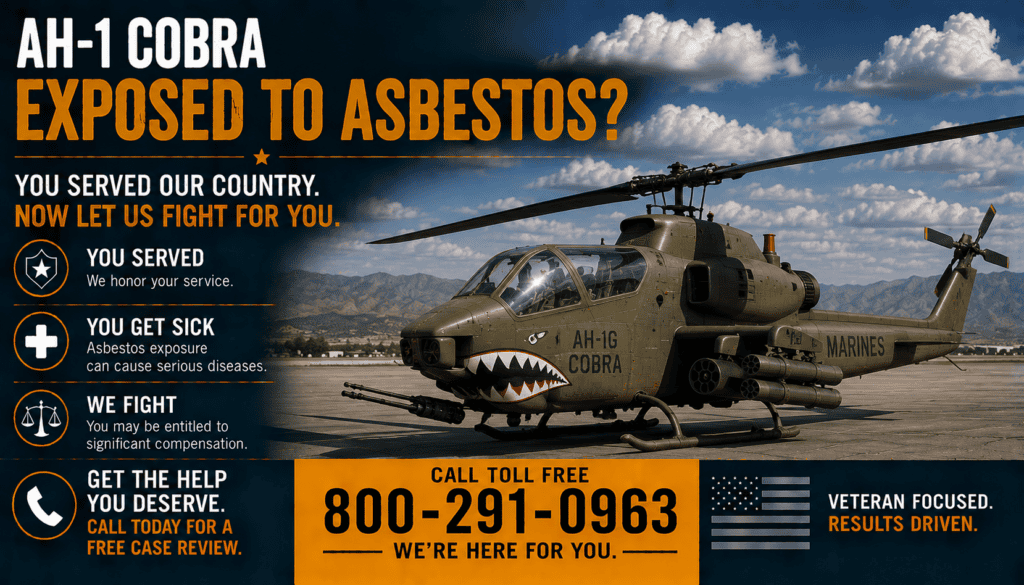
🚁 AH-1 Cobra Asbestos Exposure Lawsuit
The AH-1 Cobra was the U.S. military’s first dedicated attack helicopter, deployed by both the Army and Marines during the Vietnam War and beyond. Its speed, firepower, and narrow frame made it ideal for close air support, but also led to reliance on asbestos-containing materials to manage high temperatures in tight spaces.
Asbestos insulation was used in the rotor brake assemblies, exhaust ducts, engine compartments, and electronics bays. These areas required constant inspection and servicing. Mechanics performing rotor repairs, exhaust system maintenance, or upgrades to weapons guidance often encountered asbestos fibers. The Cobra’s compact design forced personnel into confined, poorly ventilated areas where asbestos materials were directly handled or disturbed.
Why Asbestos Was Used in the AH-1 Cobra
Built for speed and heat-intensive operations, the Cobra needed thermal insulation throughout its systems.
-
Heat shielding in engine and exhaust compartments
-
Asbestos brake linings in rotor systems
-
Fire barriers behind cockpit panels and electronic racks
-
Thermal wraps and pads in confined mechanical spaces
Asbestos was chosen for its heat resistance and durability under sustained combat use.
Branches That Used the AH-1 Cobra
| Military Branch | Role | Service Period |
|---|---|---|
| U.S. Army | Close air support, reconnaissance | 1967–present (phased out by AH-64) |
| U.S. Marine Corps | Ground attack, escort, and defense | 1971–2020 (replaced by AH-1Z Viper) |
Both branches heavily relied on the Cobra during the Vietnam War, Gulf War, and early Iraq/Afghanistan operations.
Estimated Number of Personnel Exposed to Cobra Asbestos
| Occupation Group | Estimated Number Exposed |
|---|---|
| Army Helicopter Mechanics | Over 8,000 worked with asbestos parts |
| Marine Corps Ground Crews | Approximately 4,500 exposed during repairs |
| Avionics Technicians | Around 3,000 handled electronics panels |
| Depot Maintenance Staff | Over 6,500 exposed during engine overhauls |
Total Potential Exposure: Over 22,000 personnel during the Cobra’s operational lifetime.
Common Asbestos Components on the AH-1 Cobra
Engine Exhaust Insulation
-
High-temperature wraps used around turbine exhaust paths
-
Frequently removed or rewrapped during engine servicing
Rotor Brake Linings
-
Contained asbestos to handle high-friction stopping systems
-
Replaced often due to combat wear and tear
Cockpit Panel Barriers
-
Insulation behind electrical panels and avionics
-
Cut or replaced during upgrade or troubleshooting
Electronics Bay Insulation
-
Fireproof padding surrounding targeting systems
-
Disturbed during recalibrations or wiring repairs
High-Risk Maintenance Areas
| Component Area | Exposure Cause |
|---|---|
| Engine Compartments | Disturbed asbestos during part replacement |
| Rotor Brake Assemblies | Brake dust inhaled during cleaning/repairs |
| Avionics Bays | Insulation disturbed during troubleshooting |
| Exhaust Ducts | Thermal wraps degraded during use and removal |
Long-Term Health Risks from AH-1 Cobra Exposure
-
Mesothelioma – Cancer of the pleura caused by asbestos inhalation
-
Lung Cancer – Elevated risk after prolonged fiber exposure
-
Asbestosis – Lung scarring from asbestos fiber buildup
-
Pleural Thickening – Reduces lung function over time
Notable AH-1 Cobra Asbestos Lawsuits
-
Army mechanic with mesothelioma after servicing Cobra rotor brakes
-
Marine aviation technician exposed during frequent electronics upgrades
-
Civilian depot workers exposed while rebuilding exhaust housings
-
Crew chiefs exposed during field repairs in Vietnam and Desert Storm
Sample Settlement Amounts
| Amount | Case Summary |
|---|---|
| $3.4 million | Marine mechanic exposed during routine tail boom service |
| $2.9 million | Avionics tech diagnosed decades after electronics exposure |
| $2.1 million | Army veteran exposed while replacing rotor brake linings |
| $1.8 million | Civilian depot worker exposed to fireproof wraps |
Defense Contractors Linked to AH-1 Asbestos Materials
-
Bell Helicopter (manufacturer)
-
Raybestos (brake linings, clutch parts)
-
Owens Corning (thermal insulation blankets)
-
Garlock Sealing Technologies (gaskets, seals)
-
Johns-Manville (fireproofing panels and wraps)
VA Benefits for Cobra Veterans
-
$3,800+/month for mesothelioma through VA disability
-
VA hospitals provide specialized asbestos cancer treatment
-
Survivors eligible for Dependency and Indemnity Compensation (DIC)
-
Priority status for asbestos-related illnesses
Trust Fund Compensation
-
Over $30 billion remains in asbestos trust funds
-
Most veterans qualify for $300,000–$600,000+
-
Claims don’t affect your VA benefits
-
You may qualify even if exposure occurred decades ago
Filing a Claim for AH-1 Cobra Exposure
Step 1: Confirm mesothelioma or asbestos-related illness
Step 2: Collect service records and maintenance history
Step 3: Work with a qualified asbestos law firm
Step 4: File trust fund claims and/or lawsuits
Most claims are processed in 6–12 months, and families may also qualify.
Statutes of Limitations
-
Injury Claims: 2–3 years from diagnosis (varies by state)
-
Wrongful Death Claims: 2–3 years from death
-
Trust Claims: May remain open indefinitely
AH-1 Cobra Exposure FAQs
Q: Was asbestos always used in the AH-1 Cobra?
Yes. Most models included thermal protection and friction parts with asbestos.
Q: Can civilian workers also file claims?
Yes. Depot technicians and contractors are eligible if exposed during maintenance.
Q: Can families file after a loved one passed away?
Yes. Wrongful death and trust fund claims are available to survivors.
Q: Is filing a trust fund claim difficult?
No. Experienced asbestos attorneys handle the process for you at no upfront cost.
Speak With a Legal Advocate for Air Force Veterans
📞 Call 800.291.0963 for a free asbestos exposure case review.
You may qualify for legal compensation or trust payouts based on your AH-1-Cobra maintenance records, role, or base assignments.