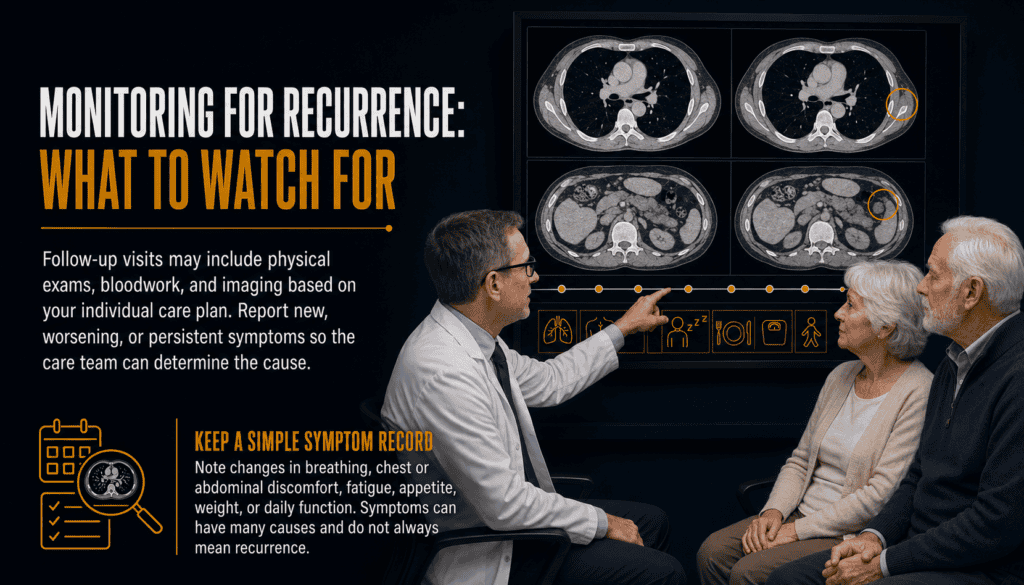
🔍 Monitoring for Recurrence: What to Watch For
Completing mesothelioma treatment is a major milestone — but continued vigilance is essential. Even after successful therapy, mesothelioma can sometimes recur months or years later. Knowing what to look for, how recurrence develops, and when to contact your doctor helps you stay proactive and protected.
This guide explains common recurrence patterns, early warning signs, and proactive monitoring steps so you can partner confidently with your oncology team for long-term peace of mind.
📞 Need help understanding your recurrence risk or follow-up plan? Call 800.291.0963 for free mesothelioma survivorship support today.
🌿 Step 1: Understanding Mesothelioma Recurrence
A recurrence occurs when mesothelioma cancer cells return after treatment. This can happen locally (near the original site), regionally (in nearby tissues), or distantly (spreading to other organs).
Common recurrence types:
-
🫁 Local recurrence: Cancer reappears in the same area where it began, such as the pleura or peritoneum.
-
💧 Regional recurrence: Involves nearby lymph nodes or tissue structures.
-
🌍 Distant recurrence: Cancer spreads to distant organs such as the liver, lungs, or abdominal cavity.
Goal:
To understand recurrence as part of the long-term monitoring process — not as a failure, but as a signal for continued care and early action.
📆 Step 2: Regular Monitoring and Follow-Up Schedule
Staying consistent with follow-up visits helps detect recurrence before symptoms develop.
Typical follow-up schedule:
-
🩺 Every 3–6 months for the first 2 years after treatment.
-
📅 Every 6–12 months for years 3–5.
-
🌤️ Annually after 5 years if no recurrence is found.
Tests used in recurrence monitoring:
-
🩻 CT or PET scans: Detect new growths or changes.
-
💉 Bloodwork and tumor markers: Track recurrence indicators like SMRP or Fibulin-3.
-
🫁 Pulmonary function tests: Check lung capacity and oxygen efficiency.
-
🩺 Physical exams: Help identify subtle changes or swelling.
Pro Tip:
Never skip follow-up appointments — early detection provides more treatment options and improves survival rates.
🚨 Step 3: Common Warning Signs of Recurrence
Even with close monitoring, recurrence can sometimes reveal itself through physical symptoms. Recognizing these early warning signs can make a crucial difference.
Watch for:
-
😮💨 Increasing shortness of breath or chest tightness.
-
💧 Fluid buildup (pleural effusion or ascites).
-
🩸 Persistent cough, fatigue, or low-grade fever.
-
🩺 Pain in the chest, back, or abdomen.
-
🌡️ Unexplained weight loss or appetite changes.
-
🕊️ Worsening fatigue or reduced stamina.
Goal:
To identify early warning signs quickly and communicate them to your healthcare team.
💬 Step 4: When to Call Your Doctor
Never dismiss new or recurring symptoms — even mild ones. Contact your oncologist if you notice changes lasting more than a few days.
Call immediately if you experience:
-
⚠️ Sudden breathing difficulties.
-
💧 Rapid abdominal swelling.
-
🩸 Severe or persistent chest pain.
-
😵 Dizziness or fainting episodes.
-
🕊️ Unusual fatigue that disrupts daily life.
Faith reminder:
“In the day when I cried thou answeredst me, and strengthenedst me with strength in my soul.” – Psalm 138:3 (KJV)
Goal:
To stay alert but calm, relying on vigilance and faith rather than fear.
🧠 Step 5: Discuss Recurrence Risk With Your Oncology Team
Your doctor can explain your personal recurrence risk based on treatment type, tumor stage, and cell subtype. Knowing what to expect reduces anxiety and helps you plan long-term care confidently.
Questions to ask your oncologist:
-
“What is my recurrence risk given my stage and treatment history?”
-
“Which tests are best for ongoing monitoring?”
-
“Are there clinical trials available for patients with recurrence?”
-
“How often should I have imaging or bloodwork done?”
-
“What symptoms should prompt an immediate visit?”
Pro Tip:
Keep a written log of these discussions — it helps you track evolving guidance and next steps.
💉 Step 6: Understanding Recurrence Patterns
Most mesothelioma recurrences appear within 2 years of treatment, though some occur later.
Typical recurrence timelines by type:
-
🫁 Pleural mesothelioma: Often recurs in the chest wall, diaphragm, or opposite lung.
-
💧 Peritoneal mesothelioma: May return in the abdominal lining or lymph nodes.
-
❤️ Pericardial mesothelioma: Rare but can recur near the heart sac.
Goal:
To anticipate where recurrence may appear and remain informed during monitoring.
🧩 Step 7: Treatment Options if Recurrence Occurs
If recurrence happens, new and effective options exist to help control disease and improve quality of life.
Possible treatment paths include:
-
💊 Chemotherapy re-treatment: Often uses pemetrexed or carboplatin.
-
🩻 Radiation therapy: Controls localized recurrence pain or growth.
-
🔬 Immunotherapy: Activates the immune system against cancer cells.
-
🫁 Surgery (in select cases): May remove localized regrowth.
-
💧 Clinical trials: Offer access to new drugs and targeted therapies.
Pro Tip:
Ask your doctor about your eligibility for immunotherapy or precision medicine based on your genetic profile.
🕊️ Step 8: Managing the Emotional Impact
Concerns about recurrence are natural. Many survivors experience “recurrence anxiety,” especially before scans or follow-up appointments. Faith, community, and counseling can help you find peace in uncertainty.
Coping tools:
-
💬 Join survivor or faith-based support groups.
-
🧘 Practice guided relaxation or meditation before appointments.
-
🙏 Pray or journal to express feelings honestly.
-
💞 Surround yourself with loved ones who encourage you.
-
🎶 Listen to peaceful or uplifting music during stressful times.
Faith reminder:
“Cast thy burden upon the Lord, and He shall sustain thee.” – Psalm 55:22 (KJV)
Goal:
To find calm and strength through emotional and spiritual grounding.
🌤️ Step 9: Staying Proactive and Hopeful
Proactive monitoring is not about living in fear — it’s about living informed and empowered. Modern treatments continue to improve outcomes for recurrent mesothelioma, giving survivors new hope and longer lives.
Stay proactive by:
-
🩺 Attending every scheduled follow-up.
-
📖 Keeping a symptom and test journal.
-
💪 Maintaining healthy habits — nutrition, hydration, and rest.
-
💬 Communicating openly with your medical team.
-
🕊️ Leaning on faith and family for ongoing strength.
Goal:
To live confidently, focusing on wellness and gratitude rather than worry.
🤝 Where to Get Help
Our advocates can connect you with oncology specialists, recurrence management programs, and emotional support groups that help survivors monitor health and maintain peace of mind.
📞 Call 800.291.0963 to speak with a Mesothelioma Help Center advocate today.
🧭 Summary
Monitoring for mesothelioma recurrence means staying alert to physical changes, attending regular scans, and keeping close communication with your oncology team. Early detection brings faster intervention, better treatment outcomes, and renewed hope for long-term survival.
You are not alone — expert help and compassionate support are just one call away.
800.291.0963