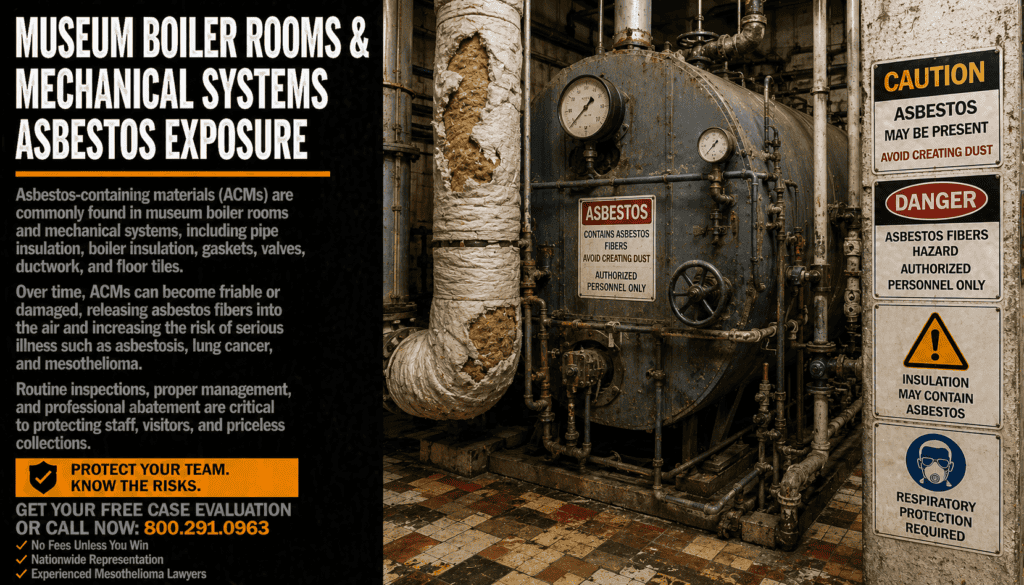
🔥 Museum Boiler Rooms & Mechanical Systems Asbestos Exposure
Boilers, steam pipes, pumps, valves, and mechanical rooms in older museums were heavily insulated with asbestos, exposing maintenance staff, engineers, and nearby workers during operation, servicing, and repairs.
Museum boiler rooms and mechanical systems were among the most asbestos-intensive areas in historic and mid-20th-century museum buildings. To protect against fire and extreme heat, asbestos insulation was widely applied to boilers, steam lines, pumps, turbines, and related equipment. Over time, this insulation deteriorated, cracked, and became friable—releasing asbestos fibers into confined mechanical spaces.
Museum employees responsible for maintaining climate-controlled environments—including facilities staff, engineers, and contractors—often worked directly inside these rooms. Exposure occurred repeatedly during routine servicing, emergency repairs, system upgrades, and even simple inspections.
🏭 Why Museum Mechanical Systems Used Asbestos
Museum boiler rooms relied on asbestos because it provided:
-
🔥 Exceptional heat resistance
-
🌡️ Thermal insulation for steam systems
-
🧯 Fireproofing in confined spaces
-
⚙️ Durability for long-term equipment protection
-
🏛️ Protection for historic buildings
Asbestos was considered essential for safeguarding both equipment and priceless collections—despite the risks to workers.
🧪 Asbestos-Containing Materials Found in Museum Boiler Rooms
Asbestos was commonly present in:
🔥 Boilers & Furnaces
-
Boiler insulation and refractory linings
-
Firebrick and thermal blankets
🚿 Steam & Hot Water Systems
-
Pipe insulation and lagging
-
Elbows, flanges, and valve packing
-
Gaskets and seals
⚙️ Pumps & Mechanical Equipment
-
Insulated pump housings
-
Asbestos gaskets and packing
🧱 Mechanical Room Fireproofing
-
Spray-on fireproofing on walls and ceilings
-
Insulated access panels and hatches
As these materials aged or were disturbed, asbestos fibers were released into the air.
⚠️ How Asbestos Exposure Occurred in Boiler Rooms
Museum workers were exposed during:
-
Boiler startup and shutdown
-
Steam pipe maintenance and repairs
-
Removing or replacing insulation
-
Scraping gaskets and valve packing
-
Emergency leak repairs
-
Cleaning debris and insulation dust
Because boiler rooms were often enclosed and poorly ventilated, fiber concentrations could become extremely high.
🌫️ Airborne Asbestos in Mechanical Spaces
Boiler rooms created severe airborne asbestos hazards because:
-
🌫️ Friable insulation released fibers easily
-
🌬️ Limited ventilation trapped contaminated air
-
🧹 Cleanup activities re-aerosolized dust
-
🚪 Foot traffic spread fibers beyond mechanical rooms
Fibers often migrated into hallways, storage areas, and offices through shared air pathways.
🧑🏭 Museum Workers Most at Risk
🛠️ Maintenance & Facilities Staff
Performed routine servicing and repairs on asbestos-insulated systems.
⚙️ Engineers & Building Operators
Monitored boilers and climate control systems daily.
🔧 Plumbers & Pipefitters
Cut and removed asbestos-wrapped pipes and valves.
👷 Contractors & Trades
Disturbed asbestos during system upgrades and replacements.
🚨 Emergency Response Staff
Entered mechanical spaces during leaks, fires, or system failures.
Exposure often occurred over decades, significantly increasing disease risk.
🧬 Secondary (Take-Home) Asbestos Exposure
Mechanical room workers frequently carried asbestos fibers home on clothing, tools, and shoes. Family members were exposed during:
-
Handling and laundering work clothes
-
Cleaning vehicles
-
Routine household contact
Secondary exposure from boiler room work has been linked to mesothelioma cases among spouses and children.
🫁 Health Risks Linked to Boiler Room Asbestos Exposure
Long-term asbestos exposure in museum mechanical systems is strongly associated with:
🧠 Mesothelioma
A rare, aggressive cancer caused almost exclusively by asbestos exposure.
🫁 Asbestosis
A chronic lung disease resulting from heavy fiber inhalation.
🫁 Lung Cancer
Elevated risk after prolonged exposure.
Because boiler room work often involved direct disturbance of friable asbestos, disease risk was especially high.
📜 Employer Knowledge & Safety Failures
Many museums and governing bodies failed to:
-
Identify asbestos in mechanical systems
-
Warn maintenance staff of exposure risks
-
Provide respirators or protective clothing
-
Perform proper abatement before repairs
-
Restrict access to contaminated areas
These failures are central to many asbestos claims involving museum boiler rooms.
❓ Frequently Asked Questions (FAQs)
1️⃣ Were museum boiler rooms high-risk asbestos areas?
Yes. They contained some of the highest concentrations of asbestos.
2️⃣ Were non-maintenance staff exposed?
Yes. Fibers migrated into adjacent areas through shared air.
3️⃣ Did emergency repairs increase exposure?
Yes. Disturbing insulation released large amounts of fibers.
4️⃣ Can family members file secondary exposure claims?
Yes. Take-home exposure is legally recognized.
5️⃣ Can claims still be filed decades later?
Yes. Asbestos diseases have long latency periods.
⚖️ How a Lawyer Can Help Get Compensation
An experienced asbestos lawyer can help museum workers and families by:
-
Investigating museum boiler rooms and mechanical systems
-
Identifying asbestos-containing insulation and equipment
-
Tracing responsible asbestos product manufacturers
-
Documenting work duties and exposure duration
-
Filing mesothelioma lawsuits
-
Submitting asbestos trust fund claims
-
Maximizing total compensation available
Because boiler room exposure often involved high fiber concentrations, strong legal claims frequently exist.
📞 Free Case Evaluation – Get Help Today
If you worked in museum boiler rooms or mechanical spaces and later developed mesothelioma or another asbestos-related illness—or were exposed through a family member—help is available.
📞 Call Now for a FREE Case Evaluation: 800-291-0963
There is no obligation, and compensation may be available.
📌 Key Takeaways
-
Museum boiler rooms used asbestos extensively
-
Maintenance and engineering staff faced heavy exposure
-
Fibers spread beyond mechanical spaces
-
Families suffered secondary exposure
-
Legal options may still be available