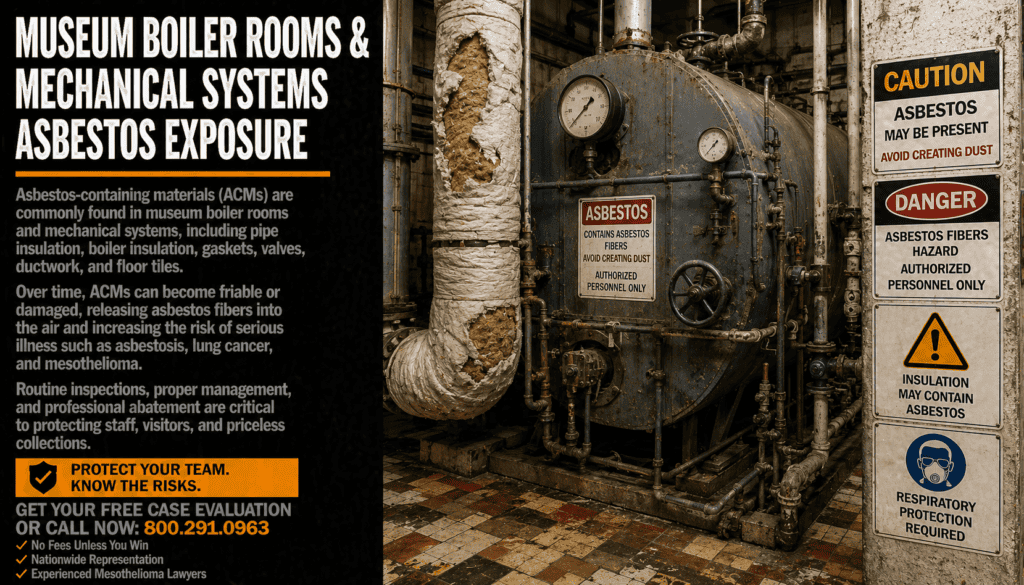
🌬️ Museum HVAC & Climate Control Systems Asbestos Exposure
Ductwork, air handlers, insulation, and climate-control components in older museums spread asbestos fibers throughout galleries, archives, offices, and storage areas, exposing staff and contractors during daily operation, maintenance, and upgrades.
Museums rely heavily on HVAC and climate control systems to protect priceless collections from temperature fluctuations and humidity. Unfortunately, many of these systems—especially in buildings constructed or renovated before the 1980s—were insulated and fireproofed with asbestos-containing materials. As systems aged, vibrated, and were serviced, asbestos fibers were released and distributed through air-handling pathways, creating building-wide exposure.
Because HVAC systems connect nearly every space in a museum, asbestos exposure was not limited to mechanical rooms. Fibers circulated into galleries, conservation labs, archives, offices, and visitor areas, placing a wide range of workers at risk over long periods.
🏛️ Why Museum HVAC Systems Used Asbestos
Asbestos was widely used in museum HVAC systems because it provided:
-
🌡️ Thermal insulation for temperature stability
-
🔥 Fire resistance in ducts and plenums
-
🔇 Sound dampening in large gallery spaces
-
⚙️ Durability for long-running systems
-
🧯 Protection for electrical and mechanical components
These properties made asbestos common in climate-control designs for museums housing sensitive artifacts.
🧪 Asbestos-Containing Materials in Museum HVAC Systems
Asbestos was commonly found in:
🌬️ Ductwork & Plenums
-
Duct insulation and wrap
-
Asbestos paper and cloth linings
-
Fireproofed plenums and shafts
⚙️ Air Handlers & Mechanical Units
-
Insulated air handler housings
-
Gaskets and seals
-
Vibration dampening materials
🔥 Insulation & Fireproofing
-
Spray-on fireproofing around ducts
-
Thermal blankets and panels
⚡ Electrical & Control Components
-
Insulated control panels
-
Fire-resistant boards
As these materials deteriorated or were disturbed, fibers were released directly into airflow.
⚠️ How Asbestos Exposure Occurred Through HVAC Systems
Exposure occurred during:
-
Normal system operation and vibration
-
Maintenance and filter changes
-
Duct cleaning and inspections
-
Repairs to fans, motors, and dampers
-
System upgrades and retrofits
-
Renovation and rerouting of ducts
Once fibers entered the HVAC system, they were distributed throughout the museum.
🌫️ Building-Wide Airborne Asbestos Distribution
Museum HVAC systems amplified exposure because:
-
🌬️ Air circulation carried fibers into occupied spaces
-
🧱 Dust settled in galleries, archives, and offices
-
🧹 Cleaning activities re-aerosolized fibers
-
🚪 Pressure changes moved fibers between rooms
This meant workers with no direct contact with asbestos materials still inhaled fibers daily.
🧑🏭 Museum Workers Most at Risk
🛠️ HVAC Technicians & Facilities Staff
Handled insulated ducts, air handlers, and fireproofing materials.
🧑🎨 Curators & Conservators
Worked long hours in climate-controlled spaces receiving contaminated air.
📚 Archivists & Collections Staff
Spent time in storage rooms and vaults connected to HVAC systems.
🧾 Administrative & Office Staff
Experienced chronic indirect exposure through shared air.
👷 Contractors & Trades
Disturbed asbestos during duct modifications and upgrades.
Exposure often occurred continuously over many years, increasing disease risk.
🧬 Secondary (Take-Home) Asbestos Exposure
HVAC and facilities workers often carried asbestos fibers home on clothing and tools. Family members were exposed when fibers:
-
Transferred to vehicles
-
Became airborne during laundry
-
Settled on household surfaces
Secondary exposure from HVAC work has been linked to mesothelioma in spouses and children.
🫁 Health Risks Linked to HVAC Asbestos Exposure
Long-term inhalation of asbestos from HVAC systems is strongly associated with:
🧠 Mesothelioma
A rare, aggressive cancer caused almost exclusively by asbestos exposure.
🫁 Asbestosis
A chronic lung disease from repeated fiber inhalation.
🫁 Lung Cancer
Elevated risk following prolonged exposure.
Even low-level but long-term airborne exposure can lead to serious disease.
📜 Employer Knowledge & Air Quality Failures
Many museums and governing authorities failed to:
-
Identify asbestos in HVAC systems
-
Warn staff about airborne exposure risks
-
Restrict access during maintenance
-
Perform proper abatement before upgrades
-
Monitor indoor air quality
These failures are central to many asbestos claims involving museum HVAC systems.
❓ Frequently Asked Questions (FAQs)
1️⃣ Can HVAC systems spread asbestos throughout a museum?
Yes. Airflow distributes fibers building-wide.
2️⃣ Were curators and office staff at risk?
Yes. Shared air exposed non-maintenance staff.
3️⃣ Did routine maintenance increase exposure?
Yes. Filter changes and inspections released fibers.
4️⃣ Can families file secondary exposure claims?
Yes. Take-home asbestos exposure is legally recognized.
5️⃣ Can claims still be filed decades later?
Yes. Asbestos diseases have long latency periods.
⚖️ How a Lawyer Can Help Get Compensation
An experienced asbestos lawyer can help museum workers and families by:
-
Investigating museum HVAC designs and maintenance history
-
Identifying asbestos-containing duct and insulation materials
-
Tracing responsible asbestos product manufacturers
-
Documenting exposure pathways through air systems
-
Filing mesothelioma lawsuits
-
Submitting asbestos trust fund claims
-
Maximizing total compensation available
Because HVAC exposure affected entire buildings, detailed investigation is critical.
📞 Free Case Evaluation – Get Help Today
If you worked in a museum with older HVAC or climate control systems and later developed mesothelioma or another asbestos-related illness—or were exposed through a family member—help is available.
📞 Call Now for a FREE Case Evaluation: 800-291-0963
There is no obligation, and compensation may be available.
📌 Key Takeaways
-
Museum HVAC systems often contained asbestos
-
Airflow spread fibers throughout buildings
-
Indirect exposure affected many job roles
-
Families faced secondary exposure risks
-
Legal options may still be available