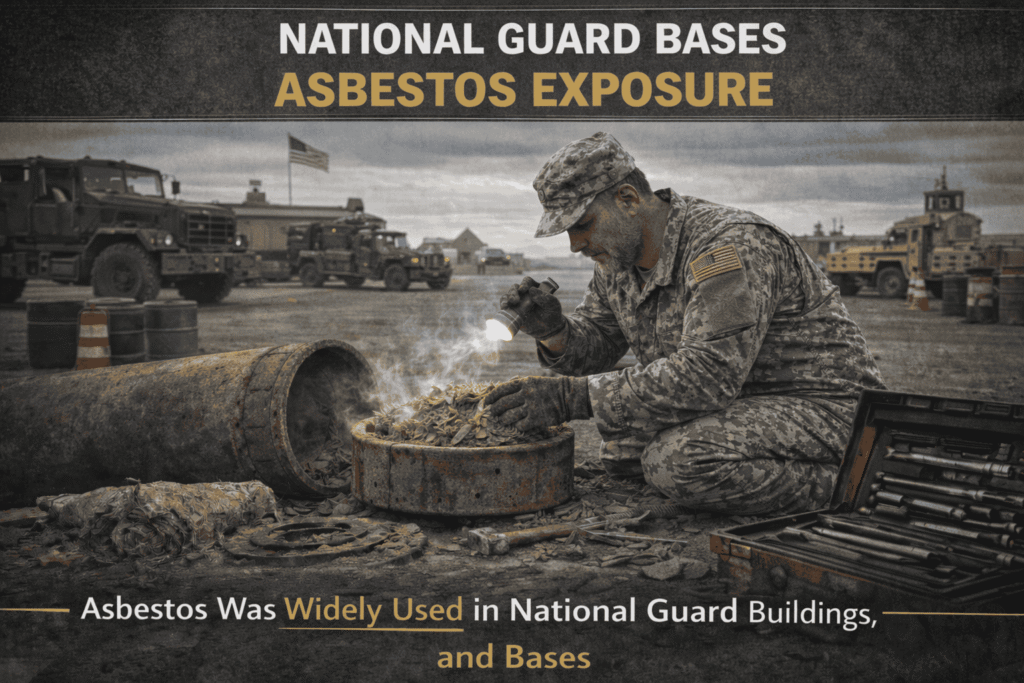
🪖 National Guard Bases Asbestos Exposure Lawsuit
National Guard facilities used asbestos in armories, maintenance buildings, and training centers.
For decades, National Guard bases across the United States exposed service members, civilian employees, and contractors to hazardous asbestos materials. From the 1940s through the late 1970s, asbestos was heavily used in armories, vehicle maintenance garages, training facilities, power plants, storage warehouses, and administrative buildings nationwide.
As these structures aged, asbestos insulation, ceiling tiles, floor materials, pipe wrapping, and boiler components deteriorated or were disturbed during renovations, releasing airborne fibers. Many Guard members were unknowingly exposed during drills, maintenance duties, and full-time assignments—later developing mesothelioma, lung cancer, or asbestosis decades after service.
📞 Immediate help is available: 800.291.0963
⚠️ Why Asbestos Was Widely Used on National Guard Bases
Asbestos was commonly used at National Guard installations because it:
🔥 Provided fireproofing for armories and training buildings
🧱 Insulated heating systems, pipes, and walls
⚙️ Protected electrical and mechanical equipment
🏗️ Reduced construction costs during rapid expansion
🛠️ Met military durability and safety standards
Guard members were rarely warned about the long-term health risks associated with asbestos exposure.
🏗️ Where Asbestos Was Found on National Guard Bases
Asbestos-containing materials were commonly present in:
🪖 Armories and drill halls
🚛 Vehicle maintenance garages
⚙️ Motor pools and repair shops
🔥 Boiler rooms and utility systems
🏢 Administrative offices
🏠 On-base housing and older facilities
Renovations, upgrades, and routine repairs often disturbed asbestos materials, releasing fibers into the air.
👷 How National Guard Members Were Exposed
Exposure frequently occurred during:
🚧 Building renovations and demolition
🛠️ Equipment and vehicle maintenance
🔥 Boiler and heating system servicing
🧹 Cleaning dust and debris in aging facilities
🏠 Working or training inside deteriorating structures
Because Guard members often trained in older state facilities built before 1980, exposure could occur repeatedly over many years of service.
🛡️ U.S. National Guard Bases With Known Asbestos Exposure
⚠️ Overview
From the 1930s through the late 1970s, asbestos was widely used in National Guard armories, readiness centers, aviation support facilities, maintenance shops, warehouses, and training camps. Pipe insulation, boiler wrap, floor tiles, ceiling panels, roofing materials, cement siding, and HVAC components frequently contained asbestos.
Although many Guard facilities now operate under state and federal asbestos management programs, aging infrastructure, renovation projects, and demolition work continue to create potential exposure risks — particularly in buildings constructed before 1980.
Below is a comprehensive list of major National Guard installations historically associated with asbestos-containing construction materials.
🏰 National Guard Installations With Documented Asbestos Risk
🇺🇸 Major National Guard Training Centers & Aviation Facilities
🛩️ Army Aviation Support Facility (AASF) #1 – Various States
Hangars, maintenance bays, and mechanical rooms constructed during mid-century expansion incorporated asbestos insulation, brake components, fireproofing materials, and roofing products disturbed during aircraft servicing and modernization projects.
🚁 Joint Forces Training Base Los Alamitos, California
Administrative buildings, armories, and aviation facilities built during Cold War expansion utilized asbestos insulation, pipe wrap, cement materials, and structural fireproofing requiring regulated abatement during upgrades.
🏕️ Camp Shelby Joint Forces Training Center, Mississippi
Barracks, training facilities, and maintenance structures incorporated asbestos pipe insulation, floor tiles, roofing materials, and boiler components requiring environmental management during renovations.
🌲 Camp Ripley Training Center, Minnesota
Mid-century construction used asbestos insulation and cement siding in barracks and mechanical systems, requiring controlled handling during modernization and infrastructure improvements.
🏜️ Camp Roberts, California (National Guard Training Site)
Training facilities and support buildings historically included asbestos insulation, roofing materials, and structural fireproofing disturbed during upgrades and demolition.
🌊 Camp Blanding Joint Training Center, Florida
Administrative buildings, motor pools, and dormitories incorporated asbestos insulation, pipe wrap, and flooring materials requiring regulated management during repairs and renovations.
🏔️ Fort Indiantown Gap National Guard Training Center, Pennsylvania
Barracks and support facilities constructed mid-century included asbestos insulation, roofing materials, and cement products requiring environmental oversight during modernization projects.
🏕️ Camp Atterbury Joint Maneuver Training Center, Indiana
Training facilities and maintenance buildings incorporated asbestos pipe insulation, fireproofing materials, and ceiling components requiring controlled removal during infrastructure upgrades.
🏢 State Armories & Readiness Centers
🧱 New York National Guard Armories (Statewide)
Historic armories constructed during the early and mid-20th century frequently incorporated asbestos pipe insulation, floor tiles, roofing materials, and boiler components requiring regulated abatement during renovations.
🛠️ Texas National Guard Armories (Statewide)
Readiness centers and maintenance shops built mid-century utilized asbestos insulation, cement materials, and fireproofing components disturbed during modernization and repair projects.
🌲 California National Guard Readiness Centers (Statewide)
Armories and aviation support facilities historically included asbestos insulation, ceiling materials, and structural fireproofing requiring environmental oversight during renovations.
🏔️ Pennsylvania National Guard Facilities (Statewide)
Administrative buildings and training centers incorporated asbestos pipe wrap, roofing materials, and mechanical insulation requiring regulated management during upgrades.
🌊 Florida National Guard Armories (Statewide)
Mid-century construction utilized asbestos insulation, flooring materials, and boiler components requiring abatement during modernization projects.
🌾 Illinois National Guard Armories (Statewide)
Historic armories and support buildings included asbestos insulation and fireproofing materials requiring environmental controls during renovation and demolition.
🏜️ Arizona National Guard Aviation Facilities (Statewide)
Hangars and maintenance bays constructed during Cold War expansion incorporated asbestos pipe insulation, roofing materials, and cement products requiring regulated removal during upgrades.
⚠️ Why National Guard Members May Have Been Exposed
National Guard personnel and civilian technicians may have encountered asbestos exposure during:
-
Aviation maintenance in older hangars
-
Armory renovations and HVAC repairs
-
Boiler and mechanical room maintenance
-
Floor tile and roofing replacement projects
-
Vehicle and equipment brake repairs
-
Infrastructure demolition at training centers
Because many Guard facilities originated decades before modern asbestos regulations, aging materials and modernization projects historically created exposure risks — particularly for full-time technicians, maintenance crews, and construction personnel.
🧬 Health Risks Linked to National Guard Base Exposure
Asbestos exposure on National Guard bases has been linked to:
🫁 Mesothelioma
🫁 Asbestos-related lung cancer
🫁 Asbestosis
🫁 Pleural plaques and thickening
Many Guard veterans do not experience symptoms until 20–50 years after exposure.
⚖️ Legal Rights of National Guard Members Exposed on Base
National Guard members exposed to asbestos may qualify to pursue:
⚖️ Lawsuits against asbestos product manufacturers
💼 Asbestos trust fund claims
⚖️ Wrongful death lawsuits for surviving families
Claims typically target manufacturers of insulation, cement products, boilers, flooring, and mechanical components—not the National Guard or government agencies.
💰 Compensation Available for National Guard Asbestos Exposure
Compensation may include:
💵 Medical treatment and ongoing care
💼 Lost wages and diminished earning capacity
💔 Pain and suffering
🚗 Travel and caregiving expenses
⚖️ Wrongful death compensation
Multiple asbestos products used across facilities may increase overall claim value.
🛡️ How a Mesothelioma Attorney Helps National Guard Veterans
An experienced military asbestos attorney can:
🧭 Identify service periods and base locations
🏭 Trace asbestos manufacturers used in state facilities
📂 File lawsuits and trust fund claims
⏰ Manage statutes of limitations
⚖️ Maximize total compensation
Most cases are handled on a contingency basis — no upfront costs.
📞 Call 800.291.0963 to Review Your National Guard Asbestos Exposure
❓ Frequently Asked Questions
Were National Guard bases built with asbestos?
Yes. Many armories and training facilities constructed before 1980 used asbestos extensively.
Does part-time Guard service qualify?
Yes. Even annual training or drill exposure may qualify.
Can claims be filed decades later?
Yes. Mesothelioma has a long latency period.
Do I need maintenance records from the base?
No. Attorneys reconstruct exposure using service and facility records.
Can families file claims after a Guard member passes away?
Yes. Wrongful death claims may be available.
📞 Get Help After National Guard Base Asbestos Exposure
If you or a loved one developed mesothelioma after serving on a National Guard base, asbestos exposure may be the cause—and compensation may be available.
✅ Free exposure review
✅ No upfront costs
✅ Nationwide representation
✅ Military asbestos litigation experience
📞 Call now: 800.291.0963