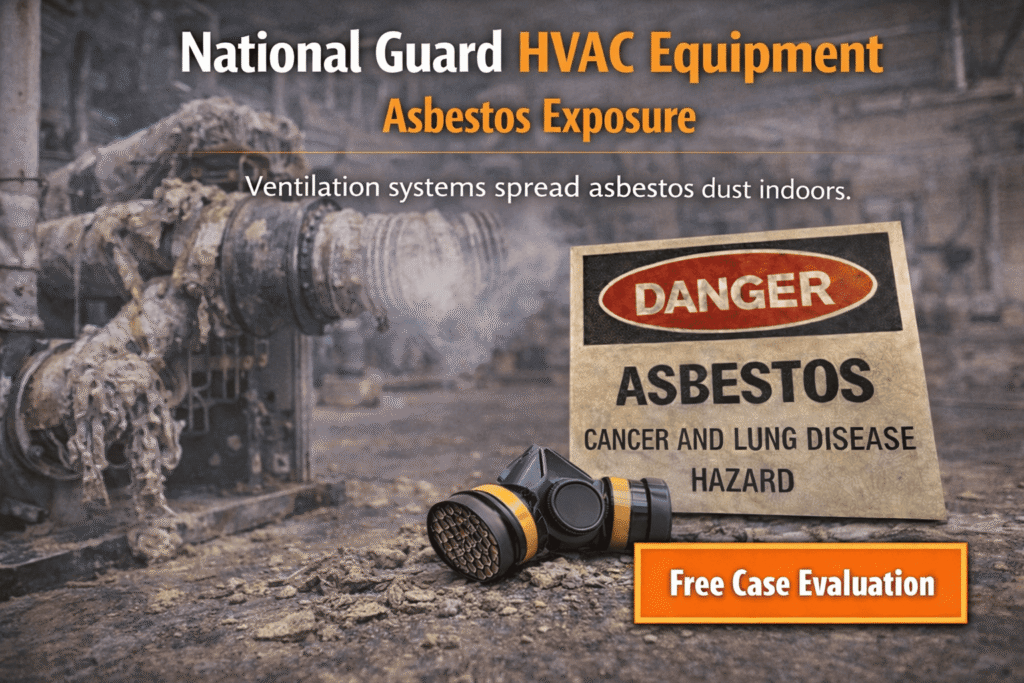
🌬️ National Guard HVAC Equipment Asbestos Exposure
Heating, ventilation, and air-conditioning systems spread asbestos dust indoors, exposing Guard members during operation, maintenance, and building renovations.
HVAC systems were installed in nearly every National Guard facility, including armories, barracks, training centers, medical clinics, hangars, warehouses, and administrative buildings. From the 1940s through the late 1980s, asbestos was widely used in HVAC components because of its heat resistance, insulating ability, and fireproofing properties.
As a result, asbestos-containing materials were integrated throughout ductwork, air handlers, boilers, furnaces, insulation, dampers, and mechanical rooms. When these systems were serviced, upgraded, or damaged, asbestos fibers were released and circulated throughout entire buildings—exposing Guard members far beyond the mechanical rooms themselves.
🧱 Why Asbestos Was Used in National Guard HVAC Systems
HVAC systems required materials that could withstand heat, airflow, and vibration.
Asbestos was commonly used to:
-
🌡️ Insulate ducts, pipes, and air handlers
-
🔥 Fireproof mechanical rooms and plenums
-
🧱 Line furnace and boiler components
-
🔩 Seal gaskets, dampers, and expansion joints
-
🚒 Reduce fire risk around heating equipment
These materials were installed throughout ceilings, walls, basements, crawlspaces, and rooftops.
🚧 Common Asbestos-Containing HVAC Components
National Guard HVAC systems frequently contained asbestos in:
-
🌬️ Duct insulation and wrap
-
🔥 Furnace and boiler insulation
-
🔩 Gaskets and seals in air handlers
-
🧱 Fireproofing on duct chases and plenums
-
🛢️ Pipe insulation connected to HVAC units
Once disturbed, these materials easily released airborne fibers.
🔧 How Asbestos Exposure Occurred Through HVAC Systems
HVAC-related asbestos exposure was particularly dangerous because fibers were distributed throughout entire buildings.
Common exposure scenarios included:
-
🧰 Removing or repairing duct insulation
-
🔧 Servicing furnaces, air handlers, and boilers
-
🧹 Cleaning vents, filters, and mechanical rooms
-
🏗️ Renovations requiring HVAC rerouting
-
💧 Water damage degrading insulation
-
🚨 Emergency repairs during extreme weather
Even Guard members far from mechanical areas inhaled asbestos circulated by ventilation systems.
🎖️ Who Was Exposed to HVAC-Related Asbestos
HVAC asbestos exposure affected nearly everyone inside a facility.
Commonly exposed individuals include:
-
🎖️ National Guard members assigned to buildings
-
🛠️ HVAC technicians and maintenance staff
-
🔌 Electricians and plumbers working nearby
-
🧑🏭 Engineers and facility supervisors
-
👨💼 Administrative and medical personnel
-
👨👩👧 Visitors and family members
This widespread exposure made HVAC systems one of the most dangerous asbestos pathways.
⚠️ Why HVAC Asbestos Exposure Was Widely Overlooked
HVAC asbestos exposure was underestimated because:
-
❌ Asbestos was hidden inside ducts and ceilings
-
❌ Airborne fibers were invisible
-
❌ Exposure occurred indirectly
-
❌ Ventilation systems masked the source
-
❌ Illness appeared decades later
Many veterans had no idea asbestos circulated through the air they breathed daily.
🫁 Diseases Linked to HVAC Asbestos Exposure
Exposure to asbestos through National Guard HVAC systems has been linked to:
-
Mesothelioma
-
Asbestos-related lung cancer
-
Pleural plaques and pleural thickening
-
Asbestosis
These diseases often appear 20–50 years after exposure, long after Guard service ends.
⏳ Latency Period and Delayed Diagnosis
HVAC exposure typically involved:
-
⏱️ Continuous low-level exposure
-
⏱️ No immediate symptoms
-
⏱️ Diagnosis decades later
Because exposure was environmental, it was rarely connected to service until much later.
⚖️ Legal Responsibility for HVAC Asbestos Exposure
HVAC-related asbestos claims do not sue the National Guard.
Instead, claims focus on:
-
🏭 HVAC equipment manufacturers
-
🏭 Duct insulation and fireproofing suppliers
-
🏭 Boiler and furnace manufacturers
Many of these companies later created asbestos trust funds to compensate exposed individuals.
HVAC systems used across facilities operated by the National Guard relied on these products for decades.
🧑⚖️ How a Lawyer Can Help HVAC Exposure Victims
An experienced asbestos lawyer can:
-
🔍 Identify asbestos-containing HVAC materials
-
📂 Review service records and facility assignments
-
🏗️ Match building construction dates to asbestos use
-
🏦 File asbestos trust fund claims
-
⚖️ Pursue lawsuits against responsible manufacturers
-
👨👩👧 Assist families with wrongful death claims
Most cases are handled on a contingency basis — no upfront cost.
⌛ Statute of Limitations for HVAC Equipment Claims
Deadlines vary by state but usually begin:
-
🩺 At date of diagnosis, or
-
⚰️ At date of death for wrongful death claims
Because asbestos diseases are often diagnosed late, early legal review is essential.
❓ Frequently Asked Questions (FAQs)
❓ Did National Guard HVAC systems really contain asbestos?
Yes. Duct insulation, boilers, and fireproofing commonly used asbestos.
❓ Can people not working in mechanical rooms be exposed?
Yes. HVAC systems distributed fibers throughout buildings.
❓ Do I need proof of specific HVAC equipment?
No. Lawyers rely on building records and asbestos product databases.
❓ Can office or medical staff file claims?
Yes. Environmental exposure is recognized.
❓ Can families file claims after death?
Yes. Wrongful death claims are common.
📞 Help for National Guard Veterans Exposed to HVAC Asbestos
If you worked or lived in National Guard facilities with asbestos-containing HVAC systems and later developed an asbestos-related disease, you may still have legal options today.
📌 You May Be Eligible For:
-
Asbestos trust fund compensation
-
Lawsuit settlements
-
VA disability benefits (if applicable)
-
Wrongful death compensation for families
📞 Call 800-291-0963 for a free, confidential National Guard HVAC exposure review
⏱️ No upfront costs • National Guard–focused claims • Nationwide representation
Breathing clean air should never put your life at risk.