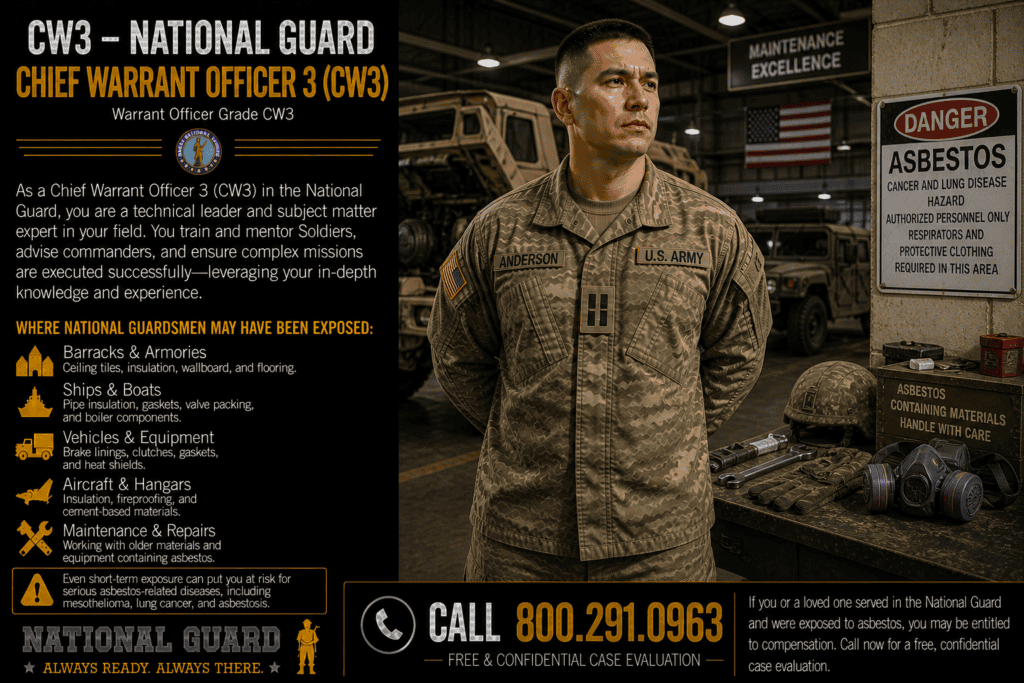
CW3 — Nat Guard Chief Warrant Officer 3
🛠️ Technical operations leader
Asbestos Exposure
⚠️ ACM in old Guard buildings
⚠️ High-heat vehicle components
Asbestos Exposure Risks for Senior Technical Warrant Officers in the National Guard
A Chief Warrant Officer 3 (CW3) in the National Guard serves as a senior technical expert responsible for overseeing advanced maintenance operations, supervising engineering and aviation sections, evaluating infrastructure issues, and resolving complex mechanical or electrical failures. Their position places them in older Guard facilities, maintenance shops, vehicle bays, hangars, and mechanical rooms where asbestos remains embedded in aging construction materials and high-temperature engine components.
Because CW3s manage multiple technical teams and personally inspect equipment, buildings, and mechanical systems, they encounter numerous asbestos sources—from deteriorating insulation in old facilities to asbestos-containing gaskets, brake pads, and heat shields used in engines and vehicles. Their expanded oversight and hands-on diagnostic role create frequent, cumulative exposure.
The Senior Technical Role of a CW3 in the National Guard
CW3s serve as mid-tier warrant officers with significant leadership authority over technical and maintenance operations.
Typical Responsibilities of a National Guard CW3 Include:
-
🧰 overseeing engineering and mechanical teams
-
🛠️ diagnosing complex failures in vehicles, aircraft, or facility systems
-
🧱 inspecting aging Guard buildings for safety issues
-
✈️ evaluating aircraft components and avionics (Air Guard)
-
⚙️ supervising maintenance work across multiple sections
-
📋 coordinating upgrades, repairs, and modernization projects
-
❄️ assessing HVAC, electrical, and plumbing problems
-
🪖 advising commanders on technical system health
CW3s are frequently the first technical authority to enter hazardous spaces for problem assessment.
Why CW3 Personnel Faced Significant Asbestos Exposure
CW3s routinely operate in:
-
pre-1980 armories
-
vehicle maintenance shops
-
aviation hangars
-
HVAC and mechanical rooms
-
electrical panels and utility corridors
-
storage and logistics buildings
Each space contains distinct asbestos risks.
Exposure Source #1: ACM in Old Guard Buildings
Guard facilities built from the 1940s–1980s contain asbestos in:
-
🧩 ceiling tiles
-
👣 vinyl tile and adhesives
-
🧱 drywall compound
-
❄️ duct insulation
-
♨️ pipe wrap
-
🔌 electrical panel insulation
How CW3s Are Exposed
CW3s often:
-
conduct facility inspections
-
assess structural damage or leaks
-
supervise renovation or demolition work
-
respond to HVAC or electrical failures
-
evaluate safety before personnel enter older buildings
Damaged ACM releases fibers during any disturbance.
Exposure Source #2: High-Heat Vehicle Components
Vehicles and heavy equipment rely on heat-resistant asbestos components, including:
-
🛞 brake pads
-
⚙️ clutch plates
-
🔥 heat shields
-
🧱 manifold gaskets
-
🔩 engine insulation
Why CW3 Technical Leaders Are at Risk
CW3s frequently:
-
inspect overheating engines
-
review brake or clutch failures
-
supervise mechanical repair operations
-
enter dusty maintenance bays
-
evaluate worn or degraded components
High-heat engine parts shed asbestos dust during operation, breakdown, and maintenance.
Exposure Source #3: Aircraft & Powerplant Areas (Air Guard)
Older aircraft contain asbestos in:
-
engine insulation blankets
-
fireproof panels
-
wiring insulation
-
brake assemblies
-
heat shielding
How CW3 Aviation Personnel Are Exposed
CW3s may:
-
inspect engine tear-downs
-
review maintenance discrepancies
-
supervise component replacement
-
examine fire or overheating damage
-
work inside confined hangar areas with poor ventilation
Aircraft systems release fibers when opened or disturbed.
Exposure Source #4: Mechanical, Boiler & Utility Rooms
CW3s enter these areas to assess:
-
steam system issues
-
HVAC failures
-
electrical shutdowns
-
plumbing or leak concerns
These rooms contain:
-
pipe wrap
-
boiler insulation
-
fire barriers
-
aging duct materials
Such environments produce heavy airborne fiber contamination.
Exposure Source #5: Oversight of Renovations & Modernization Projects
CW3s frequently supervise or inspect:
-
drywall removal
-
tile replacement
-
HVAC overhauls
-
electrical rewiring
-
demolition of older building sections
Each renovation step disturbs asbestos embedded in building materials.
Long-Term Health Risks for National Guard CW3 Personnel
Asbestos illnesses often appear 20–50 years after exposure.
Diseases Include:
-
🫁 Mesothelioma
-
🫀 Asbestos-related lung cancer
-
🌫️ Asbestosis
-
🩻 Pleural plaques and fibrosis
CW3s accumulate exposure from multiple buildings, vehicles, and systems.
VA Disability Benefits for CW3 Asbestos Exposure
The VA recognizes that technical Warrant Officers encounter asbestos during diagnostics and inspections.
Evidence That Strengthens a VA Claim:
-
📄 records showing facility or maintenance oversight
-
🧱 documentation of older Guard buildings
-
🛠️ logs of engine or aircraft inspections
-
💬 statements from mechanics or crew chiefs
-
🩺 medical evidence linking disease to exposure
Mesothelioma automatically qualifies for 100% disability.
Asbestos Trust Fund & Legal Compensation for National Guard CW3 Veterans
More than $30 billion remains available in asbestos trust funds—paid by manufacturers.
Compensation Options Include:
-
💵 trust fund payouts
-
⚖️ asbestos manufacturer lawsuits
-
👨👩👧 survivor benefits
-
🎖️ VA disability benefits (separate from legal compensation)
CW3s often meet the criteria due to multi-source exposure across several technical environments.
📞 Free Case Review for National Guard CW3 Veterans
If you served as a CW3 in the National Guard and later developed mesothelioma, asbestos lung cancer, or asbestosis, you may qualify for significant compensation.
📞 Call 800.291.0963 now for a free, confidential case review.
A specialist will help confirm your exposure history and identify every compensation path available.