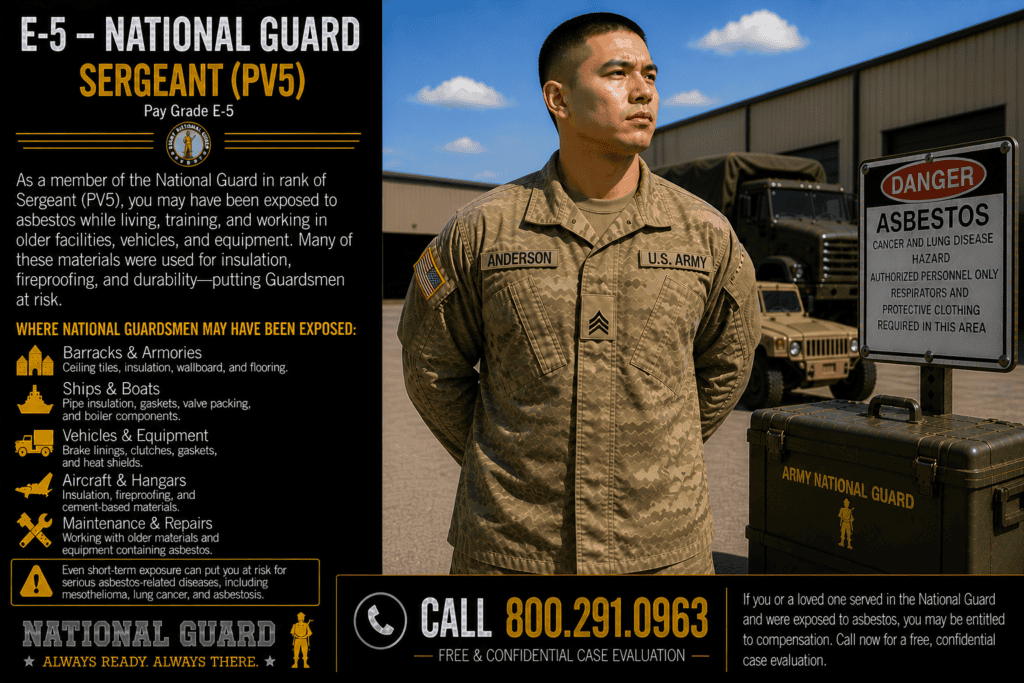
E-5 – Nat Guard Sergeant (SGT) / Staff Sergeant (SSgt)
🛠️ Squad leader, maintenance supervisor
Asbestos Exposure
⚠️ Building repairs
⚠️ Demolition of older structures
⚠️ Mechanical shop environments
Asbestos Exposure Risks for Mid-Level National Guard NCOs
An E-5 in the National Guard—Army Sergeant (SGT) or Air Guard Staff Sergeant (SSgt)—is a mid-level noncommissioned officer responsible for supervising maintenance teams, leading construction or repair operations, and conducting hands-on technical tasks. Their leadership roles place them directly in older armories, training buildings, maintenance shops, and mechanical rooms—many built during the military’s peak asbestos-construction era.
Because E-5 personnel oversee building repairs, demolition support, and mechanical operations, they often enter unsafe areas first, assess hazards, and guide team operations. This dual role of supervisor and technician puts them at increased risk of inhaling asbestos fibers released from deteriorating materials.
The Leadership and Technical Responsibilities of an E-5 in the National Guard
E-5 NCOs balance supervision with direct involvement in repair and maintenance tasks.
Typical Responsibilities of a National Guard E-5 Include:
-
🔧 leading squads during repair operations
-
🛠️ supervising engineering and maintenance tasks
-
🧱 coordinating small construction or demolition efforts
-
🧰 performing hands-on repairs on buildings and equipment
-
🛞 supporting vehicle maintenance and shop operations
-
🧹 directing cleanup of mechanical and work areas
-
🪖 preparing workspaces for training or missions
-
🏛️ inspecting older structures for safety concerns
Working in aging Guard facilities built between the 1940s and 1980s significantly increases asbestos exposure risk.
Why E-5 Personnel Faced Significant Asbestos Exposure
NCOs regularly operate in:
-
outdated armories
-
old training buildings
-
construction and demolition sites
-
mechanical shops
-
motor pools
-
HVAC and boiler rooms
-
electrical and utility areas
These buildings often contain friable asbestos in damaged flooring, piping, insulation, and structural components.
Exposure Source #1: Building Repairs
Older Guard facilities contain asbestos in:
-
🧱 drywall
-
🧩 ceiling tiles
-
👣 vinyl flooring
-
❄️ HVAC insulation
-
🔌 electrical panel backboards
-
🪨 plaster and joint compound
How E-5s Are Exposed
SGTs and SSgts may:
-
lead repair teams
-
cut into walls or ceilings
-
remove damaged tiles
-
replace ductwork or piping
-
supervise facility renovation tasks
Even routine repairs can disturb asbestos-filled dust.
Exposure Source #2: Demolition of Older Structures
Demolition creates some of the highest airborne asbestos concentrations.
Common ACM found during demolition includes:
-
flooring adhesives
-
wallboard
-
insulation wrap
-
roofing materials
-
transite (asbestos cement board)
Why E-5 NCOs Face Increased Risk
As squad leaders, E-5s often:
-
perform initial entry into old buildings
-
supervise removal of damaged materials
-
assist junior soldiers with demolition tasks
-
manage cleanup of hazardous areas
Disturbing any ACM material releases microscopic asbestos fibers into the air.
Exposure Source #3: Mechanical Shop Environments
Motor pools and mechanical shops contain asbestos in:
-
🛞 brake pads
-
⚙️ clutch plates
-
🔩 gaskets
-
🔥 heat shields
-
🧱 engine insulation
Exposure Occurs During:
-
supervising vehicle repairs
-
cleaning or sweeping repair bays
-
assisting with brake and clutch work
-
working near grinding, sanding, or compressed air operations
Asbestos dust accumulates on floors, shelves, uniforms, and tools within these shops.
Exposure Source #4: HVAC, Boiler, and Utility Areas
Older buildings often contain asbestos-wrapped pipes, boilers, and ductwork.
E-5s encounter exposure when:
-
assessing leaks or equipment failures
-
supervising HVAC or steam line repairs
-
entering mechanical rooms or confined spaces
-
coordinating contractor work
These locations frequently have deteriorating insulation that sheds fibers.
Exposure Source #5: Supervisory Roles in Hazardous Environments
Because E-5s lead teams, they often:
-
inspect hazardous areas first
-
determine if a building is safe for training
-
observe contractor operations
-
oversee demolition and renovation safety
This front-line presence increases cumulative exposure over time.
Long-Term Health Risks for National Guard E-5 Personnel
Asbestos-related diseases may appear 20–50 years after exposure.
Diseases Include:
-
🫁 Mesothelioma
-
🫀 Asbestos-related lung cancer
-
🌫️ Asbestosis
-
🩻 Pleural plaques and fibrosis
Even moderate exposure during a few years of service can cause serious illness.
VA Disability Benefits for E-5 Asbestos Exposure
The VA acknowledges asbestos exposure for personnel involved in maintenance, construction, or mechanical shop operations.
Evidence That Strengthens a VA Claim:
-
📄 records showing squad leadership or maintenance duties
-
🧱 documentation of repairs or demolition tasks
-
💬 statements from team members or supervisors
-
📝 facility records confirming older building materials
-
🩺 medical proof linking disease to exposure
Mesothelioma automatically qualifies for 100% VA disability.
Asbestos Trust Fund & Legal Compensation for National Guard E-5 Veterans
Over $30 billion in asbestos trust funds remains available—funded by manufacturers, not the military.
Compensation Options Include:
-
💵 trust fund claims
-
⚖️ lawsuits against asbestos product manufacturers
-
👨👩👧 survivor claims
-
🎖️ VA disability benefits (separate from legal compensation)
Guard mechanics, engineers, and supervisors frequently qualify due to multi-source exposure.
📞 Free Case Review for National Guard E-5 Veterans
If you served as an E-5 SGT or SSgt in the National Guard and later developed mesothelioma, asbestos lung cancer, or asbestosis, you may qualify for significant compensation.
📞 Call 800.291.0963 now for a free, confidential case review.
A specialist will help verify your exposure history and identify all eligible compensation sources.