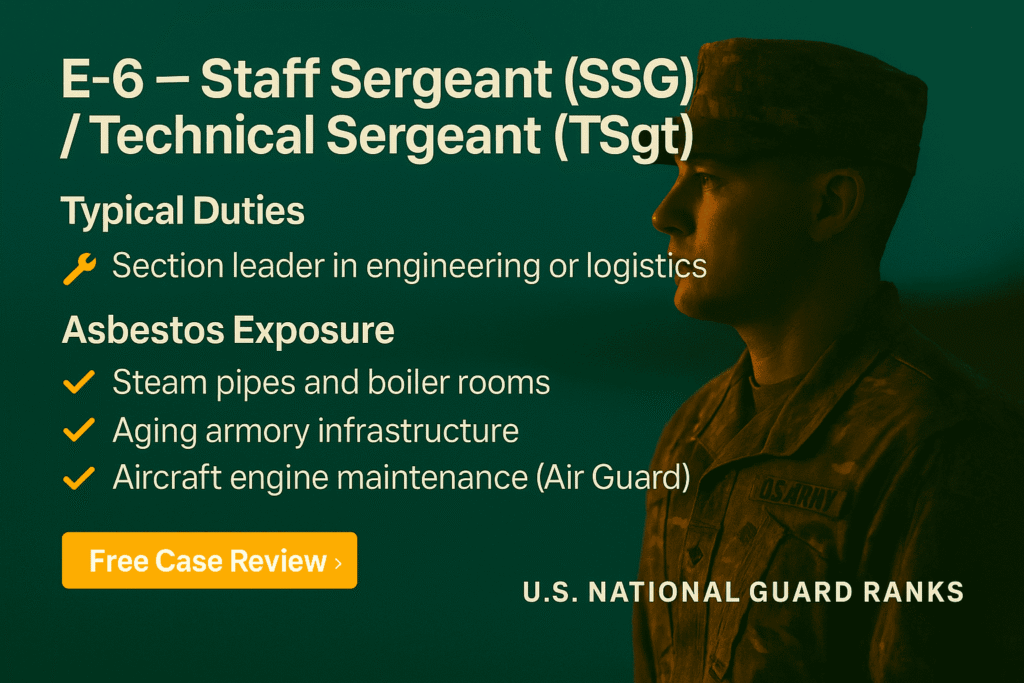
E-6 – Nat Guard Staff Sergeant (SSG) / Technical Sergeant (TSgt)
🛠️ Section leader in engineering or logistics
Asbestos Exposure
⚠️ Steam pipes and boiler rooms
⚠️ Aging armory infrastructure
⚠️ Aircraft engine maintenance (Air Guard)
Asbestos Exposure Risks for Senior National Guard NCOs
An E-6 in the National Guard—Army Staff Sergeant (SSG) or Air Guard Technical Sergeant (TSgt)—leads engineering, logistics, and maintenance operations while still performing technical tasks themselves. Their role places them inside older armories, mechanical rooms, boiler areas, motor pools, and aircraft maintenance facilities where asbestos remains embedded in insulation, piping, flooring, and engine components.
Because section leaders oversee multiple teams, respond to equipment failures, and inspect facilities for safety and maintenance readiness, they are routinely exposed to deteriorating asbestos materials. Many National Guard buildings were constructed before the 1980s and still contain high concentrations of asbestos in thermal insulation, pipe wrap, HVAC ducting, and structural components.
The full scope of E-6 supervisory duties
How steam systems, aging armories, and aircraft maintenance created asbestos exposure
Why mid-level NCO supervisors faced persistent airborne fiber risks
Long-term health dangers
VA disability, asbestos trust fund eligibility, and legal options
The Expanded Responsibilities of an E-6 in the National Guard
E-6 personnel are trusted leaders who balance supervision with hands-on technical involvement.
Typical Responsibilities of a National Guard E-6 Include:
-
🔧 supervising engineering or logistics sections
-
🛠️ coordinating maintenance and repair operations
-
🧱 overseeing HVAC, steam, or mechanical system issues
-
🧰 performing complex repairs or troubleshooting tasks
-
🛞 managing motor pool or hangar operations
-
📋 training junior soldiers or airmen
-
🏛️ inspecting aging facilities for safety or readiness
-
🪖 coordinating contractor access to mechanical spaces
Because E-6s evaluate and manage work in high-risk environments, they experience frequent asbestos contact.
Why E-6 Personnel Faced Significant Asbestos Exposure
As senior NCOs, E-6s regularly operate in:
-
steam and boiler rooms
-
older armories
-
mechanical and electrical spaces
-
aircraft maintenance hangars (Air Guard)
-
storage depots and logistics buildings
-
pre-1980 training structures
These spaces contain some of the highest concentrations of damaged asbestos materials.
Exposure Source #1: Steam Pipes and Boiler Rooms
Steam systems were historically insulated with asbestos for fire and heat resistance.
Common ACM found in these areas includes:
-
♨️ pipe wrap
-
♨️ boiler insulation
-
🔩 valve packing
-
❄️ duct insulation
-
🧱 cement board
-
🧩 gasket material
How E-6s Are Exposed
SSGs and TSgts may:
-
inspect boiler rooms for leaks
-
supervise HVAC and heating repairs
-
evaluate mechanical room safety
-
assist with equipment troubleshooting
-
sweep or clean confined spaces
Boiler rooms release high concentrations of airborne fibers due to constant heat and aging insulation.
Exposure Source #2: Aging Armory Infrastructure
Most National Guard armories were built in the 1940s–1970s and contain asbestos in:
-
ceiling tiles
-
flooring adhesives
-
drywall joint compound
-
electrical panel backboards
-
pipe and duct insulation
Why E-6 Leaders Are at Risk
They often:
-
perform building inspections
-
supervise renovation or repair tasks
-
handle emergency facility issues
-
direct teams into older sections of the building
-
evaluate structural concerns
Even limited disturbance releases asbestos dust across wide areas.
Exposure Source #3: Aircraft Engine Maintenance (Air Guard)
Air National Guard aircraft—especially older models—contain asbestos in:
-
brake assemblies
-
engine heat shielding
-
wiring insulation
-
fireproofing barriers
-
gaskets and seals
E-6 Exposure Occurs During:
-
supervising aircraft maintenance teams
-
inspecting engines and mechanical components
-
cleaning aircraft bays or engine rooms
-
working in dusty or confined hangar spaces
Air Guard TSgts often accumulate exposure from multiple aircraft types over years of service.
Exposure Source #4: Mechanical and Electrical Rooms
Older Guard facilities store asbestos in:
-
electrical arc chutes
-
switchgear insulation
-
fuse box linings
-
HVAC duct board
-
steam headers
E-6 Risk Comes From:
-
initial inspections
-
supervising troubleshooting steps
-
moving equipment through utility corridors
-
evaluating safety concerns in confined spaces
Mechanical rooms often have the highest fiber concentrations due to poor ventilation.
Exposure Source #5: Logistics & Equipment Storage Areas
E-6 logistics leaders operate in warehouses and storage buildings where:
-
old equipment coated with asbestos residue is stored
-
heating and cooling systems shed fibers
-
flooring tiles crack and degrade
Frequent movement of supplies stirs dust from deteriorated ACM.
Long-Term Health Risks for National Guard E-6 Personnel
Asbestos diseases typically appear 20–50 years after exposure.
Diseases Include:
-
🫁 Mesothelioma
-
🫀 Asbestos-related lung cancer
-
🌫️ Asbestosis
-
🩻 Pleural plaques and fibrosis
Long service combined with supervisory duties creates cumulative exposure.
VA Disability Benefits for E-6 Asbestos Exposure
The VA recognizes engineering, maintenance, logistics, and aircraft duties as credible exposure sources.
Evidence That Strengthens a VA Claim:
-
📄 records showing steam, boiler, or mechanical room duties
-
🧱 documentation of older armories or facility issues
-
💬 buddy statements describing airborne dust or unsafe conditions
-
📝 maintenance logs showing involvement in repairs
-
🩺 medical evidence linking disease to asbestos exposure
Mesothelioma automatically receives a 100% disability rating.
Asbestos Trust Fund & Legal Compensation for National Guard E-6 Veterans
More than $30 billion is available in asbestos trust funds—funded by manufacturers, not the military.
Compensation Options Include:
-
💵 asbestos trust fund payouts
-
⚖️ lawsuits against asbestos product manufacturers
-
👨👩👧 survivor benefits
-
🎖️ VA disability benefits (separate from legal claims)
E-6 personnel often qualify due to exposure in multiple hazardous environments.
📞 Free Case Review for National Guard E-6 Veterans
If you served as an E-6 SSG or TSgt in the National Guard and later developed mesothelioma, asbestos lung cancer, or asbestosis, you may qualify for significant financial compensation.
📞 Call 800.291.0963 now for a free, confidential case review.
A specialist will help verify your exposure history and identify every compensation source available.