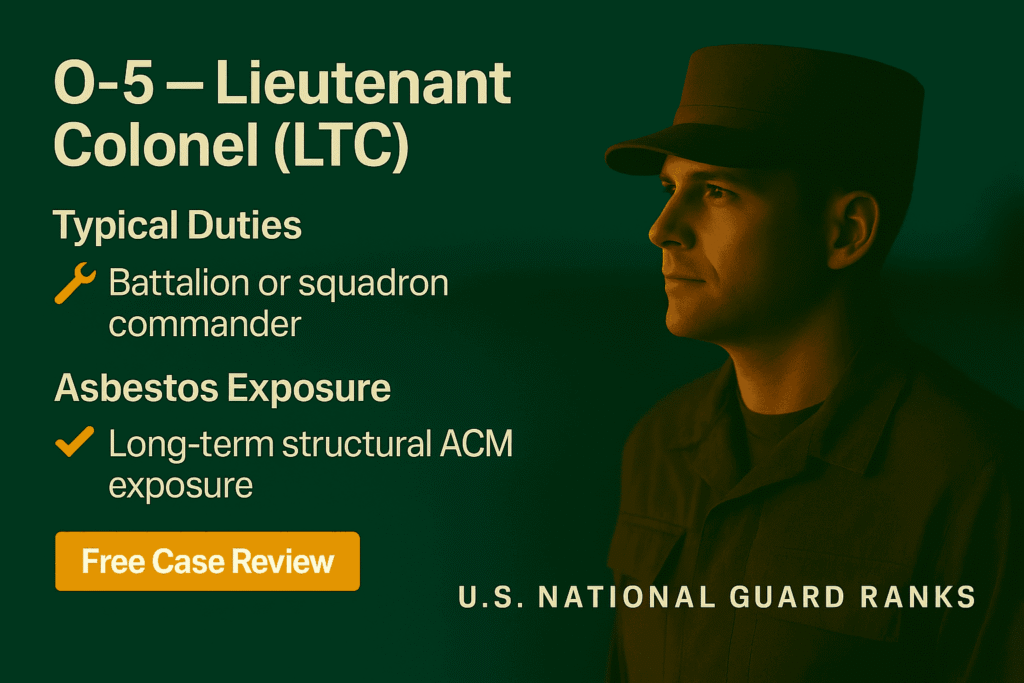
O-5 — Nat Guard Lieutenant Colonel (LTC)
🛠️ Battalion or squadron commander
Asbestos Exposure
⚠️ Long-term structural ACM exposure
Asbestos Exposure Risks for Senior National Guard Commanders
A Lieutenant Colonel (O-5) in the National Guard serves as a senior field-grade officer overseeing battalions, squadrons, or major operational elements. LTCs manage training, readiness, personnel, facilities, and long-term organizational planning. Because they supervise multiple buildings, conduct frequent inspections, and spend years inside older National Guard infrastructure, they experience significant long-term exposure to asbestos-containing materials.
Most Guard installations were built between the 1940s and late 1970s—decades of heavy asbestos usage. As an LTC, daily duties take place inside command buildings, administrative offices, storage structures, readiness centers, mechanical spaces, and operational facilities where aging ACM remains in ceilings, flooring, insulation, ductwork, pipe wrap, electrical systems, and fireproofing materials. Long-term exposure accumulates over an officer’s career, especially across multiple duty locations.
The Command Responsibilities of a National Guard O-5
Lieutenant Colonels serve as senior leaders responsible for the performance, safety, and infrastructure of their units.
Typical Responsibilities of a National Guard LTC Include:
-
🪖 commanding a battalion or squadron
-
📋 conducting readiness and facility inspections
-
🏛️ working extensively in pre-1980 command buildings
-
🛠️ overseeing maintenance and infrastructure support
-
📑 reviewing inspection reports, work orders, and building issues
-
🧱 managing building usage, renovation planning, and improvement programs
-
🚧 supervising operations held inside multiple aging facilities
These responsibilities place O-5 officers in direct and continuous contact with asbestos-containing environments.
Why O-5 Personnel Faced Significant Asbestos Exposure
LTCs routinely operate across a wide range of Guard buildings, including:
-
headquarters and command centers
-
administrative and planning spaces
-
armories and readiness facilities
-
training complexes
-
storage and supply buildings
-
mechanical and utility rooms
This broad building exposure accumulates significantly over time.
Exposure Source #1: Long-Term Structural ACM in Guard Facilities
Older Guard buildings contain asbestos in nearly every major construction component.
Common ACM includes:
-
🧩 ceiling tiles and insulation backing
-
👣 vinyl flooring and mastic adhesives
-
🧱 drywall compound and plaster
-
❄️ HVAC duct insulation
-
♨️ steam pipe and boiler insulation
-
🪵 transite siding, panels, and fireproofing boards
-
🔌 electrical panel insulation
How LTCs Are Exposed
Exposure occurs when LTCs:
-
conduct walk-throughs or readiness checks
-
supervise personnel working in older rooms
-
inspect damaged ceilings, walls, or floors
-
review or approve renovation or repair projects
-
enter mechanical spaces for operational oversight
-
respond to building hazards or infrastructure complaints
Long-term presence inside these spaces is the primary source of cumulative exposure.
Exposure Source #2: Oversight of Building Maintenance & Repairs
LTCs often oversee or approve:
-
facility repairs
-
contractor coordination
-
renovation planning
-
building improvements
-
readiness center upgrades
Exposure Increases During:
-
ceiling removal
-
HVAC replacement
-
electrical rewiring
-
pipe insulation repair
-
demolition of damaged sections
Even indirect involvement exposes commanders to airborne fibers released during these activities.
Exposure Source #3: Daily Operations Conducted Inside Aging Buildings
As senior leaders, LTCs frequently:
-
work long hours in administrative offices
-
hold meetings in old briefing rooms
-
oversee training in older facilities
-
supervise unit operations across multiple structures
Ambient asbestos dust in deteriorating buildings contributes to ongoing exposure.
Exposure Source #4: Multi-Installation Service Over Long Careers
Most O-5 officers serve:
-
multiple commands
-
multiple armories
-
multiple training locations
Each new installation adds cumulative asbestos exposure from additional aging buildings.
Long-Term Health Risks for National Guard O-5 Personnel
Asbestos-related diseases typically appear 20–50 years after exposure.
Diseases Include:
-
🫁 Mesothelioma
-
🫀 Asbestos-related lung cancer
-
🌫️ Asbestosis
-
🩻 Pleural plaques and fibrosis
Because LTCs often serve decades, cumulative risk is significantly elevated.
VA Disability Benefits for O-5 Asbestos Exposure
The VA recognizes command leaders’ long-term presence inside older military buildings as a valid exposure pathway.
Evidence That Strengthens a VA Claim:
-
📄 building inspection duties
-
🧱 records showing work in pre-1980 facilities
-
💬 statements from officers, NCOs, or facility staff
-
📝 notes documenting infrastructure issues or renovations
-
🩺 medical evidence linking disease to exposure
Mesothelioma qualifies automatically for 100% disability.
Asbestos Trust Fund & Legal Compensation for National Guard O-5 Veterans
More than $30 billion is available through asbestos trust funds—separate from VA benefits.
Compensation Options Include:
-
💵 trust fund payouts
-
⚖️ lawsuits against asbestos product manufacturers
-
👨👩👧 survivor benefits
-
🎖️ VA disability (can be filed alongside legal claims)
Many LTCs qualify due to long-term leadership in aging, asbestos-filled facilities.
📞 Free Case Review for National Guard O-5 Lieutenant Colonels
If you served as an O-5 Lieutenant Colonel in the National Guard and developed mesothelioma, asbestos lung cancer, or asbestosis, you may be entitled to significant compensation.
📞 Call 800.291.0963 now for a free, confidential case review.
A specialist will help confirm your long-term structural exposure and identify every benefit and claim available.