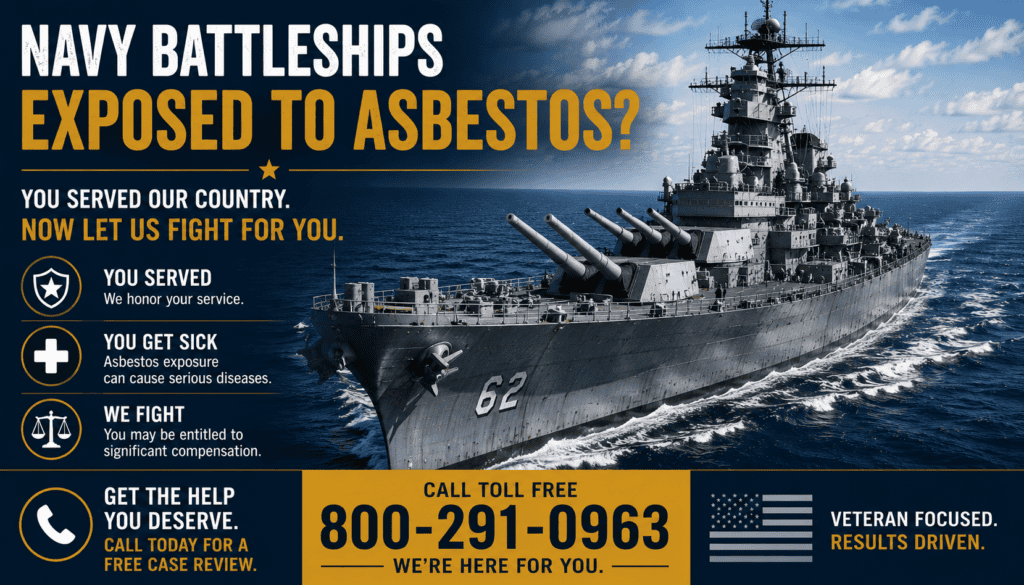
Navy Battleships Asbestos Exposure
For decades, U.S. Navy battleships were built and operated using massive amounts of asbestos. Thousands of Navy veterans, shipyard workers, and sailors were unknowingly exposed to airborne asbestos fibers that have since caused serious and often fatal diseases such as mesothelioma, asbestosis, and lung cancer.
Our legal team assists U.S. Navy veterans and their families in pursuing financial compensation for asbestos exposure that occurred aboard Navy battleships. Claims can include lawsuits against asbestos manufacturers, claims against trust funds, and VA benefits—all handled with no upfront legal costs.
Why Asbestos Was Used Heavily Aboard Battleships
During World War II and the Cold War, the U.S. Navy prioritized fireproofing, heat resistance, and durability aboard its fleet. Asbestos was the material of choice for:
-
Insulating steam systems and high-pressure turbines
-
Fireproofing ammunition rooms, weapons systems, and engine rooms
-
Preventing electrical fires in wiring and control rooms
-
Protecting vital ship operations in confined, poorly ventilated spaces
As a result, nearly every part of these ships—from the boiler rooms to sleeping quarters—contained asbestos in some form.
Battleship Classes Where Asbestos Was Heavily Used
| Battleship Class | Example Ships |
|---|---|
| Iowa-Class | USS Iowa (BB-61), USS New Jersey (BB-62), USS Missouri (BB-63), USS Wisconsin (BB-64) |
| South Dakota-Class | USS South Dakota (BB-57), USS Indiana (BB-58), USS Massachusetts (BB-59), USS Alabama (BB-60) |
| North Carolina-Class | USS North Carolina (BB-55), USS Washington (BB-56) |
| Colorado-Class | USS Colorado (BB-45), USS Maryland (BB-46), USS West Virginia (BB-48) |
Each of these classes carried thousands of pounds of asbestos insulation throughout critical systems.
Number of U.S. Service Members Exposed to Asbestos on Battleships
U.S. Navy battleships extensively utilized asbestos for insulation, fireproofing, and machinery protection, especially in engine rooms, boilers, and pipe insulation. Tens of thousands of sailors served aboard these battleships over decades, facing significant asbestos exposure.
| Battleship Class | Estimated Number of Service Members Exposed |
|---|---|
| Pennsylvania-Class (WWI/WWII) | Approximately 75,000 sailors served on Pennsylvania-class battleships during both World Wars, exposed to asbestos in multiple areas. |
| Colorado-Class (WWII) | Around 40,000 personnel served aboard Colorado-class battleships, experiencing prolonged asbestos exposure. |
| North Carolina-Class (WWII) | Nearly 50,000 service members served on North Carolina-class battleships during WWII, with extensive asbestos use onboard. |
| South Dakota-Class (WWII) | An estimated 45,000 sailors served on South Dakota-class battleships, facing high asbestos exposure risk. |
| Iowa-Class (WWII & beyond) | Over 100,000 personnel served on Iowa-class battleships through WWII, Korea, and beyond, with significant asbestos presence. |
Total Estimated Exposure: Over 310,000 U.S. Navy sailors served aboard asbestos-containing battleships, making this group highly vulnerable to asbestos-related illnesses.
Asbestos Exposure Areas on Navy Battleships
Boiler Rooms & Engine Rooms
-
Extremely high heat areas insulated with asbestos-containing materials.
-
Personnel handled asbestos gaskets, valves, pumps, turbines, and insulation regularly.
Fire Suppression & Damage Control Systems
-
Asbestos fire blankets, pipe lagging, and protective clothing exposed crews during training and emergencies.
Maintenance & Ship Repair
-
Routine maintenance disturbed asbestos insulation:
-
Pipe replacements
-
Welding operations
-
Electrical repairs
-
Overhauls in dry dock
-
Crew Quarters & Living Spaces
-
Asbestos dust infiltrated living spaces via ventilation ducts, bedding areas, and wall insulation.
Weapons Systems
-
Ammunition magazines, fireproof bulkheads, and ordnance storage used asbestos-lined safety materials.
Navy Personnel at High Risk of Asbestos Exposure
| Occupation | Exposure Level | Duties with Asbestos Exposure | Job Description |
|---|---|---|---|
| Boiler Tenders (BT) | Extremely High | Operated and maintained boilers in engine rooms | Handled insulated boiler systems |
| Machinist’s Mates (MM) | Extremely High | Repaired and operated engines, turbines, pumps | Serviced asbestos-lined machinery |
| Firemen (FN) | Very High | Assisted engineers, worked on propulsion and heat systems | Maintained asbestos-lagged pipes |
| Pipefitters | Extremely High | Installed and repaired steam, water, and fuel lines | Cut asbestos-insulated piping |
| Electrician’s Mates (EM) | High | Installed and maintained shipboard electrical systems | Stripped asbestos-coated wiring |
| Hull Maintenance Techs (HT) | High | Welded, brazed, and repaired ship hulls and structures | Worked near insulated compartments |
| Damage Controlmen (DC) | High | Fought fires, repaired battle damage, controlled flooding | Handled fireproof asbestos gear |
| Shipfitters | High | Cut, shaped, and installed metal parts on ships | Cut panels with asbestos |
| Gunner’s Mates | Moderate | Maintained and repaired weapons systems | Cleaned asbestos-insulated gun turrets |
| Communications Crew | Moderate | Operated radios, sonar, and other signal equipment | Worked in insulated spaces |
| Commanding Officers | Indirect | Oversaw operations, lived and worked on the ship | Occupied asbestos-lined quarters |
| Insulators (Added) | Extremely High | Installed thermal insulation on pipes, ducts, and machinery | Applied raw asbestos insulation |
| Engineers (Added) | Very High | Oversaw propulsion systems and mechanical functions | Monitored asbestos-laden engines |
Common Asbestos Products Used on Navy Battleships
🔥 Boiler Insulation
Use: Wrapped around high-temperature boilers to prevent heat loss and fire risk.
Exposure: Maintenance workers and boiler tenders disturbed brittle insulation while repairing or inspecting systems. Asbestos fibers became airborne in engine rooms with poor ventilation.
🔧 Pipe Lagging & Insulation Wraps
Use: Covered steam and hot water pipes throughout battleship compartments.
Exposure: Sailors often cut or removed these wraps during maintenance, releasing asbestos dust into tight spaces like engine and pump rooms.
🧱 Fireproof Bulkhead Panels
Use: Lined walls and compartment dividers to prevent fire spread.
Exposure: Routine drilling, installation, or damage to these panels released friable asbestos, especially during combat damage repair or renovations.
⚙️ Gaskets and Seals
Use: Installed between flanges in high-heat systems such as steam lines, pumps, and turbines.
Exposure: Replacing or scraping old asbestos gaskets during mechanical repairs sent fibers into the air. Personnel working in engine or pump rooms were at highest risk.
🌀 Pump and Valve Packing
Use: Asbestos rope and sheets packed around valves and pump shafts to prevent leaks.
Exposure: Routine tightening or replacement caused direct handling and cutting of asbestos materials, sending fibers into confined work areas.
🚢 Engine Room Deck Covering
Use: Asbestos-laced floor tiles or sheet flooring used for fireproofing below machinery.
Exposure: Damaged or worn coverings crumbled underfoot. Repairs or removal disturbed asbestos and spread fibers into the air around sleeping quarters or work areas.
🧯 Fireproof Gloves and Aprons
Use: Issued to machinists and welders to protect from extreme heat.
Exposure: Repeated wear and tear caused fibers to shed into the air, especially when garments were folded, stored, or cleaned.
📦 Electrical Insulation Panels and Wiring
Use: Encased electrical boxes, wiring, and circuit breakers in asbestos-containing materials for heat resistance.
Exposure: Electricians disturbed friable insulation while installing or replacing wires. Even nearby personnel inhaled dust during upgrades or fire damage cleanup.
🧪 Adhesives, Cements, and Coatings
Use: Asbestos was mixed into sealants, paints, and hull coatings to resist fire and corrosion.
Exposure: Sanding or scraping coated surfaces (especially before repainting or welding) released dangerous dust particles.
🌬️ Ventilation Duct Insulation
Use: Asbestos wrapped ducts and blower systems to contain heat and fire risk.
Exposure: When ducts were cleaned or repaired, insulation flakes fell into air circulation systems, spreading fibers throughout the ship.
🪵 Soundproofing and Acoustic Panels
Use: Lined radio rooms, sonar stations, and control rooms to reduce noise.
Exposure: Aging panels deteriorated and released asbestos over time. Damage during battle or drills also led to fiber dispersal.
⚓ Anchor Winch Brakes and Clutches
Use: Asbestos brake pads and linings used for winch and mooring operations.
Exposure: Repeated friction created dust that coated nearby surfaces. Sailors inspecting or replacing these parts were exposed up-close.
Long-Term Health Risks from Navy Asbestos Exposure
Mesothelioma
-
Cancer of the lining of the lungs, abdomen, or heart.
-
Takes decades to develop after exposure.
-
Aggressive with a poor survival rate without early detection.
Asbestosis
-
Irreversible lung scarring from inhaled fibers.
-
Causes chronic breathlessness, coughing, and respiratory decline.
Lung Cancer
-
Often linked to asbestos exposure, even years after service.
Pleural Thickening
-
Lung membrane thickening that can impair breathing and indicate long-term exposure.
The Navy’s Knowledge of Asbestos Dangers
-
As early as the 1930s, manufacturers knew asbestos exposure caused fatal diseases.
-
Shipbuilders, contractors, and suppliers continued to supply asbestos-based products without proper warnings to Navy personnel.
-
The Navy itself relied on these products based on contractor assurances while fully trusting private industry recommendations.
Because of this history, veterans have strong legal claims against asbestos manufacturers, contractors, and trust funds.
Lawsuits Filed by Navy Veterans
Thousands of lawsuits have been filed by Navy veterans and families, holding manufacturers accountable for:
-
Failing to warn about known health hazards.
-
Supplying defective products.
-
Prioritizing profits over safety.
-
Ignoring mounting medical evidence for decades.
Battleship Asbestos Settlements & Verdicts
| Settlement | Case Summary |
|---|---|
| $8.2 million | Boiler tender exposed aboard USS Missouri |
| $7.5 million | Machinist’s mate assigned to USS New Jersey |
| $6.4 million | Pipefitter exposed during Iowa-class repairs |
| $5.1 million | Electrician exposed while rewiring compartments |
| $4.3 million | Damage controlman exposed during firefighting |
| $3.7 million | Shipyard worker exposed during overhauls |
Many Navy cases settle confidentially without the need for trial, delivering financial relief to veterans and their families.
Asbestos Manufacturers & Contractors Involved
The following companies supplied asbestos products directly used aboard Navy ships:
-
Johns-Manville
-
Owens Corning Fibreboard
-
Raybestos-Manhattan
-
Eagle-Picher Industries
-
Pittsburgh Corning
-
Armstrong World Industries
-
Foster Wheeler
-
Babcock & Wilcox
-
General Dynamics (contractor)
Many of these companies have paid billions in trust fund settlements following bankruptcy proceedings.
Navy Veterans & Asbestos Trust Funds
When manufacturers declared bankruptcy, federal courts required them to establish asbestos trust funds to compensate victims.
-
Over $30 billion remains available.
-
Claims may be filed without attending court.
-
Most veterans qualify for multiple trust payouts.
-
Trust funds operate independently from VA claims or lawsuits.
VA Benefits for Navy Veterans with Mesothelioma
Navy veterans diagnosed with asbestos diseases may qualify for:
-
100% VA disability rating for mesothelioma
-
Tax-free monthly benefits exceeding $3,800
-
Comprehensive VA healthcare coverage
-
Dependency & Indemnity Compensation (DIC) for surviving spouses
VA claims may be filed alongside legal claims for additional financial recovery.
Navy Asbestos Lawsuit Process
1️⃣ Free Consultation
-
Review of service history and medical diagnosis.
-
Confirm battleship assignments and exposure timeline.
2️⃣ Investigation
-
Collect military records, ship logs, manufacturer data, and coworker statements.
-
Identify product liability and responsible parties.
3️⃣ File Claims
-
File lawsuits against liable companies.
-
Submit claims to asbestos trust funds.
4️⃣ Negotiation or Trial
-
Most cases settle confidentially.
-
Legal teams are fully prepared for trial if necessary.
Statute of Limitations
-
Deadlines vary by state (usually 2–3 years from diagnosis).
-
Wrongful death claims typically allow 2–3 years from the date of death.
-
Trust fund claims often remain open beyond lawsuit deadlines.
Because time limits vary, early legal consultation is strongly advised.
Frequently Asked Questions (Navy Battleship Exposure)
Were Navy veterans warned about asbestos dangers?
No. Most were never informed of asbestos hazards during service.
Can family members also file claims?
Yes. Surviving spouses and children may file wrongful death and trust fund claims.
Can lawsuits be filed even after VA benefits are awarded?
Yes. VA benefits do not prevent legal claims against private manufacturers.
What compensation is available?
Awards may include medical expenses, lost income, pain, suffering, and survivor benefits.
How long do cases take?
Many resolve within 6–18 months depending on case complexity.
Why Work with Mesothelioma Help Center
-
25+ years experience in Navy asbestos claims
-
Extensive knowledge of battleship construction and exposure sites
-
Access to military records and expert witnesses
-
Track record of multi-million-dollar settlements
-
Handle trust fund claims and legal lawsuits together
-
No fees unless we win your case
Free Case Evaluation for Navy Battleship Veterans
If you or a loved one served aboard a U.S. Navy battleship and developed mesothelioma or an asbestos-related illness:
-
Contact us today for a free case review
-
We’ll examine your full exposure history
-
File your claims before any deadlines expire
-
You pay nothing unless compensation is recovered
Call 800.291.0963 to find out if you have a valid claim.