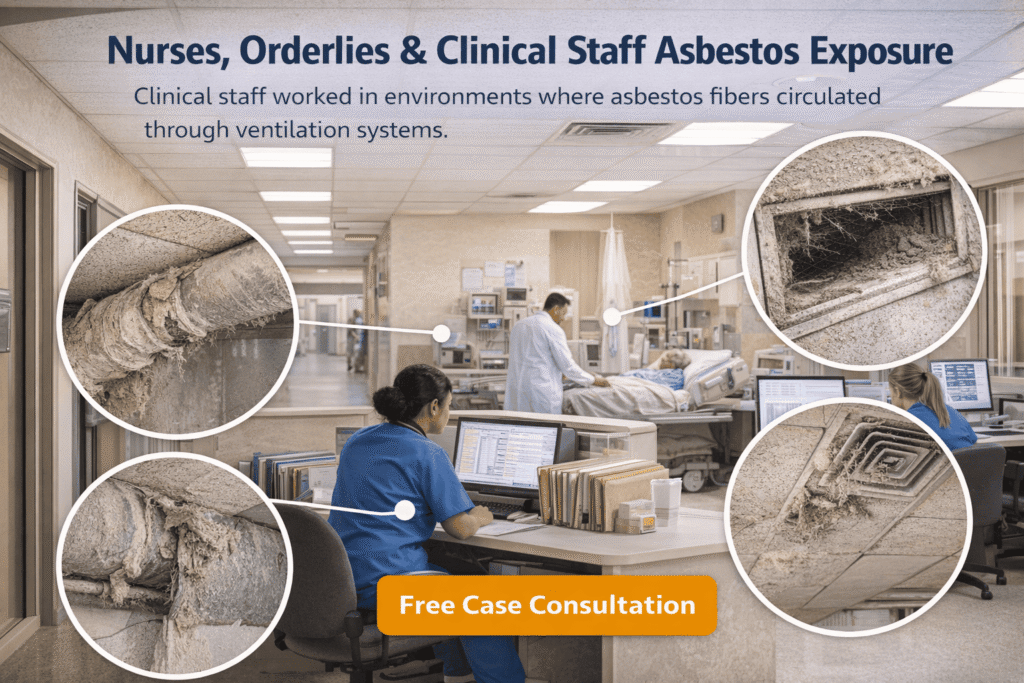
🩺 Nurses, Orderlies & Clinical Staff Asbestos Exposure
Nurses, orderlies, and clinical staff were exposed to asbestos by working daily inside hospital environments where aging asbestos materials contaminated air through insulation, ceiling systems, flooring, piping, and HVAC ventilation—often without warning and over long careers of continuous patient care.
Clinical staff form the backbone of hospital operations. Nurses, orderlies, technicians, therapists, and other frontline healthcare workers spend extended shifts inside patient rooms, corridors, operating suites, and treatment areas. In hospitals built or renovated before the 1980s, these spaces frequently contained asbestos in building materials and mechanical systems that deteriorated over time.
Unlike maintenance workers who disturbed asbestos directly, clinical staff experienced chronic, environmental exposure—breathing asbestos fibers circulated through ventilation systems or released during nearby repairs and renovations. Because exposure occurred gradually and invisibly, many clinical workers were never informed of the risk until decades later, when serious asbestos-related illnesses developed.
🏛️ Why Nurses & Clinical Staff Were Exposed to Asbestos
Nurses and clinical staff faced asbestos exposure because:
-
🏥 Hospitals were constructed with asbestos-containing materials
-
🌬️ HVAC systems circulated asbestos fibers throughout patient care areas
-
🧱 Aging insulation and fireproofing deteriorated over time
-
🚧 Repairs and renovations occurred during active hospital operations
-
⏱️ Clinical staff worked long shifts over many years in the same buildings
Exposure did not require direct handling of asbestos—simply being present in older hospital environments was enough.
🧪 Asbestos-Containing Materials Affecting Clinical Areas
Asbestos was commonly present in areas where nurses and clinical staff worked:
🧱 Patient Rooms & Corridors
-
Asbestos fireproofing on beams and columns
-
Drywall joint compound and plaster
-
Ceiling tiles and insulation above ceilings
🪜 Flooring & Adhesives
-
Vinyl asbestos floor tiles
-
Sheet flooring with asbestos backing
-
Floor mastics and adhesives
🌬️ HVAC & Ventilation Systems
-
Insulated ductwork and plenums
-
Fire dampers and air handler linings
-
Deteriorated insulation above ceilings
🔥 Piping & Utility Systems
-
Steam pipes running through walls and ceilings
-
Insulated risers and chases
-
Valve and gasket residue migrating into rooms
🧹 Renovation Residue
-
Dust released during lighting, cabling, or room upgrades
-
Fibers tracked through hallways after maintenance work
As these materials aged or were disturbed, asbestos fibers entered the breathing zones of clinical staff.
⚠️ How Asbestos Exposure Occurred for Nurses & Clinical Staff
Exposure commonly occurred through:
-
🌬️ Breathing recirculated air contaminated with asbestos
-
🧹 Settled dust disturbed by routine cleaning and foot traffic
-
🚧 Renovation or repair work during patient care hours
-
🪜 Accessing ceiling spaces near nursing stations
-
🚶 Fibers tracked between departments and rooms
Because nurses and orderlies move throughout hospitals during shifts, exposure occurred in multiple locations daily.
🌫️ Hospital-Wide Asbestos Contamination
Asbestos exposure among clinical staff was intensified because:
-
🌬️ HVAC systems distributed fibers throughout buildings
-
🏥 Large hospitals amplified airborne spread
-
⏱️ Continuous occupancy increased cumulative exposure
-
🧹 Cleaning re-aerosolized settled asbestos dust
This created a persistent background level of asbestos in patient care areas, often unnoticed for years.
🧑⚕️ Clinical Roles Most at Risk
🩺 Registered Nurses & Licensed Practical Nurses
Worked full shifts in patient rooms and corridors.
🛏️ Orderlies & Patient Care Technicians
Moved patients through contaminated areas.
🧪 Technologists & Therapists
Worked in imaging, labs, and treatment rooms.
🧹 Clinical Support Staff
Assisted with patient care near renovation and repair areas.
🏥 Long-Term Unit Staff
Experienced prolonged exposure due to years in the same facility.
Because exposure was environmental, job title did not eliminate risk.
🧬 Secondary (Take-Home) Asbestos Exposure
Clinical staff exposed to asbestos often carried fibers home on:
-
Uniforms and scrubs
-
Shoes and outerwear
-
Hair and skin
-
Personal vehicles
Family members were exposed during laundry and household contact. Many mesothelioma cases have been linked to secondary exposure from nurses and hospital staff.
🫁 Health Risks Linked to Clinical Asbestos Exposure
Long-term environmental asbestos exposure is associated with:
🧠 Mesothelioma
A rare, aggressive cancer almost exclusively caused by asbestos.
🫁 Asbestosis
Progressive lung scarring causing chronic breathing difficulty.
🫁 Lung Cancer
Elevated risk following prolonged asbestos exposure.
Because exposure often occurred at low levels over long periods, symptoms frequently appeared decades after employment.
📜 Safety Failures Affecting Nurses & Clinical Staff
Many hospitals failed to:
-
Identify asbestos in occupied patient care areas
-
Warn nurses and staff of environmental asbestos risks
-
Monitor indoor air quality during renovations
-
Isolate work areas during maintenance
-
Schedule repairs during off-hours
-
Perform asbestos abatement before upgrades
These failures are central to asbestos claims involving nurses and clinical workers.
❓ Frequently Asked Questions (FAQs)
1️⃣ Can nurses develop mesothelioma without handling asbestos?
Yes. Long-term environmental exposure is a known cause.
2️⃣ Were patient care areas contaminated by asbestos?
Yes. Fibers circulated through ventilation and dust.
3️⃣ Did renovations increase exposure risk?
Yes. Repairs often released hidden asbestos.
4️⃣ Can family members file secondary exposure claims?
Yes. Take-home asbestos exposure is legally recognized.
5️⃣ Can claims still be filed decades later?
Yes. Asbestos diseases have long latency periods.
⚖️ How a Lawyer Can Help Get Compensation
An experienced asbestos lawyer can help nurses and clinical staff by:
-
Investigating hospital building histories and renovation records
-
Identifying asbestos-containing materials in patient care areas
-
Tracing manufacturers of insulation, flooring, and fireproofing
-
Documenting environmental and secondary exposure
-
Filing mesothelioma lawsuits
-
Submitting asbestos trust fund claims
-
Coordinating claims across multiple exposure sources
-
Maximizing total compensation available
Because clinical exposure is often building-wide, legal cases frequently involve multiple responsible parties.
📞 Free Case Evaluation – Get Help Today
If you worked as a nurse, orderly, or clinical staff member in a hospital and developed mesothelioma or another asbestos-related illness—or were exposed through a family member—help is available.
📞 Call Now for a FREE Case Evaluation: 800-291-0963
There is no obligation, and compensation may be available.
📌 Key Takeaways
-
Nurses and clinical staff faced daily asbestos exposure
-
HVAC systems spread fibers throughout patient areas
-
Exposure occurred without direct handling
-
Families faced secondary exposure risks
-
Legal options may still be available