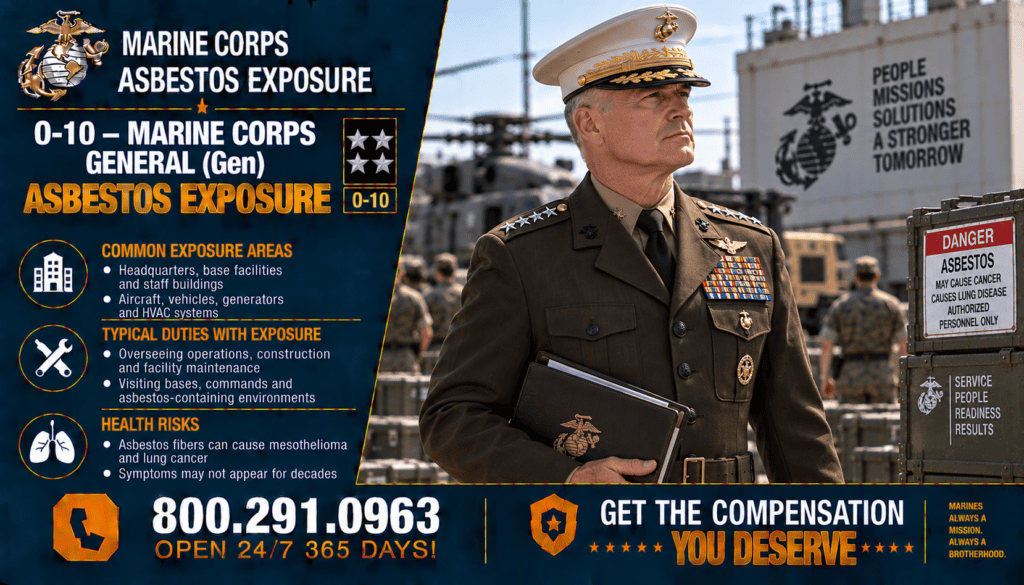
O-10 – Marine Corps General (Gen) Asbestos Exposure
⚠️ Asbestos Exposure Risks for Marine Corps Generals (O-10)
Marine Corps Generals (Gen) serve at the absolute highest levels of United States military leadership. They direct global Marine Corps strategy, force readiness, infrastructure oversight, and coordination with the Joint Chiefs, Congress, the Department of Defense, and allied military commands. Although their responsibilities are strategic rather than mechanical, Marine Corps Generals often spent 35–45 years rising through the ranks—decades when military infrastructure relied heavily on asbestos.
From the 1940s through the late 1980s, asbestos was used extensively across Marine Corps bases, aviation facilities, barracks, offices, shipboard transport spaces, and overseas installations. Even after bans began in the late 1970s, many buildings remained in daily use for decades. As a result, nearly every Marine Corps General—regardless of MOS—experienced chronic, long-term exposure simply by working and living in older facilities.
Historic Marine Corps installations such as:
-
Camp Lejeune
-
Camp Pendleton
-
MCB Quantico
-
MCAS Cherry Point
-
MCAS Miramar
-
Barstow
-
MCB Hawaii
-
Okinawa Bases
contained hundreds of structures with asbestos insulation, floor and ceiling materials, boiler systems, HVAC ducts, steam lines, and fireproof coatings. Generals spent extensive time inside these environments—from their earliest enlisted or officer years all the way through senior command positions.
Even at the O-10 level, daily exposure in historic command facilities remained a real and medically significant risk.
🛠 Typical Duties of a Marine Corps General (O-10)
Marine Corps Generals serve at the pinnacle of military authority. Their influence spans the entire service, and their daily work environment involves complex headquarters operations, joint command centers, and frequent base visits—many of which remained asbestos-contaminated well into the 21st century.
H3 — Senior Marine Corps Leadership (Your Provided Duty Expanded)
🛠 Marines at the O-10 rank serve in positions such as:
-
Commandant of the Marine Corps
-
Assistant Commandant of the Marine Corps
-
Commander of Marine Forces Command (MARFORCOM)
-
Commander of Marine Forces Pacific (MARFORPAC)
-
Director-level positions in the Pentagon
-
Senior roles within Joint Staff (J-codes)
-
Leaders of global Marine Corps operations and readiness
These positions require continuous presence inside historic command buildings, many of which were constructed when asbestos use was standard.
H3 — Strategic Oversight of Installations & Infrastructure
Generals supervise the entire infrastructure of the Corps, reviewing:
-
base construction
-
barracks life-cycle condition
-
utilities and mechanical systems
-
aviation maintenance facilities
-
logistics hubs
-
operational readiness centers
-
environmental and hazard compliance
This responsibility places them inside older buildings, mechanical rooms, and administrative spaces built long before asbestos restrictions.
H3 — Regular Travel Across Multiple Installations
Generals routinely visit major bases, training centers, aviation wings, recruit depots, support facilities, and overseas stations. Many of these locations have long histories of asbestos use.
Their travel schedule often includes:
-
command briefings
-
facility tours
-
maintenance oversight
-
readiness inspections
-
infrastructure evaluations
-
unit visits and operational walk-throughs
Each visit adds cumulative asbestos exposure.
H3 — Long Hours Inside Command Buildings
Most Generals spend:
-
10–14 hours per day
-
inside administrative buildings
-
many of which were built pre-1980
Command centers that housed decades of high-level operations frequently contained:
-
asbestos ceiling panels
-
aging steam lines
-
HVAC duct insulation
-
fireproof wall materials
-
electrical room insulation
-
boiler systems beneath office floors
These materials degrade over time, releasing microscopic asbestos fibers into the air.
🏗️ Asbestos Exposure Sources for Marine Corps O-10 Generals
While Generals do not perform manual labor, their exposure derives from long-term presence in worn, aging facilities filled with asbestos.
H3 — 1. Historic Command Buildings (Primary Exposure Source)
Your note—
“Historic command buildings”
—is correct and is the single largest asbestos exposure risk at this rank.
These facilities contained asbestos in:
-
floor tiles and backing
-
ceiling panels
-
wallboard and plaster
-
HVAC ducts and heating systems
-
steam and hot-water piping
-
structural fireproofing
-
insulation beneath subfloors
-
boiler rooms adjacent to office areas
Many remained untouched for decades due to funding delays.
H3 — 2. Administrative Facilities Built Before Asbestos Bans (Your Provided Note)
Marine Corps administrative centers built between WWII and the late 1970s relied heavily on ACM materials. Generals worked in these spaces daily.
Common ACM in these buildings included:
-
joint compound
-
drywall
-
mastic adhesives
-
asbestos-containing floor covering
-
acoustical ceiling panels
-
furnace and boiler insulation
-
electrical insulation boards
Routine wear and tear released airborne fibers, even without renovations or demolition.
H3 — 3. Aviation and Logistics Command Structures
Generals visiting or commanding aviation units encountered:
-
hangars lined with asbestos insulation
-
avionics rooms with ACM electrical boards
-
turbine and engine shops
-
aircraft maintenance shelters with fireproofing materials
-
steam and hot-water plant insulation
Even though they were not performing repairs, the environment itself was contaminated.
H3 — 4. Marine Logistics Bases & Depot Facilities
During inspections or command tours, Generals walked through:
-
warehouses
-
engine shops
-
power plants
-
steam lines running under roads
-
pump rooms
-
boiler rooms
-
supply depots
-
maintenance divisions
These facilities traditionally contained large amounts of friable asbestos.
H3 — 5. Overseas Installations With Delayed Asbestos Removal
Major overseas Marine Corps hubs had significant asbestos exposure due to slow abatement:
-
Okinawa
-
Korea
-
Japan
-
Middle East support bases
Generals often spent months or years forward-deployed in these areas during earlier career stages—adding to lifetime exposure.
H3 — 6. Senior Officer Housing
Many Generals lived on-base for decades, often in homes built in the 1960s–70s containing asbestos in:
-
ceiling texture
-
popcorn ceilings
-
HVAC duct linings
-
floor tiles
-
roofing felt
-
siding
-
heating systems
Family members may have been affected as well.
H3 — 7. Renovation, Construction & Abatement Oversight
Generals frequently tour or approve:
-
building demolitions
-
barracks reconstruction
-
hangar modernization
-
HVAC replacements
-
steam system overhauls
-
asbestos removal plans
These activities release extremely high quantities of asbestos fibers.
🩺 Asbestos-Related Illnesses in Senior Marine Corps Officers
Many O-10 officers experience asbestos illnesses decades after retirement.
Common diseases include:
-
Mesothelioma
-
Asbestos lung cancer
-
Asbestosis
-
Pleural plaques
-
Diffuse pleural thickening
-
COPD worsened by asbestos exposure
Symptoms may appear 30–50 years after initial exposure.
📂 Evidence Used to Prove Marine General Asbestos Exposure
Legal teams and VA reviewers often use:
-
assignment and deployment records
-
building construction histories
-
environmental tests
-
HVAC and boiler room schematics
-
maintenance and renovation logs
-
testimony from staff and Marines
-
before-and-after facility photos
-
abatement records from base engineers
Generals often served in documented asbestos “hot zones” of major installations.
💵 Compensation Options for Marine Corps O-10 Generals
H3 — VA Disability Benefits
-
Mesothelioma → 100% disability rating
-
Lung cancer → often 100%
H3 — Asbestos Trust Funds
Over $30 billion remains available.
H3 — Legal Claims Against Manufacturers
Claims target the companies that made ACM products—not the Marine Corps.
H3 — Survivor Benefits (DIC)
Tax-free benefits for surviving spouses and dependents.
📞 Get Help Documenting Asbestos Exposure as a Marine Corps General (O-10)
If you or a loved one served as a Marine Corps General (Gen) and later developed mesothelioma, asbestos lung cancer, or other asbestos diseases, your long-term exposure during decades of service is well-supported.
📞 Call 800.291.0963 for a free, confidential case review.
You’ll speak directly with a specialist who understands Marine Corps base infrastructure, asbestos building histories, and command-level exposure patterns.