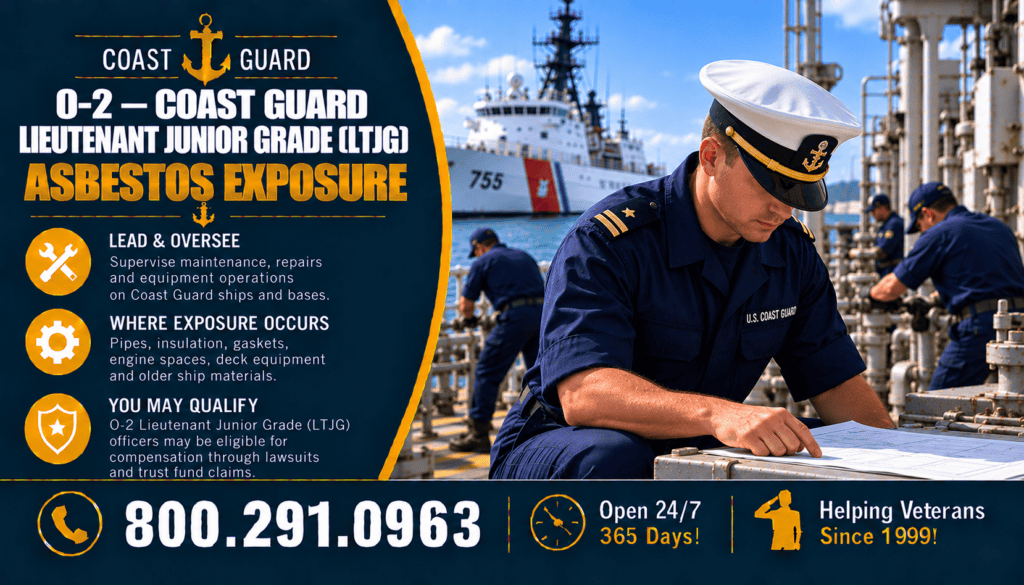
O-2 – Coast Guard Lieutenant Junior Grade (LTJG) Asbestos Exposure
⚠️ Asbestos Risks for Coast Guard Lieutenant Junior Grade (LTJG) Veterans
Coast Guard Lieutenant Junior Grade (LTJG) personnel serve as emerging leaders within engineering, deck, navigation, logistics, and operations departments. With more experience and responsibility than a new Ensign, the LTJG becomes deeply involved in system oversight, daily operational readiness, machinery management, shipboard inspections, and coordination of maintenance teams. As an assistant department head, the LTJG is required to supervise work across all major compartments of a Coast Guard cutter or shore installation.
Because Coast Guard vessels and facilities built prior to the early 1990s relied heavily on asbestos-containing materials (ACM), LTJG officers frequently entered and supervised operations in areas filled with deteriorating insulation, gaskets, pipe lagging, ceiling panels, machinery coverings, electrical systems, and fireproofing materials. Their role in overseeing engineering operations and participating in shipyard overhauls significantly increased their risk of long-term asbestos exposure.
This page details LTJG duties, common asbestos exposure sources, claim documentation, and compensation options.
🛠 Typical Duties of a Coast Guard Lieutenant Junior Grade (LTJG)
🧭 Assistant Department Head Roles
LTJGs commonly serve as assistant leaders for:
-
Engineering departments
-
Deck operations
-
Navigation teams
-
Damage control and safety divisions
-
Electrical and electronics operations
-
Communications departments
-
Logistics and supply functions
These positions require daily movement between operational compartments, many of which historically contained asbestos insulation and structural ACM.
⚓ Engine Room Oversight & Watchstanding
LTJGs supervise engine room operations, including:
-
propulsion system readiness
-
boiler monitoring
-
turbine and generator checks
-
pump and valve inspections
-
steam line integrity
-
emergency equipment functionality
Engine rooms aboard legacy cutters were among the highest asbestos concentration areas, with numerous ACM applications still present during the LTJG’s service period.
🛠 Supervision of Enlisted Maintenance Teams
LTJGs oversee:
-
MK (Machinery Technicians)
-
EM (Electrician’s Mates)
-
DC (Damage Controlmen)
-
ET (Electronics Technicians)
-
BM (Boatswain’s Mates)
These ratings regularly handle asbestos-containing:
-
gaskets
-
packing
-
thermal insulation
-
deck coverings
-
fireproofing materials
LTJGs inhale fibers released during these maintenance tasks.
📋 Conducting Inspections & Readiness Checks
LTJGs are responsible for:
-
compartment walkthroughs
-
structural inspections
-
damage control evaluations
-
watertight integrity checks
-
electrical and mechanical reviews
-
operational readiness assessments
Many legacy compartments were built with asbestos wallboards, pipe coverings, and ceiling panels.
🛳 Participation in Shipyard Operations
LTJGs frequently participate in:
-
drydock periods
-
depot-level maintenance
-
hull cutting and welding
-
major machinery replacement
-
insulation removal or repair
-
fireproofing updates
-
structural modifications
Shipyards were one of the most hazardous asbestos environments, exposing LTJGs to airborne fibers during large-scale removal and refurbishment.
📡 Duties Involving Electrical & Communications Systems
LTJGs also supervise the maintenance and readiness of:
-
radar
-
radio equipment
-
navigation systems
-
power distribution panels
-
emergency communications
Electrical equipment historically used asbestos for arc protection and heat resistance.
🏛 Exposure at Older Coast Guard Stations & Support Buildings
Shore facilities built pre-1980 often contained ACM in:
-
boiler rooms
-
ductwork
-
insulation
-
floor tiles
-
ceiling tiles
-
electrical closets
-
maintenance shops
Daily operations and inspections increased long-term exposure.
🧱 Asbestos Exposure Risks for LTJG Personnel
1. Engine Room Oversight (Primary Exposure Source)
Engine rooms contained:
-
asbestos pipe insulation
-
boiler refractory
-
turbine lagging
-
exhaust insulation
-
pump and compressor insulation
-
gasket debris
Heat and vibration caused continuous fiber release.
2. Shipyard Operations
Shipyard exposure included:
-
insulation removal
-
valve and gasket replacements
-
steam line overhaul
-
boiler rebuilds
-
hull cutting
-
compartment demolition
LTJGs supervising work inhaled fibers disturbed during these tasks.
3. Structural ACM in Cutter Compartments
Legacy ships used asbestos in:
-
deck tiles
-
overhead panels
-
wall insulation
-
soundproofing boards
-
bulkhead coverings
-
fireproof doors
LTJGs entered these compartments during inspections and training.
4. Electrical & Electronics ACM
Asbestos was common in:
-
switchboards
-
circuit breakers
-
arc-protection panels
-
wiring insulation
-
motor controllers
-
communication system housings
LTJGs supervising ET and EM work were routinely exposed.
5. Ventilation & Airflow Systems
Fibers circulated through:
-
ducting
-
fan rooms
-
HVAC units
-
engine intake vents
Inspections placed LTJGs directly in contaminated airflow zones.
6. Fireproofing Materials
ACM fireproofing included:
-
fire blankets
-
emergency heat shields
-
insulated bulkheads
-
firefighting gloves
-
thermal padding
Heat degradation caused these materials to crumble.
7. Deck & Operations Equipment
Deck equipment contained asbestos in:
-
brake linings
-
winch systems
-
mooring machinery
-
hydraulic systems
-
cargo-handling equipment
LTJGs supervising deck evolutions encountered fibers released during operations.
📊 Why LTJG Veterans Have Strong Asbestos Claims
Supervisory Duties in High-Exposure Areas
LTJGs were present for nearly every major repair or inspection.
Frequent Engine Room & Machinery Space Access
These spaces retained the most ACM materials into the 1980s.
Shipyard Overhauls Significantly Increased Exposure
Large-scale insulation removal produced extremely high airborne fiber levels.
Documented Asbestos Locations Match LTJG Duties
Their job responsibilities align closely with known ACM applications.
Long-Term Career Progression
LTJGs often move into O-3 and O-4 roles, increasing cumulative exposure.
📂 Evidence Used in LTJG Asbestos Claims
📁 Service & Performance Records
Confirm supervision in engineering, deck, and operations divisions.
🛳 Cutter Technical Manuals & Schematics
Show ACM use in:
-
boilers
-
turbines
-
insulation layers
-
structural materials
🧰 Inspection Logs & Watchstanding Records
Document presence in contaminated compartments.
⚓ Drydock & Shipyard Activity Reports
Demonstrate involvement in high-risk overhaul periods.
📜 Witness Statements
From MKs, EMs, DCs, ETs, and fellow officers.
💼 Example Compensation Awards for LTJG Veterans
Case Example 1 — LTJG Engineering Officer
Engine room supervision
$3.9M compensation
Case Example 2 — LTJG Deck & Operations Officer
Deck machinery ACM exposure
$3.2M compensation
Case Example 3 — LTJG Shipyard Project Participant
Drydock asbestos removal exposure
$3.4M compensation
💙 Compensation & Benefits for LTJG Veterans
💵 Asbestos Trust Fund Payouts
Part of the nationwide $30+ billion system.
⚖ Legal Claims Target Manufacturers Only
Not the Coast Guard or federal government.
❤️ Survivor Benefits for Families
VA DIC available for asbestos-related deaths.
📞 Get Help Identifying Your Coast Guard LTJG Asbestos Exposure
LTJG officers were frequently exposed to asbestos during engine room supervision, shipyard operations, and compartment inspections. Their claims are well-documented and historically strong.
📞 Call 800.291.0963 for a free case review today.