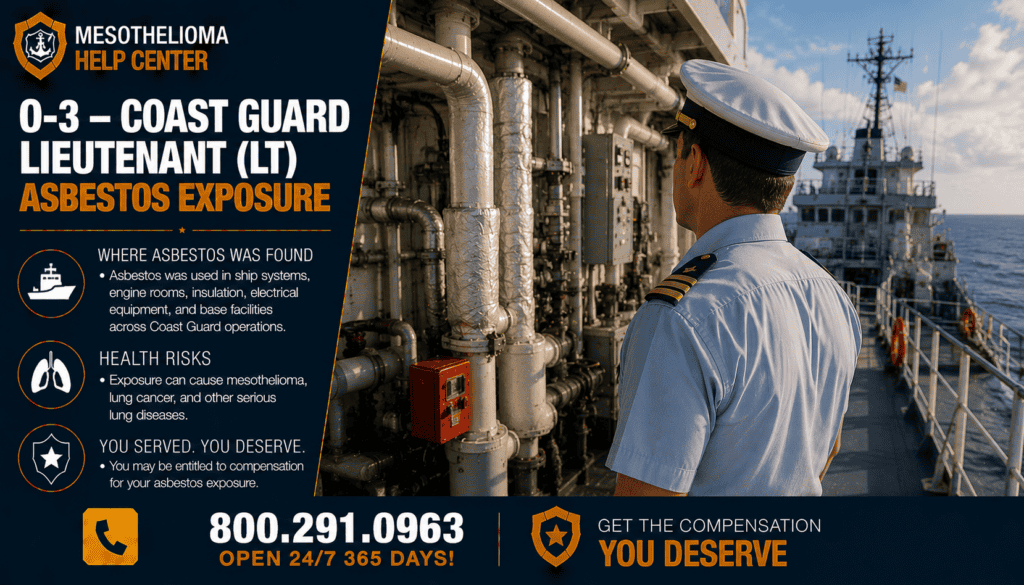
O-3 – Coast Guard Lieutenant (LT) Asbestos Exposure
⚠️ Asbestos Risks for Coast Guard Lieutenant (LT) Veterans
Coast Guard Lieutenants (LTs) serve as seasoned commissioned officers who manage major departments aboard cutters, shore units, and operational commands. As department heads, they oversee engineering divisions, deck operations, navigation teams, communications units, administrative departments, and mission-support operations. Their work requires constant movement throughout the ship, close coordination with enlisted maintenance personnel, and direct supervision of repair, readiness, and safety operations.
Because the Coast Guard relied extensively on asbestos-containing materials (ACM) from the 1940s through the late 1980s, LTs spent years working inside cutters filled with aging insulation, ACM floor and ceiling tiles, pipe lagging, electrical systems lined with asbestos, and machinery spaces where fibers were routinely released during maintenance. Even administrative and command-level spaces—where LTs spent more time compared to junior officers—were often built with asbestos-backed wall panels, tile adhesives, duct materials, and structural ACM that deteriorated over decades.
This page outlines the duties of a Coast Guard Lieutenant, how asbestos exposure occurred, and what evidence supports compensation claims.
🛠 Typical Duties of a Coast Guard Lieutenant (LT)
🔧 Department Head Aboard Cutters
As mid-grade officers, LTs typically command entire departments, including:
-
Engineering
-
Deck and seamanship operations
-
Communications
-
Navigation and electronics
-
Damage control and safety
-
Logistics and supply
-
Operations and readiness divisions
Managing these divisions requires daily access to shipboard compartments where asbestos was heavily used.
⚓ Administrative & Command Responsibilities
LTs perform extensive administrative and operational oversight, including:
-
personnel management
-
equipment condition reports
-
mission planning
-
training supervision
-
safety compliance reviews
-
maintenance scheduling
Even administrative offices aboard older cutters contained ACM in:
-
ceiling tiles
-
floor tiles
-
adhesive backing
-
ventilation ducts
-
bulkhead insulation
-
pipe chases
Movement and vibration caused these materials to degrade and release fibers.
🛠 Oversight of Maintenance & Repair Activities
LTs supervise repair and maintenance involving:
-
machinery spaces
-
pump systems
-
boilers
-
electrical panels
-
navigation equipment
-
structural repairs
-
valve and gasket replacements
Although they do not perform most repairs, LTs inhale the asbestos fibers released when crews disturb ACM materials.
📋 Conducting Shipboard Inspections
Lieutenants conduct:
-
readiness assessments
-
engineering walk-throughs
-
safety inspections
-
compartment surveys
-
structural integrity evaluations
-
fire safety checks
These inspections require entering engineering, auxiliary, and storage spaces with high concentrations of ACM.
⚓ Coordination During Drydock & Shipyard Cycles
LTs work closely with shipyard personnel during:
-
drydock overhauls
-
insulation and lagging removal
-
valve and pump refurbishment
-
hull cutting and welding
-
electronic system replacement
-
boiler teardown and reassembly
Shipyards historically contained some of the highest airborne asbestos levels in the Coast Guard.
📡 Electronics, Communications & Navigation Oversight
LTs supervise advanced systems that historically contained ACM:
-
radar equipment
-
communication consoles
-
circuit panels
-
wiring insulation
-
radio room components
-
navigation stations
Asbestos was commonly used for fire resistance in electrical systems.
🏛 Shore-Based Leadership & Administrative Assignments
When assigned to shore facilities, LTs often worked in older buildings with ACM in:
-
HVAC ducts
-
insulation
-
mechanical rooms
-
boiler systems
-
floor tiles
-
ceiling panels
-
wallboard materials
Routine inspections and daily office presence contributed to long-term environmental exposure.
🧱 Asbestos Exposure Risks for Coast Guard LT Personnel
1. Administrative and Command Areas Containing ACM
Even office settings aboard cutters contained asbestos in:
-
ceiling tile backing
-
floor tile adhesive
-
bulkheads
-
ventilation systems
-
electrical chases
Years spent working in these enclosed spaces increased risk.
2. Maintenance Oversight Involving ACM Materials
LTs supervised maintenance on:
-
pumps
-
valves
-
boiler systems
-
steam and hot water lines
-
gasket and packing replacements
-
insulation patching or removal
Fibers released during these tasks circulated through machinery spaces.
3. Engine Room & Auxiliary Machinery Exposure
Engine rooms contained:
-
asbestos pipe lagging
-
turbine insulation
-
boiler refractory
-
pump insulation
-
exhaust coverings
-
heat shields
LTs entered these spaces during readiness checks and engineering meetings.
4. Electrical ACM Components
Electrical equipment used asbestos for heat and fire protection, including:
-
switchboards
-
arc chutes
-
wiring insulation
-
control panels
-
breaker housings
-
motor controllers
LTs coordinating electrical division work were regularly present around these systems.
5. Shipyard Overhaul Exposure
During drydock cycles, asbestos exposure increased dramatically due to:
-
lagging removal
-
valve repacking
-
compartment demolition
-
boiler tearouts
-
structural rebuilds
-
ventilation replacement
LTs often supervised these activities from start to finish.
6. Ventilation System Contamination
Fibers from deteriorating insulation traveled through:
-
air ducts
-
blower systems
-
engine air intakes
-
fan rooms
-
overhead venting systems
LTs conducting ventilation inspections inhaled significant amounts of airborne asbestos.
7. Deck & Seamanship Equipment Exposure
Deck machinery historically contained ACM in:
-
brake systems
-
winch components
-
heat-resistant linings
-
mooring equipment
LTs supervising deck operations encountered asbestos during routine use.
📊 Why LT Veterans Have Strong Asbestos Claims
Department-Level Access to Every Cutter Compartment
As department heads, LTs entered nearly all machinery, administrative, and operational compartments.
Supervisory Exposure During ACM Repairs
LTs inhaled fibers released by enlisted personnel performing maintenance.
Multiple Drydock Cycles Throughout Career
These overhauls were extremely asbestos-heavy.
Long-Term Presence in ACM-Coated Administrative Areas
Offices aboard ships were not safe from asbestos exposure.
Duties Align With Known Coast Guard ACM Locations
Technical manuals show asbestos use directly in compartments routinely visited by LTs.
📂 Documentation Used in LT Asbestos Exposure Claims
📁 Service Records & Duty Assignments
Confirm LT’s department-head responsibilities.
🛳 Cutter Blueprints & System Manual Evidence
Show specific ACM materials in:
-
machinery
-
flooring
-
insulation
-
ventilation
-
electrical systems
🧰 Maintenance Logs & Inspection Reports
Demonstrate presence during repair operations.
⚓ Drydock Overhaul Records
Provide documented proof of high-risk exposure.
📜 Witness Statements
From MKs, EMs, DCs, ETs, BMs, and fellow officers.
💼 Compensation Examples for Coast Guard LTs
Case Example 1 — LT Engineering Officer
Engine room oversight exposure
$4.0M compensation
Case Example 2 — LT Operations Department Head
Administrative space ACM + maintenance supervision
$3.6M compensation
Case Example 3 — LT Shipyard Coordinator
Drydock asbestos removal exposure
$3.9M compensation
💙 Compensation & Benefits for LT Veterans
💵 Asbestos Trust Fund Compensation
Part of $30+ billion available.
⚖ Legal Claims Target Manufacturers Only
Never the Coast Guard.
❤️ Survivor Benefits (VA DIC)
Available for spouses and dependents.
📞 Get Help Identifying Your Coast Guard LT Asbestos Exposure
Coast Guard Lieutenants supervised high-risk environments, conducted inspections in ACM-lined spaces, and managed maintenance involving asbestos materials. Their claims are strong, well-documented, and highly compensable.
📞 Call 800.291.0963 for a free case review today.