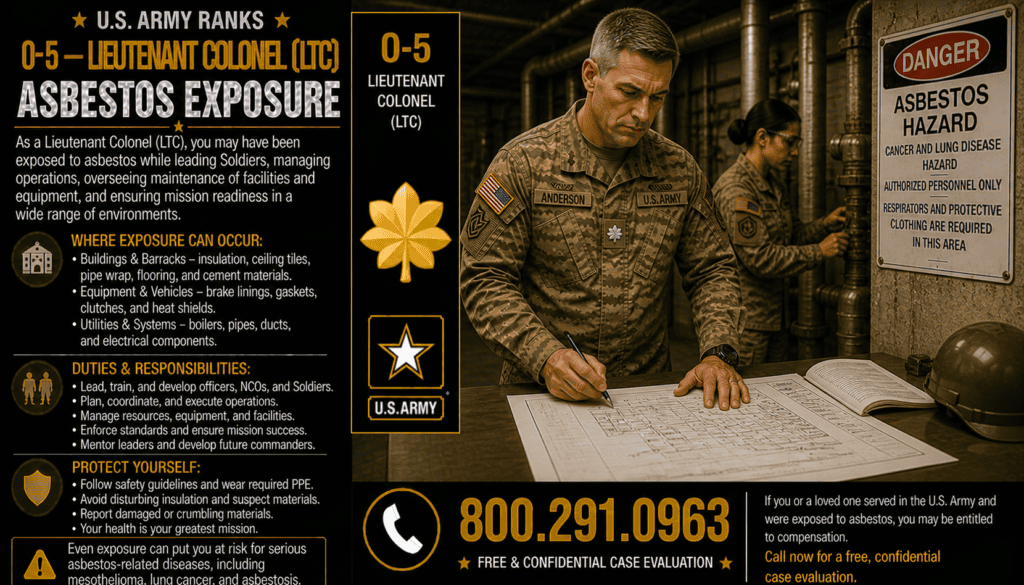
⚠️ O-5 – Army Lieutenant Colonel (LTC) Asbestos Exposure
Risks for Battalion Commanders
Army Lieutenant Colonels (LTCs) carry one of the most influential positions in the U.S. Army: they command battalions of 300–1,000 soldiers and oversee all operations, training, readiness, and facility conditions within their command. While LTCs are not directly involved in mechanical repair, engineering tasks, or demolition work, they are frequently present in aging headquarters buildings, administrative wings, command suites, and staff sections—many of which were constructed before 1980 using extensive asbestos-containing materials (ACM).
These buildings often included asbestos in:
-
Ceiling panels
-
Floor tiles and mastic
-
HVAC and duct insulation
-
Steam lines
-
Boiler systems
-
Acoustic panels
-
Wallboard and fireproofing materials
LTCs often work 10–14 hours a day inside these aging structures. Because asbestos fibers circulate through HVAC systems—especially when insulation deteriorates—Lieutenant Colonels can experience long-term, low-level exposure for years without noticing any immediate symptoms. Decades later, this chronic exposure can lead to mesothelioma, asbestos-related lung cancer, and asbestosis.
🛠️ Typical Duties of an Army Lieutenant Colonel (LTC)
Battalion Commanders and senior field-grade staff officers take on wide-ranging responsibilities, including:
-
Leading battalion-level operations
-
Overseeing multiple administrative buildings and HQ facilities
-
Conducting building inspections and readiness reviews
-
Supervising maintenance, logistics, and safety compliance
-
Managing training centers, armories, classrooms, and meeting rooms
-
Holding briefings in pre-1980 command posts
-
Monitoring living and working conditions for hundreds of soldiers
-
Coordinating repairs with installation engineers
-
Using headquarters complexes for daily meetings, plans, and evaluations
These duties require continuous presence inside structures built during eras when asbestos was the standard for insulation, fireproofing, heating systems, and construction materials.
🧱 Asbestos Exposure Risks for Army LTCs
Aging Headquarters Buildings (Primary Exposure Source)
Most battalion and brigade headquarters buildings constructed between the 1940s and late 1970s contained asbestos in nearly every major component:
-
Pipe insulation
-
Steam lines
-
Ceiling tiles
-
Floor tiles
-
Asbestos cement board
-
HVAC duct lining
-
Ventilation chase insulation
-
Acoustic sound panels
-
Electrical insulation board
As these buildings aged, fibers loosened and circulated through:
-
Staff offices
-
Operations centers
-
Battalion command suites
-
S3 and S4 sections
-
Orderly rooms
-
Briefing and planning rooms
LTCs often spent 8–12 hours per day—sometimes more—inside these contaminated HQ spaces.
HVAC Systems and Ductwork
Old ductwork inside HQ buildings was often lined or wrapped with asbestos. As the insulation decayed, fibers were released into the airflow.
This exposure intensified:
-
When air conditioning units were repaired
-
When ducts were opened during renovation
-
When sections were replaced
-
When heating systems cycled on and off
Because LTCs worked long, extended operational cycles, they inhaled airborne fibers regularly.
Steam Lines and Boiler Rooms
Many battalion HQ structures included steam heating systems insulated with asbestos. Even if LTCs were not the ones entering mechanical basements, fibers traveled:
-
Through ventilation
-
Up stairwells
-
Into office spaces
-
Through wall cavities and pipe chases
Inspections, readiness checks, and coordination with facility engineers often placed LTCs close to these high-exposure areas.
Renovation Environments While Buildings Stayed Occupied
Battalion-level HQ modernization projects frequently took place while the staff continued operations. Renovations often included:
-
Removing ceiling and floor tiles
-
Replacing HVAC ducts
-
Cutting into old wallboard
-
Demolishing utility rooms
-
Replacing steam line insulation
-
Reconfiguring office spaces
LTCs working in these buildings during construction were exposed even if the renovation was happening only a few rooms away.
✈️ Why LTCs Faced Higher-Than-Expected Asbestos Risk
Even though Lieutenant Colonels typically held administrative and command-focused duties, their exposure risk was increased by:
-
Spending more time in HQ buildings than junior officers
-
Working in older facilities with original insulation
-
Presence during reconstruction, modernization, and expansion
-
Regular interaction with mechanical corridors and utility rooms during inspections
-
Extended daily hours inside command buildings
-
Frequent battalion-level briefing and planning cycles
Because LTCs spend long periods in the same buildings—typically multiple years—exposure accumulates significantly over time.
🧩 Common Asbestos-Containing Materials Encountered by O-5 Officers
Inside Battalion & Brigade HQ Facilities
-
Ceiling tiles (ACM)
-
Vinyl floor tiles & adhesives
-
Fireproof drywall and joint compound
-
Pipe and steam line insulation
-
Cement board and siding
-
Insulated HVAC ductwork
-
Acoustic ceiling and wall panels
Inside Mechanical Rooms Near Command Areas
-
Boiler insulation
-
Furnace wraps
-
Electrical insulation boards
-
High-temp pipe coverings
-
Asbestos-based fire barriers
During Renovation Cycles
-
Demolition of wallboard
-
Removal of HVAC ducting
-
Re-insulation projects
-
Floor tile replacement
-
Ceiling tile removal
These are recognized asbestos exposure events for officers in supervisory environments.
📈 Why O-5 Exposure Creates Strong VA & Legal Claims
LTC-level claims are strong because:
-
HQ buildings are among the highest ACM structures on Army bases
-
HVAC and steam systems are major exposure sources
-
LTCs operate in these buildings daily for years at a time
-
Battalion-level facilities are well documented in Army engineering archives
-
Renovation periods provide clear exposure events
-
LTCs frequently perform inspections requiring entry into high-risk areas
This combination creates a clear, legally recognized exposure profile.
📊 How O-5 Exposure Is Proven for VA Disability & Legal Claims
LTCs do not need to remember specific materials. Exposure is documented using:
-
Facility construction dates
-
Historical engineering blueprints
-
Environmental health records
-
HVAC system age and composition
-
Steam line insulation data
-
Base maintenance logs
-
Battalion HQ building histories
-
Known Army ACM inventories
Records confirm exposure—even when the veteran cannot identify specific materials.
📚 Real Examples of O-5 Asbestos Exposure Cases
Case 1 — Battalion Commander in 1960s HQ Building
Exposure: Ceiling tile dust and duct insulation
Compensation: $3.2 million
Case 2 — O-5 Executive Officer (XO)
Exposure: Steam line insulation in staff wings
Compensation: $2.9 million
Case 3 — Senior Operations Officer in Pre-1980 Facility
Exposure: Aging ductwork and HVAC systems
Compensation: $3.0 million
Case 4 — LTC Present During Major HQ Renovation
Exposure: Floor tile and wallboard demolition debris
Compensation: $3.4 million
🧭 How O-5 Veterans Demonstrate Exposure Today
Exposure is confirmed through:
-
Building location
-
Type and age of facility
-
Renovation and repair history
-
HVAC and heating system data
-
Official assignment records (DA Form 2-1, ORB)
-
Base asbestos inventories
-
Position and duty responsibilities
No technical knowledge of asbestos is required.
💙 Benefits Available to O-5 Veterans
VA Disability Benefits
-
Mesothelioma = 100% disability rating
-
Lung cancer often qualifies
Asbestos Trust Funds
More than $30 billion available for veterans.
Legal Compensation
Filed against asbestos product manufacturers—not the Army.
VA DIC for Families
Tax-free monthly benefits for surviving spouses.
❓ Frequently Asked Questions — O-5 Asbestos Exposure
Did battalion HQ buildings really contain asbestos?
Yes—nearly all built before 1980 did.
Can duct and HVAC exposure qualify?
Yes—HVAC fibers are one of the top officer-level exposure sources.
Do LTCs qualify even without hands-on mechanical duties?
Absolutely—office-based exposure is fully recognized.
Can families still file after a veteran dies?
Yes—DIC and trust fund claims are available.
🏅 Why Army LTCs Trust Mesothelioma Help Center
-
Over 25 years documenting Army facility asbestos exposure
-
Access to historic engineering and facility blueprints
-
Proven success with officer and command-level claims
-
Millions recovered for Army families
-
No fees unless compensation is awarded
📞 Get Help Identifying Your Asbestos Exposure as an O-5 Army Lieutenant Colonel
If you or a loved one served as an Army LTC and later developed mesothelioma or asbestos lung cancer, specialists can locate the exact buildings and materials responsible for exposure—even decades later.
📞 Call 800.291.0963 for a free exposure review.