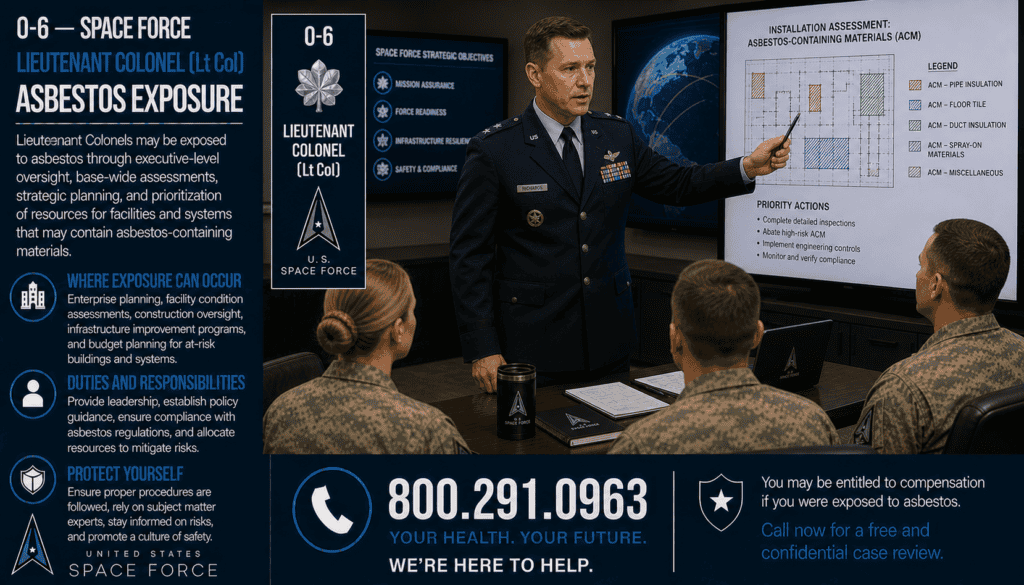
O-5 — Space Force Lieutenant Colonel (Lt Col)
🛠️ Squadron commander, oversees mission readiness
Asbestos Exposure
⚠️ Aged mechanical insulation
⚠️ Hangar ceiling and wall ACM
⚠️ Pre-1980 tile and adhesive
Asbestos Exposure Risks for Space Force Lieutenant Colonels
A Space Force Lieutenant Colonel (Lt Col) serves as a senior field-grade officer responsible for commanding squadrons, directing operational missions, ensuring personnel readiness, and overseeing key infrastructure and mission environments. Lt Cols supervise both operational and administrative areas and regularly enter facilities built decades before asbestos regulations were strengthened.
Many legacy Air Force and Space Force buildings—including hangars, control rooms, mechanical spaces, and administrative centers—were constructed using asbestos-containing materials (ACM). Even though Lt Cols typically perform oversight rather than hands-on maintenance, their command responsibilities place them directly in high-risk zones where insulation, structural coatings, tiles, and adhesives may be deteriorating.
The Command Role of a Space Force Lieutenant Colonel
Lt Cols are central to squadron-level leadership, mission execution, and readiness management. Their duties integrate strategic oversight with on-the-ground facility assessments.
Typical Responsibilities of a Lt Col Include:
-
commanding a mission squadron or serving as deputy group commander
-
supervising operations sections, personnel, and readiness programs
-
conducting facility walkthroughs to verify mission safety
-
coordinating maintenance, upgrades, and modernization actions
-
overseeing operational planning and resource distribution
-
ensuring compliance with Space Force and Air Force standards
-
reviewing risk assessments and infrastructure reports
-
working directly with engineers, contractors, and tech specialists
Because of these responsibilities, Lt Cols frequently enter older mission facilities that still contain asbestos.
Why Space Force Lieutenant Colonels Faced Asbestos Exposure
Lt Cols enter numerous base environments while leading mission-critical inspections and operational checks. Exposure occurs during:
-
readiness inspections
-
oversight of maintenance teams
-
supervision of facility renovations
-
emergency evaluations after equipment failures
-
mission preparation walkthroughs
Even brief visits into contaminated structures can result in long-term exposure risk.
Exposure Source #1: Aged Mechanical Insulation
Mechanical spaces built before 1980 often contain asbestos in:
-
pipe insulation
-
steam systems
-
boiler rooms
-
mechanical chases
-
HVAC duct insulation
Lt Col Exposure Occurs When:
-
entering mechanical rooms during facility checks
-
evaluating failures in heating or cooling systems
-
reviewing maintenance or modernization progress
-
overseeing contractor repairs involving insulated piping
Deteriorating insulation releases airborne fibers when disturbed.
Exposure Source #2: Hangar Ceiling and Wall ACM
Pre-1980 hangars are among the highest-risk asbestos structures, often containing ACM in:
-
sprayed-on insulation
-
structural fireproofing coatings
-
wall panels
-
ceiling materials
-
acoustic boards
Lt Cols Are Exposed During:
-
flightline operations oversight
-
safety or compliance inspections
-
mission-readiness briefings inside older hangars
-
walkthroughs after structural or equipment issues
Hangars accumulate dust that becomes airborne with vibration and airflow.
Exposure Source #3: Pre-1980 Tile and Adhesive
Air Force and Space Force administrative buildings traditionally used asbestos-containing:
-
floor tiles
-
mastic (adhesive)
-
ceiling tiles
-
soundproofing panels
Lt Col Exposure Happens When:
-
entering older administrative or operational areas
-
reviewing renovation or expansion work
-
conducting readiness assessments inside legacy spaces
-
walking through areas with cracked or degrading tiles
Tile deterioration produces fine, inhalable asbestos dust.
Long-Term Health Risks for Space Force Lieutenant Colonels
Asbestos-related diseases can emerge 20–50 years after exposure.
Primary Conditions Include:
-
🫁 Mesothelioma
-
🫀 Asbestos-related lung cancer
-
🌬️ Asbestosis
-
🩻 Pleural plaques and thickening
Even limited exposure in command environments can lead to significant disease.
VA Disability Benefits for Space Force Lieutenant Colonels
Lt Cols may qualify for VA benefits if their condition is linked to asbestos exposure during service.
Strong Supporting Evidence Includes:
-
records of inspections in older facilities
-
documentation of base construction dates
-
renovation or environmental reports
-
statements from subordinates or maintenance personnel
-
diagnostic findings connecting illness to asbestos
Mesothelioma qualifies automatically for 100% VA disability.
Asbestos Trust Fund & Legal Compensation
More than $30 billion remains available in asbestos trust funds for service-related exposures.
Compensation Options Include:
-
💵 asbestos trust fund payouts
-
⚖️ legal claims against asbestos manufacturers
-
👨👩👧 survivor compensation
-
🎖️ VA disability benefits (separate from legal awards)
Many Lt Cols qualify due to repeated entry into contaminated buildings.
📞 Free Case Review for U.S. Space Force Lieutenant Colonels
If you served as a Space Force Lt Col and later developed mesothelioma, asbestos lung cancer, or asbestosis, you may be eligible for significant compensation.
📞 Call 800.291.0963 today for a free, confidential case review.
A specialist will examine your service history, facility exposures, and medical diagnosis to determine what benefits and compensation you qualify for.