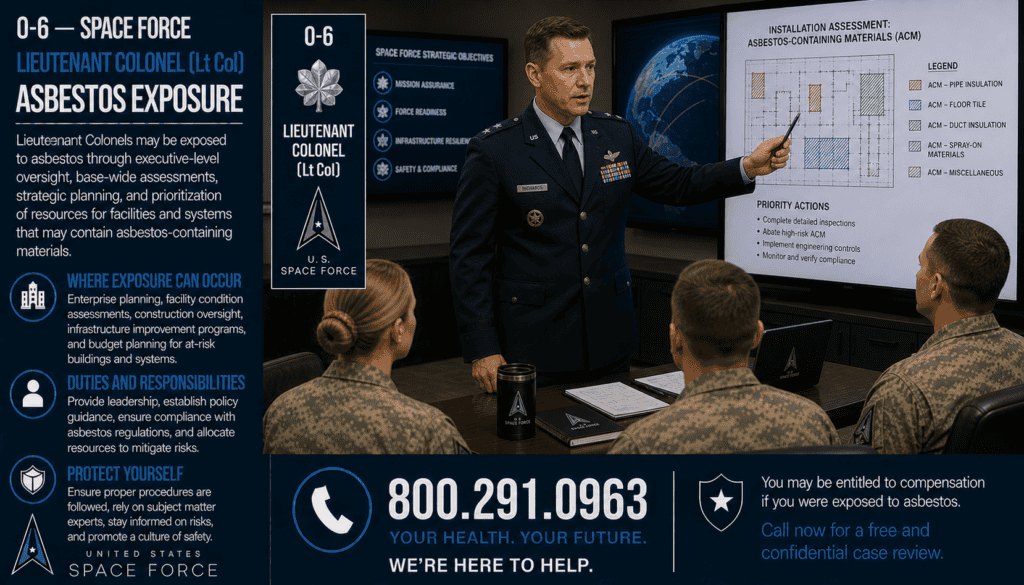
O-6 – Space Force Colonel (Col)
🛠️ Group commander, installation-level operations leadership
Asbestos Exposure
⚠️ Legacy radar stations
⚠️ Old infrastructure ACM
⚠️ Electrical room insulation
Asbestos Exposure Risks for Space Force Colonels
A Space Force Colonel (Col) serves as a senior field-grade officer responsible for commanding groups, overseeing installation-wide operations, managing mission readiness, and directing critical space, cyber, and surveillance capabilities. Colonels play a central role in infrastructure oversight, strategic planning, and operational continuity—requiring them to routinely enter mission facilities, mechanical rooms, and older Air Force structures inherited before asbestos restrictions.
Many radar stations, communications facilities, and power rooms built between the 1950s and 1980s contain significant asbestos in insulation, wall panels, ceiling materials, flooring, fireproofing, and electrical system components. Although Colonels perform strategic leadership rather than hands-on maintenance, their roles require high-frequency inspections, incident response walkthroughs, and readiness evaluations inside contaminated environments.
The Installation Leadership Role of a Space Force Colonel
Colonels command groups or serve as senior installation leaders, responsible for large-scale mission execution, personnel readiness, and coordination across multiple squadrons and operational sections.
Typical Responsibilities of a Col Include:
-
commanding a Space Force group
-
overseeing installation-wide operations and mission readiness
-
conducting facility inspections across multiple mission areas
-
reviewing risk assessments for aging infrastructure
-
coordinating renovation, modernization, and maintenance projects
-
supervising commanders and senior enlisted leaders
-
ensuring compliance with Space Force and Air Force standards
-
evaluating operational hazards and environmental risks
-
directing emergency or incident response activities
These responsibilities place Colonels inside older structures where asbestos remains widespread.
Why Space Force Colonels Faced Asbestos Exposure
Colonels interact with nearly every major installation facility, including:
-
radar sites
-
satellite communication buildings
-
electrical rooms and substations
-
older administrative and mission structures
-
mechanical rooms and utility corridors
-
hangars and pre-1980 control centers
Exposure occurs from deteriorating materials, operational vibration, and renovation activity.
Exposure Source #1: Legacy Radar Stations
Many radar facilities built decades ago contain asbestos in:
-
fireproof wall coatings
-
acoustic tiles
-
structural supports
-
ceiling insulation
-
electrical equipment housings
Colonels Encounter Exposure When:
-
inspecting radar systems for mission readiness
-
reviewing facility modernization needs
-
responding to outages or equipment failures
-
overseeing environmental and safety compliance
Radar station vibration can disturb asbestos dust trapped in walls and ceilings.
Exposure Source #2: Old Infrastructure ACM
Pre-1980 infrastructure commonly contains ACM in:
-
wallboard and joint compounds
-
ceiling panels
-
flooring
-
mastic and adhesives
-
structural fireproofing
-
mechanical duct insulation
Colonels Are Exposed During:
-
installation-wide readiness assessments
-
facility condition surveys
-
oversight of large renovation projects
-
movement through older multi-purpose buildings
Decades-old materials break down and release microscopic fibers.
Exposure Source #3: Electrical Room Insulation
Electrical rooms and substations frequently used asbestos in:
-
panel board insulation
-
arc chutes
-
wire coatings
-
heat shields
-
conduit linings
Colonels Face Exposure When Conducting:
-
risk assessments in critical power facilities
-
inspections after electrical failures
-
safety oversight during renovation or maintenance
-
command-level walkthroughs of high-voltage environments
Aging insulation sheds fibers due to heat, vibration, and deterioration.
Long-Term Health Risks for Space Force Colonels
Asbestos diseases typically emerge 20–50 years after exposure.
Major Conditions Include:
-
🫁 Mesothelioma
-
🫀 Asbestos-related lung cancer
-
🌬️ Asbestosis
-
🩻 Pleural plaques and pleural thickening
Even limited exposure during inspections can lead to severe illness.
VA Disability Benefits for Space Force Colonels
Colonels may qualify for VA disability compensation if diagnosed with asbestos-related conditions.
Evidence That Strengthens Claims:
-
documentation showing entry into older mission facilities
-
base construction or renovation records
-
exposure reports from radar and electrical facilities
-
statements from airmen, NCOs, or officers
-
diagnostic findings linking disease to service exposure
Mesothelioma automatically qualifies for a 100% VA disability rating.
Asbestos Trust Fund & Legal Compensation
More than $30 billion remains available through asbestos trust funds.
Colonels May Be Eligible For:
-
💵 trust fund compensation
-
⚖️ lawsuits against asbestos product manufacturers
-
👨👩👧 survivor benefits
-
🎖️ VA disability (separate from legal claims)
Most exposure came from aging Air Force installations—not Space Force mission operations.
📞 Free Case Review for U.S. Space Force Colonels
If you served as a Space Force Colonel and later developed mesothelioma, asbestos lung cancer, or asbestosis, you may qualify for significant compensation.
📞 Call 800.291.0963 now for a free, confidential case review.
A specialist will review your installation exposure history and help determine every compensation option available.