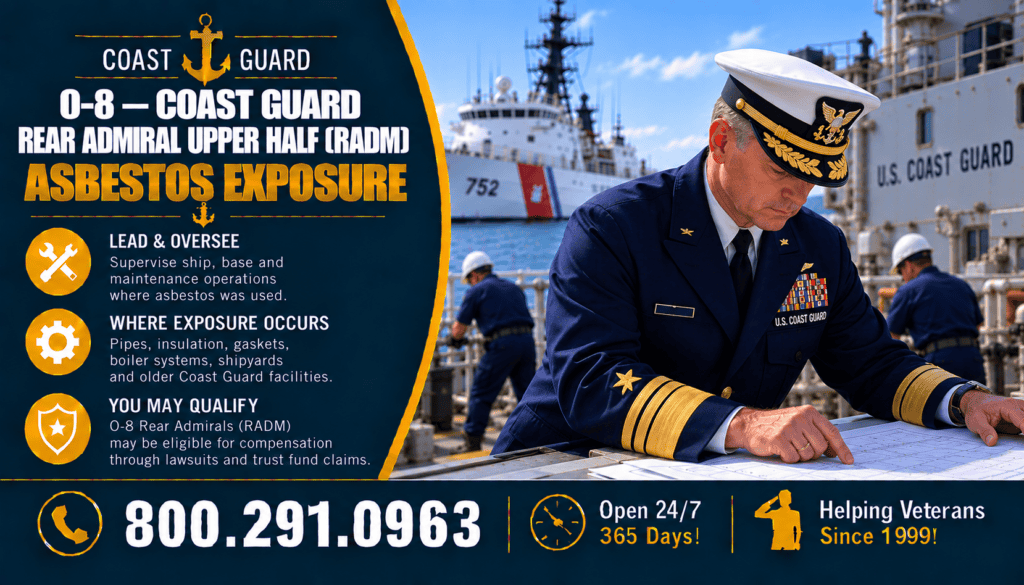
O-8 – Coast Guard Rear Admiral Upper Half (RADM) Asbestos Exposure
⚠️ Asbestos Risks for Coast Guard Rear Admiral Upper Half (RADM) Veterans
Coast Guard Rear Admiral Upper Half (RADM) officers are senior flag officers responsible for large regions, districts, mission areas, and major operational programs across the service. They oversee fleets of cutters, aviation units, stations, and sector commands, and often hold key positions in Coast Guard Headquarters and joint operational commands.
Although RADMs are far removed from hands-on mechanical work, their careers span decades of service, almost always beginning in junior shipboard or aviation roles and progressing through mid-level command positions. By the time they wear two stars, they have spent much of their lives inside cutters, air stations, sector command centers, and headquarters buildings—many built during the peak years of asbestos use. As a result, RADMs can still face significant risk of developing mesothelioma, asbestos-related lung cancer, and asbestosis later in life.
This page explains how Coast Guard RADMs may have been exposed to asbestos over a long career—even in leadership and administrative roles—and what compensation options are available now.
🛠 Typical Duties of a Coast Guard Rear Admiral Upper Half (RADM)
🧭 Senior Regional, Mission, or Program Command
RADM officers typically serve as:
-
District commanders responsible for multi-state regions
-
Area or major mission-area leaders
-
Senior operational or support program directors
-
Joint task force or interagency coordinators
-
Senior headquarters flag officers
These roles require constant engagement with:
-
district headquarters
-
sector command centers
-
operational facilities
-
air stations and large cutters
-
training and support installations
Many of these structures were built before 1980, when asbestos-containing materials (ACM) were extensively used.
⚓ Oversight of Cutters, Air Stations & Shore Facilities
RADM responsibilities often include:
-
supervisory control of entire cutter fleets
-
oversight of aviation wings and air stations
-
support for stations, sectors, and small units
-
inspection visits and readiness checks
-
participation in major exercises and evaluations
During these visits, RADMs move through:
-
bridges and command centers
-
operations and communications rooms
-
hangars and maintenance bays
-
machinery-adjacent spaces
-
administrative and planning offices
All of these environments historically contained ACM in insulation, flooring, ceiling tiles, pipe lagging, and structural materials.
📋 High-Level Inspections & Readiness Assessments
RADM roles require them to:
-
conduct base and sector inspections
-
review facility readiness and safety
-
tour older cutters during visits
-
inspect hangars and mechanical shops
-
evaluate modernization and maintenance programs
Though they are not turning wrenches, they enter the same contaminated spaces where asbestos fibers accumulate—in particular during or after maintenance work.
🏛 Long-Term Work in Headquarters & Command Facilities
Many RADMs serve one or more tours in:
-
Coast Guard Headquarters
-
regional command centers
-
district or area headquarters
-
large operational support facilities
These buildings—especially those built from the 1950s–1970s—often used asbestos in:
-
ceiling tiles
-
acoustical wallboard
-
HVAC duct insulation
-
boiler and mechanical rooms
-
floor tiles and mastic adhesives
Simply working there every day can cause chronic low-level exposure.
🛳 Career Path Through Earlier, More Exposed Ranks
Most RADMs previously served as:
-
junior officers on cutters or at aviation units
-
department heads (LT, LCDR, CDR)
-
ship or air station commanding officers (CAPT)
During those earlier years, they frequently:
-
lived aboard older cutters
-
supervised maintenance in ACM-heavy spaces
-
worked in hangars with asbestos insulation
-
walked engine rooms, boiler spaces, and pump rooms
This means that their RADM-level exposure is only the last chapter in a lifetime of contact with asbestos.
🧱 Asbestos Exposure Risks for Coast Guard RADM Personnel
1. Legacy Cutter & Shipboard Infrastructure
Throughout their careers, RADMs:
-
visit older cutters built before asbestos restrictions
-
spend time in bridges, CICs, and operations spaces
-
tour engineering spaces and machinery rooms
These areas historically contained asbestos in:
-
pipe lagging and insulation
-
boiler and turbine coverings
-
bulkhead panels
-
soundproofing and heat-shield materials
-
electrical panels and backs
Even short but repeated visits over many years contribute to exposure.
2. Long-Term Office Exposure in Pre-1980 Structures
Headquarters and district buildings traditionally used ACM in:
-
floor tile and adhesives
-
ceiling tiles
-
duct and HVAC insulation
-
boiler rooms and heating systems
-
electrical rooms and panels
RADMs may spend entire tours—often years—inside these buildings, breathing fibers that circulate through ventilation systems.
3. Hangars, Maintenance Bays & Aviation Spaces
When RADMs oversee aviation operations, they visit:
-
hangars
-
flight-line maintenance shops
-
avionics and structural repair spaces
These environments historically contained:
-
asbestos insulation
-
fireproof wall and ceiling panels
-
ACM brake, clutch, and friction products
-
heat-resistant engine and exhaust components
Dust from sanding, drilling, grinding, or removing parts can remain airborne.
4. Shipyard & Drydock Visits
During major modernizations and overhauls, RADMs may:
-
tour shipyards
-
review drydock progress
-
inspect large cutters mid-overhaul
-
brief with shipyard engineers and leadership
Shipyards disturb:
-
old pipe insulation
-
boiler brick and refractory
-
ACM panels and bulkheads
-
gaskets and packing materials
These activities create intense localized fiber clouds, and even short visits without respiratory protection can result in meaningful asbestos exposure.
5. Structural Repairs & Renovations of Old Facilities
When older bases or HQ buildings undergo renovation, RADMs may:
-
attend milestone walkthroughs
-
review modernization projects
-
tour partially renovated spaces
Any disturbance of:
-
ceiling tile
-
floor tile
-
old ductwork
-
insulated piping
-
boiler rooms
can release asbestos dust into occupied areas—even outside the work zones.
📊 Why RADM Veterans Have Strong Asbestos Claims
✔ Long, Multi-Decade Careers
RADM officers typically serve 25–35+ years, often beginning in the 1960s–1980s—prime asbestos exposure decades.
✔ Environmental, Not Just Occupational, Exposure
They may not have performed mechanical work, but environmental exposure inside ACM-filled buildings and cutters is fully compensable.
✔ Continuous Presence in High-Value, High-Risk Spaces
Command centers, HQ buildings, sector operations centers, and legacy cutters were all heavily built with ACM.
✔ Documented ACM Use Across Coast Guard Infrastructure
Engineering manuals, ship plans, and base blueprints confirm where asbestos was installed—which often overlaps exactly with RADM workspaces.
📂 Evidence That Helps RADM Veterans Prove Asbestos Exposure
📁 Service & Assignment Records
Show:
-
dates of service
-
duty locations
-
command roles
-
earlier shipboard or aviation assignments
This ties the veteran to known ACM facilities and cutters.
📄 Facility & Ship Engineering Records
Include:
-
base/facility construction dates
-
material lists
-
asbestos abatement or renovation records
-
cutter engineering diagrams
These documents identify ACM in the spaces where the RADM served and visited.
🛳 Drydock & Yard Records for Cutters
Confirm:
-
overhauls
-
modernization work
-
insulation removal
-
boiler and pipeline replacement
This helps prove high fiber levels during certain tours or visits.
👨✈️ Witness & Co-Worker Statements
Statements from:
-
officers
-
enlisted crew
-
base personnel
-
shipyard workers
can confirm that asbestos was visible, disturbed, or discussed during the RADM’s tenure.
💼 Example Compensation Outcomes (Comparable Senior Officers)
While exact amounts vary, similar high-ranking veterans across branches have received:
-
$4–5 million+ for mesothelioma
-
$3–4 million for asbestos-related lung cancer
These awards come from asbestos trust funds plus legal settlements against manufacturers—not the U.S. government or Coast Guard.
💙 Benefits & Compensation Options for RADM Veterans
💵 Asbestos Trust Funds
Part of the $30+ billion reserved for people harmed by asbestos products.
⚖ Lawsuits Against Asbestos Product Manufacturers
Legal claims are brought against the companies that made or supplied asbestos materials—not against the Coast Guard.
❤️ VA Disability Benefits
Mesothelioma is typically rated at 100% disability, and other asbestos diseases may also qualify for substantial monthly benefits.
👨👩👧 Survivor Benefits (VA DIC)
If the RADM has passed away from asbestos-related disease, spouses and dependents may qualify for Dependency and Indemnity Compensation (DIC).
📞 Get a Free Asbestos Exposure Case Review for Coast Guard RADMs
If you or a loved one served as a Coast Guard Rear Admiral Upper Half (RADM) and later developed mesothelioma, asbestos-related lung cancer, or another asbestos illness, there may be significant compensation available.
📞 Call 800.291.0963 for a free, confidential case review.
You’ll speak with a real mesothelioma case specialist who understands Coast Guard careers and asbestos exposure.