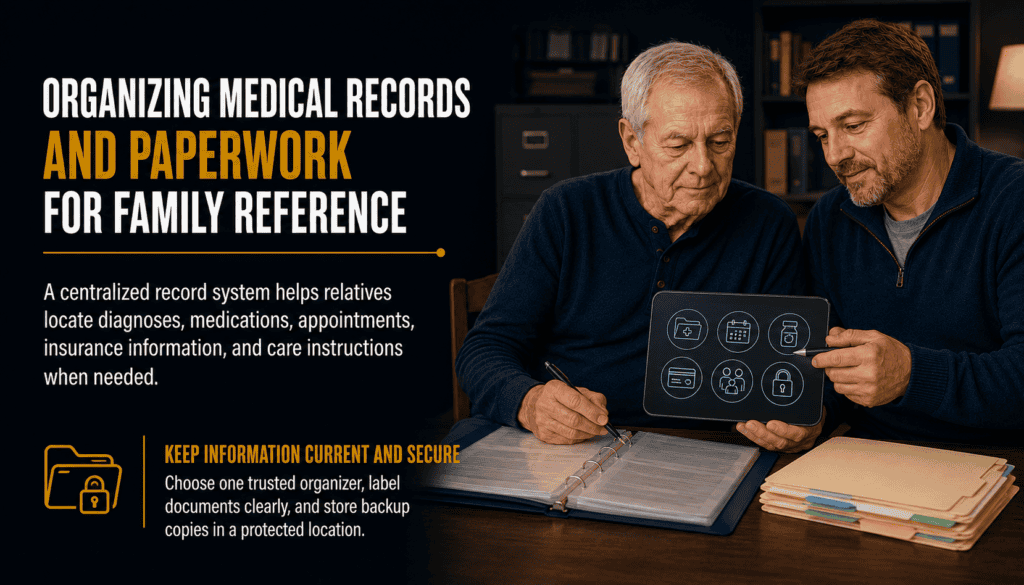
🗂️ Organizing Medical Records and Paperwork for Family Reference
Create simple systems to keep test results, insurance files, and treatment summaries accessible for all caregivers.
Mesothelioma treatment generates a large amount of paperwork—scan results, pathology reports, insurance correspondence, medication lists, treatment summaries, schedules, and billing documents. Without an organized system, families can quickly become overwhelmed, leading to missed information, delayed approvals, or confusion during appointments.
Building a clear, simple, and accessible system helps every caregiver stay informed, reduces stress, and ensures the patient receives consistent, well-coordinated care.
📞 Call 800.291.0963 to speak with a Mesothelioma Help Center advocate for guidance on organizing medical documents.
🧭 Step 1: Understand Why Medical Organization Matters
Mesothelioma care involves multiple specialists, phases of treatment, and ongoing insurance processing. Organized documentation streamlines communication and protects the patient’s care quality.
A strong system:
🩺 Ensures doctors receive accurate history
🧾 Speeds up referrals and authorizations
📅 Makes appointments more efficient
💼 Helps caregivers coordinate tasks
🛡️ Reduces the risk of lost records
📌 Keeps everyone informed and prepared
Goal:
To highlight why clear and accessible documentation supports better medical outcomes.
📁 Step 2: Create a Dedicated Medical Binder or File Box
Centralizing records prevents documents from being scattered across drawers, desks, or digital folders. Use a binder, accordion file, or portable file box.
Divide sections into:
🧪 Test results (CT, PET, X-rays, pathology)
💊 Medication lists and pharmacy printouts
📅 Treatment plans and schedules
🧾 Insurance authorizations and denials
💼 Medical bills and receipts
📩 Doctor correspondence
📑 Symptom tracking logs
Label each section clearly, and use plastic sleeves to protect original documents.
Goal:
To build a physical system that caregivers can bring to appointments for quick reference.
🗂️ Step 3: Set Up a Digital Medical Records Folder
Paper copies are useful—but digital access ensures documents are available anytime, anywhere.
Use:
📱 Google Drive
💻 Dropbox
📲 Apple Files
🖥️ A password-protected desktop folder
Organize files into the same categories as the physical binder, and upload:
🧾 PDFs from patient portals
📸 Photos of paper documents
💬 Notes from doctor visits
📅 Appointment confirmations
📩 Insurance emails or statements
Digital organization allows easy sharing with family members who cannot attend appointments in person.
Goal:
To provide instant access for all approved caregivers.
📝 Step 4: Maintain a Running Treatment Summary
Create one document that tracks the patient’s full medical journey. This becomes extremely valuable for oncologists, new doctors, emergency rooms, or second opinions.
Include:
📅 Diagnosis date
🧪 Stage and type of mesothelioma
💊 Past and current medications
⚙️ Surgeries and procedures
🔬 Test results with dates
💼 Treatment cycles and dosages
📞 Contact information for all medical providers
Update this summary after every major appointment.
Goal:
To provide a quick, accurate snapshot of the patient’s health for any medical professional.
🧾 Step 5: Track Bills, Insurance, and Authorization Documents
Mesothelioma care involves frequent insurance approvals and high-cost procedures. Staying organized reduces delays and denials.
Organize:
🧾 Explanation of Benefits (EOBs)
📌 Prior authorizations
💼 Payment receipts
📩 Appeal letters
📝 Case manager contact information
Create a spreadsheet for:
💰 Billing amounts
📅 Payment dates
🏦 Outstanding balances
🧾 Insurance submissions
Goal:
To prevent missed payments, track disputes, and ensure coverage is properly applied.
🧬 Step 6: Keep All Test Results Together for Comparison
Mesothelioma specialists often compare past imaging and lab results to measure progress. Keeping them in order makes follow-up appointments more efficient.
Sort tests by:
📅 Date
🔬 Test type (MRI, PET, CT, pathology, bloodwork)
📌 Facility where test was performed
🧪 Summary of findings
Ask for both:
🩻 Full image reports
🗂️ Printed radiology summaries
Goal:
To allow doctors and caregivers to view long-term changes and trends clearly.
📲 Step 7: Use Apps and Portals to Stay Updated
Modern medical systems offer tools that streamline access to information.
Use:
📱 MyChart
📲 Hospital-specific portals
📌 Pharmacy apps
⏰ Medication reminder apps
Benefits:
🧾 See lab results sooner
📅 Track upcoming appointments
📩 Message doctors securely
💊 Refill prescriptions easily
Share portal login access with trusted caregivers only.
Goal:
To simplify care through digital tools that keep everyone updated.
📋 Step 8: Create an Emergency Information Sheet
In urgent situations, caregivers need quick access to accurate medical details.
Include:
📛 Patient’s name and date of birth
📞 Emergency contacts
🩺 Diagnosis and stage
💊 Current medications
🚫 Allergies
📅 Treatment history
🏥 Hospital preferences
📌 Insurance information
Keep copies:
🏠 On the refrigerator (for EMTs)
🚗 In the car
📁 In the medical binder
📱 On each caregiver’s phone
Goal:
To ensure fast, accurate communication during emergencies.
🧷 Step 9: Make Documents Accessible to All Caregivers
Whether caregivers live together or share duties remotely, easy access ensures seamless support.
Share:
📂 Digital folders
📲 Calendar links
📁 Appointment instructions
📑 Doctor summaries
💬 Notes from each visit
Use clear naming conventions such as:
“CTScan_03-2025.pdf”
“OncologySummary_DrSmith_04-10-2025.pdf”
Goal:
To keep everyone aligned and informed without confusion.
🔄 Step 10: Review and Update the System Weekly
Medical paperwork accumulates quickly. Regular maintenance keeps the system effective.
Weekly tasks:
🧾 File new documents
🗑️ Remove duplicates
📅 Update appointments
💬 Add notes from consultations
📄 Review insurance updates
⚙️ Refresh the emergency sheet
A consistent schedule prevents the binder or digital folders from becoming overwhelming.
Goal:
To maintain clarity, accuracy, and long-term organization.
🤝 Where to Get Help
The Mesothelioma Help Center assists families with medical organization, insurance coordination, and treatment planning.
📞 Call 800.291.0963 for free guidance on managing records and supporting your loved one through treatment.
🧭 Summary
Organizing medical records and paperwork ensures clarity, reduces stress, and improves communication with doctors. By building a binder, creating digital archives, maintaining treatment summaries, and keeping insurance files in order, families can stay prepared and confident throughout the mesothelioma journey.
800.291.0963 — Free nationwide support available now.