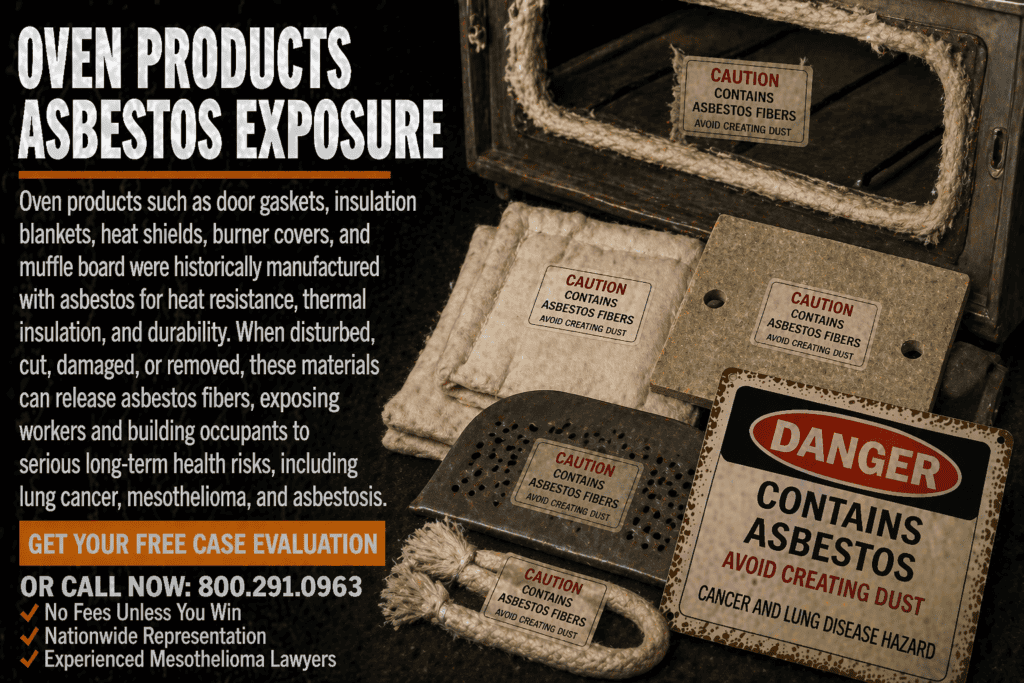
🔥 Oven Products Asbestos Exposure Mesothelioma Lawsuit
If you or a loved one has been diagnosed with mesothelioma or asbestos lung cancer due to exposure from oven products containing asbestos, you may qualify to file an oven products mesothelioma lawsuit. Our experienced legal team helps workers, veterans, and families pursue financial compensation by identifying the companies responsible for their asbestos exposure—often through negligent practices and a failure to provide proper safety warnings. We carefully build strong legal cases based on occupational and environmental exposure history, including asbestos exposure from oven insulation, firebricks, gaskets, seals, cement, refractory linings, protective gear, and heat-resistant coatings used in industrial, commercial, and residential ovens.
Through oven products asbestos lawsuits, victims may receive compensation for medical expenses, lost income, pain and suffering, long-term care, and wrongful death. At Mesothelioma Help Center, we guide families through every step of the legal process—with no upfront fees, and no payment unless we win. Our attorneys have decades of experience securing asbestos verdicts, settlements, and trust fund claims, helping victims hold negligent oven manufacturers and product suppliers accountable and obtain the justice they deserve.
📚 Here’s What You’ll Learn When You Read This Page:
-
Ovens across industrial, commercial, and residential settings relied heavily on asbestos for insulation and fire resistance.
-
Workers were exposed while maintaining, repairing, manufacturing, or demolishing asbestos-containing ovens and components.
-
Exposure was common in bakeries, foundries, factories, power plants, laboratories, restaurants, and residential kitchens.
-
Victims of oven asbestos exposure have filed lawsuits and trust fund claims.
📊 Facts About Asbestos in Oven Products
• Ovens used asbestos in nearly every thermal and insulation system until the 1980s.
• Asbestos Exposure: Extremely high in furnace rooms, bakery lines, and heat-treatment facilities.
• Asbestos-Related Disease Risk: Severe for bakers, maintenance crews, metallurgical workers, and appliance installers.
• Extreme heat and fire risks increased asbestos reliance in all oven applications.
• Similar Occupations: Furnace technicians, refractory masons, food industry workers, foundry staff, electricians, and appliance repair specialists.
🏭 History of Asbestos Use in Oven Products
Beginning in the early 1900s, asbestos became a critical material in oven manufacturing due to its unmatched fire resistance, insulation capability, and durability. Industrial furnaces, commercial ovens, laboratory kilns, and household cooking appliances all used asbestos to retain heat, prevent fires, and improve energy efficiency. Common applications included insulation blankets, refractory bricks, gaskets, seals, cement linings, fire doors, and high-temperature adhesives.
Exposure was especially high in enclosed areas such as bakery backrooms, foundry heat-treatment zones, industrial plants, and residential kitchens, where oven maintenance, dismantling, or repairs disturbed asbestos fibers. Workers and homeowners often endured years of unprotected exposure before safety regulations and alternative materials were introduced in the 1980s.
👷♂️ Number of U.S. Workers Exposed to Asbestos from Oven Products
| Occupational Group | Estimated Number of Workers Exposed |
|---|---|
| Industrial Oven Operators | Over 800,000 exposed to asbestos insulation and firebricks. |
| Commercial Bakery & Food Workers | Around 600,000 handled asbestos ovens in baking facilities. |
| Foundry & Heat-Treatment Workers | Approximately 500,000 exposed during oven and kiln operations. |
| Appliance Installers & Repair Techs | Nearly 400,000 serviced asbestos-containing residential ovens. |
| Maintenance & Facility Staff | About 550,000 disturbed asbestos oven linings and seals. |
| Laboratory & Research Personnel | Roughly 250,000 exposed through high-temperature lab ovens and furnaces. |
Total Estimated Exposure:
Over 3.1 million U.S. workers were exposed to asbestos from oven products.
🔥 Asbestos Oven Products
Asbestos was used extensively in oven construction and maintenance because of its exceptional ability to insulate, resist fire, and endure extreme temperatures. Unfortunately, these same properties that made asbestos valuable also created significant health risks when materials aged, deteriorated, or were disturbed.
🔧 Oven Insulation
Industrial and commercial ovens were lined with asbestos insulation to prevent heat loss and contain extreme temperatures. Cutting, replacing, or removing this insulation released dangerous airborne fibers, exposing technicians, maintenance crews, and operators to inhalation risks daily.
🧱 Refractory Bricks & Linings
High-temperature ovens and furnaces used asbestos-reinforced firebricks and refractory linings. During repairs, replacements, or demolition, dust from deteriorated bricks contaminated the air, endangering workers in foundries, bakeries, and metallurgical plants.
🪛 Gaskets & Seals
Asbestos gaskets and door seals prevented heat leaks and maintained pressure inside ovens. Over time, sanding, scraping, or replacing these components released toxic fibers, exposing appliance repair workers, bakers, and industrial technicians.
⚙️ Heating Elements & Components
Heating assemblies and components within industrial ovens often used asbestos boards and insulation wraps to control temperature. Routine servicing and breakdown repairs disturbed fibers, putting electricians and maintenance personnel in direct contact with asbestos dust.
🧤 Protective Clothing
Workers handling or operating ovens wore asbestos aprons, mitts, and gloves designed for fire resistance. Over time, these garments released fibers as they wore down, exposing food industry workers, foundry operators, and laboratory staff.
🧱 Cement & Coatings
Asbestos cement and refractory coatings were applied to oven walls, doors, and structural frames. Drilling, patching, or demolition of these surfaces during maintenance released asbestos dust into confined spaces, increasing the risk of inhalation.
🧰 Types of Workers & Asbestos Exposure from Oven Products
Exposure from oven products affected a wide range of trades and professions across multiple industries. Each group encountered asbestos differently, depending on their specific tasks in construction, maintenance, or daily operations.
👨🏭 Industrial Oven Operators
Operated and maintained high-temperature ovens in foundries, manufacturing plants, and heat-treatment facilities. Prolonged work near deteriorating insulation and refractory linings exposed them to asbestos fibers daily.
👨🍳 Bakery & Food Production Workers
Worked with commercial baking ovens lined with asbestos insulation. Cracked linings and damaged seals released fibers into air and food preparation spaces, exposing bakers and production staff over decades.
🔥 Foundry & Metallurgical Workers
Used annealing ovens, furnaces, and heat-treatment chambers built with asbestos materials. Frequent repairs and relining operations created heavy dust exposure in poorly ventilated facilities.
🛠️ Appliance Installers & Repair Technicians
Installed, serviced, and dismantled residential and commercial ovens. Removing old insulation, gaskets, or fireproof panels released hazardous fibers, often without adequate protective equipment.
🔧 Maintenance & Facility Staff
Repaired oven insulation, replaced seals, and maintained high-heat equipment across factories and food plants. Their daily activities frequently disturbed asbestos materials, releasing dust that lingered long after work.
🧪 Laboratory Technicians
Operated high-temperature lab ovens and kilns lined with asbestos insulation. Cracked linings and deteriorating seals released invisible fibers, contaminating research areas and exposing scientists and staff.
⚓ Marine & Shipboard Personnel
Worked aboard ships equipped with galley ovens and industrial cooking units insulated with asbestos. Poor ventilation in ship kitchens and engine-adjacent spaces intensified exposure levels.
🧱 Construction Crews
Built and installed ovens in industrial and commercial facilities using asbestos cement, refractory mortar, and insulation panels. Cutting and fitting these materials created significant airborne fiber hazards.
❓ FAQs About Oven Products and Mesothelioma Lawsuits
Who qualifies?
Anyone diagnosed with mesothelioma or asbestos-related lung cancer after exposure to asbestos-containing oven products may qualify for legal claims and asbestos trust fund compensation. This includes workers who operated, maintained, installed, or dismantled industrial, commercial, or residential ovens containing asbestos components — as well as family members exposed secondhand through contaminated work clothing.
How did exposure happen?
Exposure occurred during regular tasks such as cleaning, repairing, or replacing insulation, refractory linings, gaskets, and seals inside ovens. Disturbing these materials released microscopic asbestos fibers, which were inhaled by workers in factories, bakeries, laboratories, food production facilities, foundries, power plants, and homes. Even routine tasks like door seal replacement or removing old firebrick linings released dangerous dust into the air.
Are veterans eligible?
Yes. Veterans who worked with or near asbestos-containing ovens — especially in naval ships’ galleys, shipboard bakeries, or military base kitchens — may qualify for VA benefits in addition to pursuing lawsuits against oven manufacturers and product suppliers.
What’s the filing deadline?
Most states allow between 1 and 3 years from the date of diagnosis or death to file a mesothelioma or asbestos-related lawsuit. Acting quickly is crucial to preserve legal rights, secure evidence, and increase the likelihood of obtaining full compensation.
Do I pay anything upfront?
No. Our asbestos litigation attorneys operate on a contingency fee basis, meaning you owe nothing upfront and pay nothing unless financial compensation is successfully recovered. We cover all investigative costs, expert witness fees, and legal expenses.
🏭 Manufacturers of Asbestos Oven Products
Many oven manufacturers and product suppliers used asbestos-containing materials in the production of industrial, commercial, and residential ovens well into the 1980s. These companies manufactured insulation, refractory linings, cements, gaskets, firebricks, and other components that exposed countless workers and consumers to asbestos dust.
Oven Manufacturers and Product Suppliers
Produced asbestos-insulated ovens, refractory linings, and fireproof components for factories, bakeries, and power plants. Workers who installed, repaired, or dismantled these ovens often inhaled asbestos fibers during routine maintenance and demolition.
Industrial Equipment Companies
Supplied asbestos-containing insulation, fire doors, and high-temperature sealing products used in large-scale industrial ovens. Exposure occurred as technicians removed or replaced deteriorating insulation during system overhauls.
Commercial Kitchen Equipment Suppliers
Distributed commercial bakery and food service ovens lined with asbestos to meet heat resistance standards. Bakers, kitchen staff, and maintenance crews inhaled asbestos dust when these ovens were repaired or replaced.
Appliance Manufacturers
Produced residential ovens and kitchen ranges containing asbestos insulation and gaskets. Appliance installers, service technicians, and homeowners faced exposure during installation, servicing, and disposal of older units.
Refractory Material Producers
Supplied asbestos bricks, cement, and mortars used to line industrial furnaces, kilns, and ovens. Mixing and applying these materials released fine asbestos fibers into surrounding workspaces.
📈 Oven Products Mesothelioma Cases
From the early 20th century through the late 1980s, asbestos was a fundamental material in oven manufacturing due to its heat resistance, durability, and fireproofing capabilities. Industrial furnaces, bakery ovens, laboratory kilns, and residential cooking units all contained asbestos in insulation, linings, seals, and components. Workers involved in the installation, operation, repair, and demolition of these ovens were regularly exposed to asbestos fibers released during maintenance and replacement tasks. Decades later, many of these individuals developed mesothelioma and other asbestos-related diseases as a direct result.
Who Qualifies
Individuals diagnosed with mesothelioma after handling or working near asbestos-containing oven products — including industrial oven operators, bakery workers, foundry personnel, maintenance technicians, appliance installers, laboratory staff, and home repair specialists — may be eligible for financial compensation. Family members exposed to asbestos dust brought home on contaminated clothing may also qualify for claims.
📊 Statistics
-
Thousands of mesothelioma cases are directly linked to asbestos exposure in industrial ovens, commercial baking facilities, laboratory kilns, and residential kitchen appliances.
-
High-risk job sites include bakeries, foundries, food manufacturing plants, research laboratories, power plants, and commercial kitchens.
-
Settlements in oven asbestos exposure cases often exceed six figures, with additional compensation available through asbestos trust funds and legal claims.
🫁 Oven Products Asbestos Lung Cancer Cases
Oven products were also a significant source of asbestos-related lung cancer among industrial, commercial, and residential workers. Common tasks such as replacing door gaskets, cleaning insulation, relining oven interiors, or dismantling old cooking equipment often released harmful asbestos fibers into enclosed workspaces. These fibers remained suspended in the air long after work was completed, leading to prolonged inhalation over years of exposure. Even today, older ovens in factories, bakeries, laboratories, and homes continue to pose risks when disturbed during renovation, repair, or demolition.
Who Qualifies
Individuals diagnosed with asbestos-related lung cancer after working with or near asbestos-containing oven products — including bakers, foundry workers, appliance technicians, laboratory staff, and home renovators — may qualify for compensation. Family members exposed through secondary contact with asbestos-contaminated clothing may also be eligible for claims.
📊 Statistics
-
Thousands of asbestos-related lung cancer lawsuits have been linked to exposure from industrial furnaces, commercial bakery ovens, and residential cooking appliances.
-
Many claims result in substantial settlements or payouts from asbestos trust funds to cover medical expenses, lost wages, and ongoing care.
🏛️ History of Mesothelioma and Asbestos Lung Cancer From Oven Products
1900s–1970s: Asbestos was widely used in industrial, commercial, and residential oven products. Manufacturers relied on its superior heat resistance and insulation properties in ovens, furnaces, kilns, and kitchen ranges. Common asbestos components included refractory bricks, cement linings, door seals, insulation blankets, gaskets, and protective clothing. Workers were routinely exposed during installation, operation, maintenance, and dismantling — often without knowledge of the health risks.
1980s: As awareness of asbestos-related diseases grew and federal safety regulations tightened, the use of asbestos in oven manufacturing sharply declined. However, millions of ovens containing asbestos materials remained in operation for decades, continuing to expose workers and consumers during maintenance, retrofits, and demolition.
Today: Many mesothelioma and asbestos lung cancer patients were exposed decades earlier while working with or near asbestos-containing ovens. High-risk groups include bakery employees, furnace operators, metallurgical technicians, appliance installers, laboratory researchers, and home renovation contractors. Even secondhand exposure — from asbestos fibers carried home on clothing — continues to cause disease among family members.
⚖️ How a Mesothelioma Lawyer Can Help Oven Industry Workers
If you or a loved one worked with asbestos-containing ovens and later developed mesothelioma, asbestos lung cancer, or asbestosis, legal support is available. Oven product lawsuits have secured billions of dollars in compensation for victims and their families.
🕵️♂️ Investigate Job Sites and Exposure Records
Attorneys trace asbestos use across industrial, commercial, and residential oven job sites — identifying exposure sources, documenting product use, and connecting these findings to your diagnosis.
📜 File Trust Fund Claims and Lawsuits
Lawyers pursue all available compensation channels, including asbestos trust funds, lawsuits against oven manufacturers and suppliers, and settlements to cover medical bills, lost wages, and treatment costs.
👨👩👧👦 Represent Families of Deceased Workers
If a loved one has passed away from mesothelioma or asbestos-related cancer linked to oven exposure, wrongful death lawsuits can help families secure justice and financial support.
⚖️ Work on a No-Win, No-Fee Basis
There are no upfront costs — attorneys only get paid if they successfully recover compensation for you. This allows victims and families to pursue justice without financial risk.
🎖️ Assist Veterans with Military-Related Exposure
Attorneys assist veterans who were exposed to asbestos ovens during military service — including naval galley operations, shipboard kitchens, and base food service facilities — by filing VA claims and lawsuits against product suppliers.
📞 Legal Help for Oven Products Asbestos Exposure
If you or a loved one worked with or around asbestos-containing oven products and developed mesothelioma, lung cancer, or asbestosis — you may be entitled to significant financial compensation. Our legal team has decades of experience handling asbestos litigation and understands how to build strong cases against negligent oven manufacturers and product suppliers.
📍 Call Now: 800.291.0963
-
No upfront costs
-
No fees unless we win
-
Comprehensive product and exposure investigation
-
Help for bakers, maintenance workers, furnace operators, appliance installers, laboratory staff, and families
Or request legal help online 24/7: