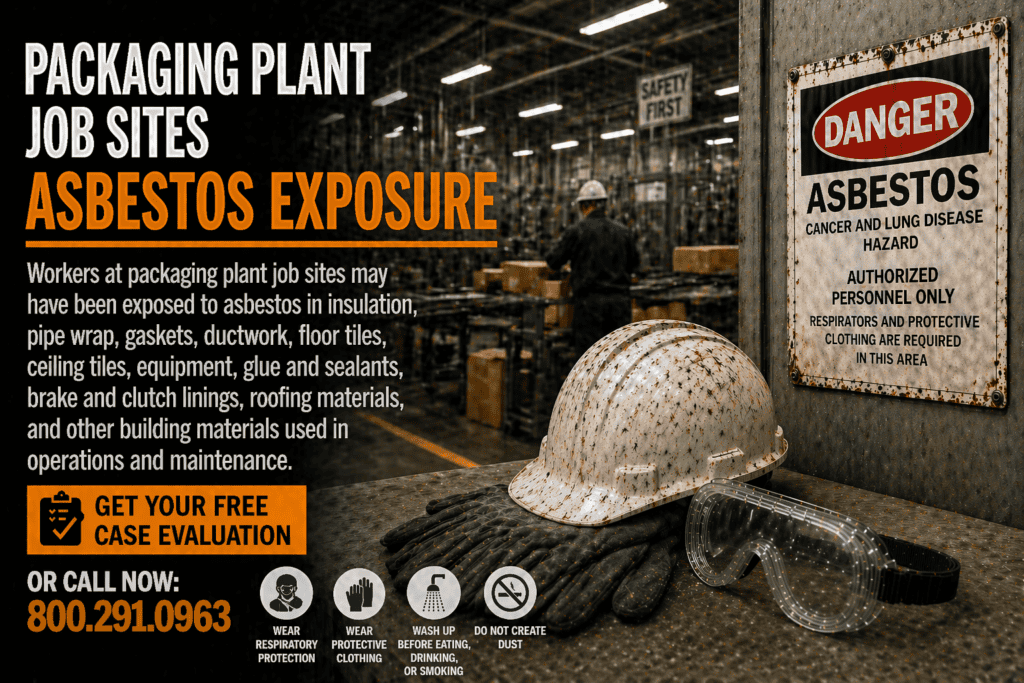
📦 Packaging Facilities Asbestos Exposure Lawsuit
Packaging facilities across the U.S. used asbestos in machinery insulation, brake systems, sealing equipment, and steam lines from the 1940s through the 1980s. Because packaging lines operated under heat and friction, asbestos was used to fireproof machinery and reduce wear—but this came at the cost of serious health risks to workers.
Employees who maintained or repaired packaging equipment often disturbed insulation and gaskets made with asbestos. Fibers became airborne during maintenance shutdowns, motor replacements, and daily cleaning tasks—especially in older plants with minimal ventilation.
📦 Packaging Facility Job Sites – What You’ll Learn From This Page:
📦 Packaging facilities used machinery insulated with asbestos, especially older heat-sealing and wrapping systems.
🔧 Maintenance workers disturbed asbestos insulation during equipment repair and retooling.
🧰 Sealers, molders, and laminating equipment contained gaskets and pads lined with asbestos.
🌫️ Dust from aging machinery spread throughout production lines, exposing operators and technicians.
💰 Packaging plant workers with asbestos illness may be eligible for legal or trust-based compensation.
📊 Facts About Packaging Facility Workers
• Over 600,000 Americans have worked in packaging and container manufacturing jobs since the 1950s.
• Asbestos Exposure: Widespread between the 1940s and early 1990s, especially in older machinery and insulation.
• Asbestos-Related Disease Risk: High, especially during maintenance, gasket removal, and boiler work.
• Studies have linked mechanical work in packaging facilities with elevated rates of mesothelioma and lung fibrosis.
• Similar Occupations: Machine operators, line technicians, boiler operators, electricians, pipefitters
🏭 History of Asbestos Use on Job Sites
Asbestos was widely used in packaging plants due to its affordability, heat resistance, and fireproofing qualities. Insulation was applied to ovens, sealing machines, boilers, and piping systems that kept packaging lines running at high speeds and high temperatures.
Over time, insulation wore down, broke apart, or was removed during servicing—releasing dangerous asbestos fibers into the air where workers inhaled them unknowingly.
Number of People Exposed to Asbestos in Packaging Facilities in the U.S.
Older packaging systems used heat-resistant materials that included asbestos insulation.
| Exposure Category | Estimated Number of People Exposed |
|---|---|
| Occupational Exposure (Machine operators, mechanics) | Approximately 370,000 workers exposed |
| Secondary Exposure (Family via tools/uniforms) | Estimated 55,000 exposed |
| Environmental Exposure (Dusty repair zones) | Around 90,000 people exposed |
👉 Total Estimated Exposure:
Over 515,000 people in the U.S. were exposed through packaging facility asbestos contact.
⚠️ Mesothelioma Risk for Packaging Facility Workers
Decades of exposure data show a clear link between packaging jobs and asbestos-related illness:
• Maintenance crews were among the most at risk due to frequent equipment teardown and reassembly.
• Electricians and mechanics also faced high exposure while accessing insulated systems.
• Diseases often appear 20–50 years after exposure, meaning many retired workers are now being diagnosed.
Timely medical evaluation and legal action are key to securing care and compensation.
🧪 Asbestos Products Used in Packaging Facilities
🧱 Machine Insulation Wraps
Lined packaging machines, steam sealers, and heaters; exposure occurred during disassembly and repair.
🔩 Gaskets and Seals
Used in mechanical joints and pump systems; scraping or replacing released asbestos fibers.
🧯 Heat Shields and Fire Panels
Installed on conveyor belts and hot sealing equipment; cracked surfaces released fibers during servicing.
🛢 Pipe Lagging
Wrapped around high-pressure steam and hot water lines; disturbed during system upgrades and leak repairs.
🧥 Protective Gloves and Aprons
Worn by operators near high-heat machinery; released dust from aging materials.
⚡ Electrical Backing Boards
Found in breaker boxes and control cabinets; rewiring disturbed asbestos-laced panels.
🛠 Brake Pads on Carts and Crates
Used in forklifts, conveyor brakes, and loading systems; dust released during replacement or failure.
🧪 Sealant Compounds
Applied around heating units and pipe joints; sanding or removal created airborne particles.
🏗 Boiler Insulation
Covered heating systems powering packaging lines; frequent exposure during maintenance.
🧵 Thermal Cloth Wraps
Used to insulate machine components; cut and applied during installation or repair.
📦 Conveyor Motor Insulation
Wrapped around drive and motor units; degraded over time and shed fibers during handling.
🏠 Ceiling Tiles and Wall Panels
Installed in equipment rooms; drilling or impacts dislodged asbestos dust.
👷 How Packaging Workers Were Exposed
Most exposure occurred during machine maintenance, daily operation, and routine plant inspections. Small, unventilated equipment rooms made conditions worse.
⚙️ Packaging Machine Operators
Handled heat-sealing and forming machines; exposure occurred near degraded insulation.
🛠 Maintenance Technicians
Removed and replaced gaskets, panels, and insulation; heavy exposure during servicing.
🔥 Boiler Operators
Worked with asbestos-lined systems that powered packaging lines; exposure during cleanouts and relining.
🧰 Pipefitters and Steam Mechanics
Serviced asbestos-wrapped piping; fibers released during cutting and sealing.
⚡ Electricians
Opened panels with asbestos backings; drilled, wired, and repaired components near fiber sources.
🧹 Janitors and Cleaners
Swept or vacuumed areas with settled asbestos dust; often unaware of the health risks.
📦 Shipping and Receiving Workers
Handled materials near insulated machinery and warehouse carts with asbestos brakes.
🔍 Quality Control Inspectors
Inspected lines during active operation; secondhand exposure from machinery and staff.
🚛 Forklift and Equipment Drivers
Used vehicles with asbestos brakes and clutches; exposure during use and maintenance.
👷 Supervisors and Plant Foremen
Oversaw operations in high-exposure areas without masks or protective gear.
🔧 Welders and Fabricators
Modified machinery lined with asbestos panels or pads; exposure during cutting and heat application.
🧪 Lab and Product Testing Staff
Worked near heated devices insulated with asbestos; exposure during tests and sample runs.
🏗️ Types of Packaging Facilities With Asbestos Exposure
📦 Consumer Goods Packaging Plants
Produced wrappers, cartons, and seals for retail goods; machinery insulated with asbestos materials.
🧪 Pharmaceutical Packaging Facilities
Used heat-sealed blister packs and sterile systems; exposure occurred around ovens and autoclaves.
🍽 Food & Beverage Packaging Plants
Operated shrink-wrap and conveyor systems lined with asbestos insulation; exposure during upgrades or leaks.
🏭 Industrial Packaging Plants
Produced drum liners, crates, and mechanical parts; asbestos present in insulation and brake pads.
📏 Custom Packaging Workshops
Handled niche orders with complex machinery; exposure occurred during setup and servicing.
🛍 Retail Packaging Manufacturers
Printed and sealed product boxes and bags; exposure from older machines and electrical panels.
🔥 Heat Seal & Vacuum Forming Plants
Ran high-heat press systems lined with asbestos; fiber release during part changes and cooling system maintenance.
🧴 Plastic Packaging Mold Shops
Formed containers and bottles in insulated presses; asbestos disturbed during retooling or repairs.
🚚 Logistics and Crate-Building Shops
Used conveyor systems and transport carts with asbestos parts; exposure occurred during daily operations.
📦 Shipping Supply Production Plants
Made bubble wrap, cartons, and labels; asbestos dust released during equipment repair or packaging line work.
❓ Common Questions About Packaging Asbestos Claims
Can I file if the plant closed down?
Yes — claims are made against asbestos product manufacturers, not the facility itself.
What if I didn’t know I was exposed?
Many workers were exposed unknowingly. Diagnosis of an asbestos disease is usually enough to pursue a claim.
What if I only worked there a few months?
Even short-term exposure can lead to illness. You may still qualify.
How do lawyers prove exposure?
Attorneys use product lists, maintenance logs, and witness statements from former coworkers.
Can my family file if I passed away?
Yes — surviving spouses and children may be eligible for wrongful death compensation.
What kind of compensation is available?
Six-figure settlements and trust fund payments are common in confirmed asbestos exposure cases.
⚖️ How a Mesothelioma Attorney Can Help Packaging Workers
A qualified asbestos lawyer can help by:
• Identifying asbestos sources at your former job
• Collecting employment, union, or product records
• Filing asbestos trust fund claims or lawsuits
• Navigating state deadlines and eligibility laws
• Supporting family members in wrongful death cases
• Offering free consultations and no upfront fees
You only pay if your attorney wins your case.
📞 Free Legal Help for Packaging Facility Workers & Families
If you or a loved one worked in a packaging plant and have been diagnosed with mesothelioma, asbestos lung cancer, or asbestosis—compensation may be available.
Whether you repaired conveyor systems or operated sealing machines, we can help.
Call Now: 800.291.0963
• No fees unless we win
• Full exposure investigation
• Lawsuit and asbestos trust assistance
• Help for family members and retirees
Or request help online 24/7