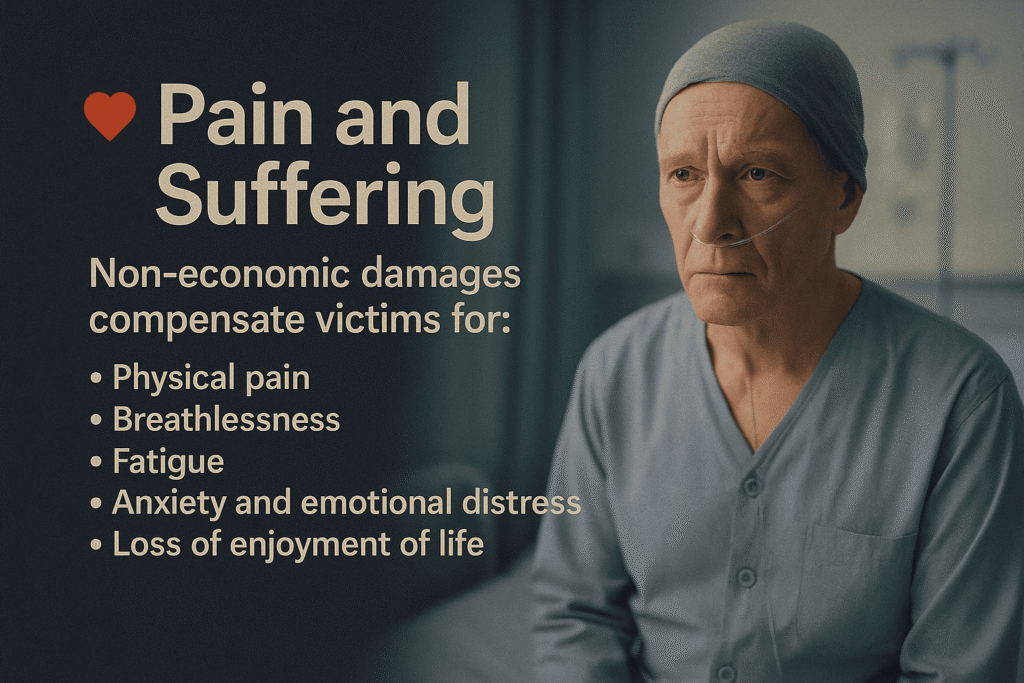
Pain and Suffering in Mesothelioma Claims
How Non-Economic Damages Compensate Victims for Physical and Emotional Hardship
Pain and suffering damages are one of the most significant forms of non-economic compensation available in mesothelioma lawsuits. These damages recognize that mesothelioma causes far more than financial loss—it brings intense physical pain, emotional strain, loss of independence, and major disruptions to daily life. Because the disease is aggressive and incurable, courts understand that mesothelioma victims endure a unique level of suffering that warrants meaningful compensation.
Pain and suffering damages reflect the real, lived experience of the patient. They acknowledge the hardship caused by breathing difficulties, fatigue, anxiety, uncertainty, and the inability to enjoy normal activities. Courts, juries, and attorneys rely on medical documentation, caregiver testimony, and expert analysis to understand the full scope of a patient’s suffering.
This article explains what pain and suffering includes, how it is proven, and why it plays a central role in mesothelioma compensation.
🔥 What Are Pain and Suffering Damages?
Pain and suffering damages compensate mesothelioma victims for physical pain, emotional distress, and overall reduction in quality of life. These damages do not require receipts or bills because they are not tied to financial losses—they represent human suffering that cannot be measured mathematically.
They typically compensate for:
-
Physical pain
-
Breathlessness and respiratory distress
-
Fatigue and weakness
-
Anxiety and emotional distress
-
Loss of enjoyment of life
These damages help ensure that the legal system recognizes the deep personal suffering caused by asbestos exposure.
🩺 Physical Pain
Mesothelioma is known for causing persistent, intense, and progressively worsening physical pain. Tumors in the pleura or peritoneum press on organs, nerves, bones, and tissues, resulting in significant discomfort.
Patients may experience:
-
Sharp chest or abdominal pain
-
Rib or back pain
-
Pain from fluid buildup
-
Pain during breathing
-
Post-surgical or treatment-related discomfort
📑 Evidence Courts Consider
-
Radiology and imaging results
-
Oncologist reports
-
Pain-management logs
-
Notes from palliative care specialists
-
Testimony from family documenting daily suffering
Physical pain is one of the largest components of pain-and-suffering awards because it dramatically affects the patient’s daily life.
💨 Breathlessness and Respiratory Distress
Difficulty breathing is one of the earliest and most distressing symptoms of mesothelioma. Fluid buildup in the chest or abdomen, reduced lung capacity, and tumor pressure all contribute to:
-
Shortness of breath
-
Wheezing
-
Coughing
-
Panic episodes caused by inability to breathe
-
Fear during physical activity
📑 Evidence Used for This Category
-
Pulmonary function tests
-
Medical reports detailing respiratory decline
-
Notes from respiratory therapists
-
Caregiver testimony about breathing episodes
Breathlessness makes even simple tasks—walking, talking, eating—feel exhausting, and courts recognize this as a major form of suffering.
⚡ Fatigue and Physical Weakness
Mesothelioma patients often describe endless, overwhelming fatigue that limits their independence. This fatigue may be caused by:
-
Tumor growth
-
Chemotherapy and radiation
-
Loss of appetite
-
Difficulty sleeping
-
Emotional stress
Fatigue can prevent patients from:
-
Leaving the home
-
Participating in family activities
-
Completing household tasks
-
Maintaining social connections
📑 Evidence Courts Review
-
Oncology treatment notes
-
Personal journals describing fatigue
-
Statements from caregivers
-
Occupational and physical therapy evaluations
Fatigue contributes significantly to the loss of independence and quality of life.
😔 Anxiety and Emotional Distress
A mesothelioma diagnosis causes intense emotional suffering. Victims frequently experience:
-
Anxiety about their health and future
-
Depression
-
Fear related to treatments
-
Emotional exhaustion
-
Stress over financial and family responsibilities
-
Trauma associated with pain and decline
📑 Evidence Courts Consider
-
Mental-health evaluations
-
Counseling notes
-
Prescriptions for anxiety or depression
-
Testimony from spouses, children, and caregivers
Emotional distress has a substantial impact on a patient’s well-being and is a key factor in determining pain-and-suffering awards.
🌅 Loss of Enjoyment of Life
Mesothelioma restricts nearly every activity the patient once enjoyed. The disease affects mobility, stamina, breathing, and social interaction, leading to the loss of meaningful experiences and relationships.
Patients may no longer be able to:
-
Travel
-
Play with grandchildren
-
Garden or work outside
-
Attend social events
-
Participate in hobbies
-
Exercise or stay active
📑 Documentation Used for This Damage
-
Testimony from family describing lifestyle changes
-
Personal notes or journals
-
Evaluations from occupational therapists
-
Reports on functional limitations
Loss of enjoyment damages are highly personal, reflecting the activities and experiences that gave the patient purpose and happiness.
🧭 How Courts and Juries Evaluate Pain and Suffering
Because pain and suffering damages do not come with fixed financial values, courts rely on a combination of medical records, expert evaluations, and personal testimony.
🧪 Medical Documentation
Confirms diagnosis, pain progression, treatment effects, and physical decline.
🗣 Caregiver and Family Testimony
Provides insight into daily struggles, fear episodes, emotional impact, and lost independence.
📘 Expert Reports
Life-care planners, psychologists, and palliative specialists help quantify suffering.
📝 Patient Journals
Offer firsthand descriptions of pain, fear, fatigue, and emotional changes.
⚖ Comparable Case Verdicts
Courts often look at previous mesothelioma awards to determine a reasonable amount.
Pain and suffering awards in mesothelioma cases are often substantial because the disease is severe, fast-moving, and exceptionally painful.
🔍 Why Pain and Suffering Damages Matter
Pain and suffering damages serve several important purposes:
1️⃣ They Recognize Human Suffering
Mesothelioma inflicts deep physical and emotional harm. Compensation acknowledges this reality.
2️⃣ They Hold Companies Accountable
Asbestos exposure was preventable.
These damages reinforce accountability for corporate negligence.
3️⃣ They Support Patients and Families
Compensation helps families focus on care, comfort, and emotional support rather than financial pressure.
🧾 Pain and Suffering Damages in Settlements vs. Trials
🏛 Settlements
Most mesothelioma cases settle out of court. Pain and suffering is built into the settlement value through negotiations.
⚖ Trials
Juries may award very high pain-and-suffering damages based on witness testimony and expert evidence.
🏢 Trust Funds
Asbestos trust funds do not calculate pain and suffering separately.
Instead, this category is built into the disease-level compensation amount for mesothelioma.
📞 Free Case Evaluation — Call 800-291-0963
If you or a loved one is suffering from mesothelioma, you may be entitled to significant pain-and-suffering compensation in addition to medical and financial damages.
Call 800-291-0963 now for a free, confidential case evaluation.
No fees unless you win.
We are here to help you pursue justice, accountability, and the compensation your family deserves.