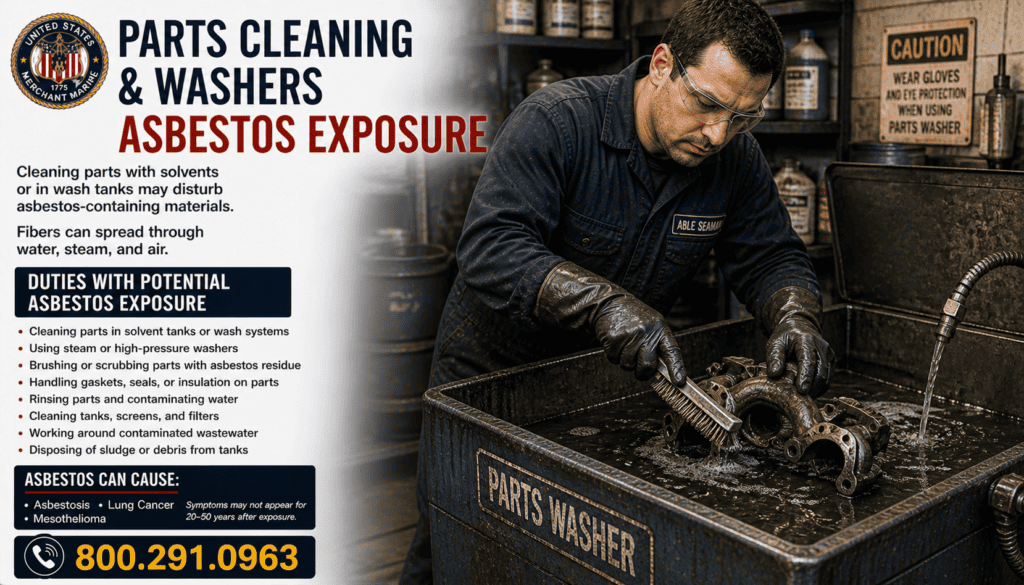
👷Parts Washers Asbestos Exposure
Solvent-based parts washers circulated asbestos-contaminated residue, releasing fibers into automotive repair shop air and workspaces.
Parts washers asbestos exposure was a persistent and underestimated source of occupational asbestos exposure in automotive repair shops. Throughout much of the 20th century, parts washers were used daily to clean brake assemblies, clutch housings, engine components, transmission parts, and drivetrain hardware coated with asbestos-laden dust and residue.
Because many automotive components accumulated asbestos fibers from brakes, clutches, gaskets, and insulation, parts washers became collection points for concentrated asbestos contamination. As solvents circulated over dirty components, asbestos fibers were loosened, redistributed, and released into the air through splashing, agitation, draining, and drying processes.
Over time, asbestos residue accumulated in washer basins, filters, sludge traps, and solvent tanks. Workers cleaning or maintaining these washers were often exposed to high concentrations of asbestos fibers, frequently without any protective equipment or warnings.
🔥 Why Parts Washers Were Widely Used in Auto Repair Shops
Parts washers were standard equipment in automotive repair shops because they allowed workers to:
-
Remove grease, oil, and brake dust from components
-
Prepare parts for inspection and reassembly
-
Speed up repair workflows
-
Reduce manual scrubbing time
-
Improve shop efficiency
Unfortunately, the solvents used did not neutralize asbestos fibers. Instead, they redistributed asbestos throughout the cleaning system and into surrounding air and surfaces.
🧪 How Asbestos Exposure Occurred During Parts Washer Use
Parts washer operations released asbestos fibers through several common mechanisms.
🪣 Solvent Circulation and Agitation
As solvents flowed over contaminated parts, asbestos fibers were dislodged and suspended in liquid, then released into the air through splashing and agitation.
🧽 Manual Handling of Contaminated Parts
Workers handled wet, asbestos-coated parts directly, transferring fibers to hands, gloves, clothing, and work surfaces.
🌬️ Air Drying and Compressed Air
After washing, parts were often air-dried or blown dry with compressed air, re-aerosolizing asbestos fibers from solvent residue.
🛢️ Cleaning Washer Basins and Filters
Maintaining washer tanks, screens, and filters exposed workers to concentrated asbestos sludge that had accumulated over months or years.
🧹 Spill Cleanup and Housekeeping
Cleaning spilled solvent and sludge released asbestos residue back into the shop environment.
👷 Workers Commonly Exposed to Parts Washer Asbestos
Parts washer asbestos exposure affected many shop workers, including:
-
Auto mechanics
-
Apprentices and helpers
-
Parts cleaners and detailers
-
Fleet garage workers
-
Shop supervisors and foremen
-
Maintenance and cleanup staff
-
Nearby technicians and office personnel
Because washers were often centrally located, asbestos fibers spread beyond the immediate cleaning area.
🫁 Diseases Linked to Parts Washer Asbestos Exposure
Asbestos fibers released during parts washer use were inhaled and embedded in lung tissue, leading to serious illnesses decades later.
Common asbestos-related diseases include:
-
Mesothelioma
-
Asbestos-related lung cancer
-
Asbestosis
-
Pleural plaques and thickening
Mesothelioma is particularly associated with chronic, low-level occupational exposure, which is characteristic of parts washer work.
⏳ Long Latency Period and Delayed Diagnosis
Most automotive workers exposed through parts washers were diagnosed 20 to 50 years after exposure. Because washer use was viewed as routine cleaning, workers were rarely warned about asbestos hazards.
This delay often resulted in diagnosis at advanced stages.
⚖️ Legal Options for Parts Washer Asbestos Exposure
Workers exposed to asbestos through parts washer use may qualify for compensation through:
-
Personal injury lawsuits
-
Asbestos trust fund claims
-
Wrongful death lawsuits (for surviving families)
Claims are filed against manufacturers of asbestos-containing automotive components that contaminated the washers—not against repair shop employers.
📄 Evidence Used in Parts Washer Asbestos Claims
Successful claims often rely on:
-
Medical records confirming asbestos-related disease
-
Employment history at automotive repair shops or garages
-
Job duties involving parts washer operation or maintenance
-
Identification of asbestos-containing brake, clutch, and gasket products
-
Coworker testimony describing washer use practices
Experienced asbestos attorneys use automotive exposure databases to identify responsible manufacturers.
💰 Compensation Available for Parts Washer Asbestos Exposure
Compensation may include:
-
Medical treatment and long-term care costs
-
Lost wages and diminished earning capacity
-
Pain and suffering
-
Travel and caregiving expenses
-
Loss of quality of life
Because parts washer exposure was continuous and involved multiple contaminated products, claims often result in substantial compensation.
🏦 Asbestos Trust Funds and Parts Washer Exposure
Many manufacturers whose products contaminated automotive parts later filed for bankruptcy and established asbestos trust funds. Workers may qualify for multiple trust fund claims, often alongside lawsuits.
Trust fund claims allow compensation without trial and are frequently processed faster.
⏱️ Statute of Limitations for Parts Washer Claims
Filing deadlines vary by state and usually begin on:
-
The date of diagnosis, or
-
The date the illness was linked to asbestos exposure
Strict deadlines make early legal review essential.
⚖️ Why Parts Washer Asbestos Claims Are Strong
These claims are often successful because:
-
Asbestos contamination of automotive parts is well documented
-
Washers concentrated asbestos residue over time
-
Exposure affected multiple workers
-
Medical causation is clearly established
-
Manufacturers failed to warn of cleaning-related risks
Courts consistently recognize parts washer use as a significant asbestos exposure pathway.
🧑⚖️ Role of Experienced Automotive Asbestos Attorneys
Parts washer cases require attorneys who understand:
-
Automotive shop workflows
-
Historical cleaning systems
-
Asbestos-containing automotive products
-
Occupational exposure reconstruction
-
Trust fund coordination
Strategic legal representation often results in significantly higher compensation.
📞 Legal Help for Parts Washers Asbestos Exposure
If you worked in an automotive repair shop operating parts washers and were later diagnosed with mesothelioma or another asbestos-related disease, legal help may be available.
📞 Call 800-291-0963 for a free case review
✔ No upfront costs
✔ Nationwide representation
✔ Complete automotive exposure investigation
✔ Help with lawsuits and asbestos trust fund claims