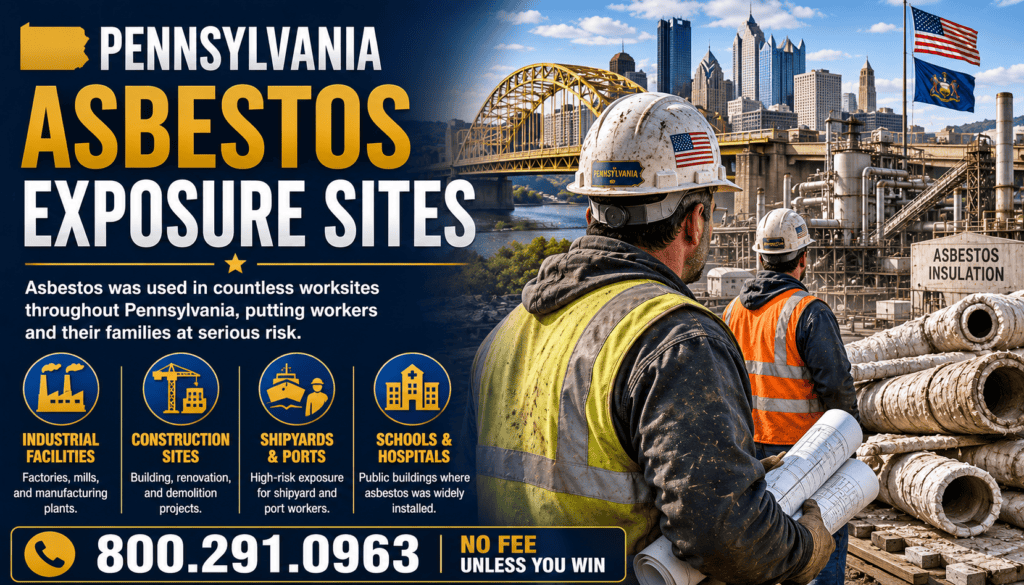
Pennsylvania Asbestos Exposure Sites
🏭 Pennsylvania Asbestos Exposure Sites Have Been Linked to Thousands of Occupational Exposures
Pennsylvania is home to thousands of industrial, commercial, military, and public facilities where asbestos-containing materials were used extensively throughout much of the twentieth century. The Commonwealth’s steel mills, manufacturing plants, power stations, railroads, shipyards, chemical plants, oil refineries, paper mills, glass factories, schools, hospitals, and government buildings relied on asbestos because it provided outstanding resistance to heat, fire, electricity, and chemical corrosion.
As these facilities expanded during the early and mid-1900s, asbestos became one of the most widely used construction and industrial materials in Pennsylvania. It was installed around boilers, steam lines, turbines, furnaces, pumps, valves, electrical equipment, roofing systems, insulation, floor tile, ceiling tile, cement products, and thousands of other commercial applications.
Unfortunately, many of these materials released microscopic asbestos fibers whenever they were cut, drilled, sanded, repaired, removed, or simply deteriorated with age. Workers performing routine maintenance, renovations, equipment repairs, and demolition often inhaled asbestos fibers without realizing the long-term health risks.
Today, Pennsylvania remains one of the states most affected by asbestos-related diseases because of its long industrial history and extensive use of asbestos-containing products. Thousands of former workers have developed mesothelioma, asbestos-related lung cancer, asbestosis, and other asbestos diseases decades after working at Pennsylvania job sites. Pennsylvania’s heavy industrial base and widespread historical asbestos use have contributed to a large number of occupational exposure locations throughout the state.
If you or a family member worked at one of Pennsylvania’s industrial facilities, construction sites, power plants, railroads, or manufacturing operations, you may have experienced occupational asbestos exposure.
🏢 What Is an Asbestos Exposure Site?
An asbestos exposure site is any location where workers, contractors, military personnel, or visitors may have been exposed to airborne asbestos fibers. Exposure sites include far more than asbestos manufacturing plants. Any building, industrial facility, or workplace containing asbestos insulation, fireproofing, construction materials, industrial equipment, or mechanical systems could become an asbestos exposure site whenever those materials were disturbed.
Pennsylvania contains thousands of documented and suspected asbestos exposure sites because asbestos was used in nearly every major industry for much of the twentieth century.
Examples include:
- Steel mills
- Manufacturing plants
- Power plants
- Chemical plants
- Oil refineries
- Paper mills
- Glass manufacturing facilities
- Railroad shops
- Rail yards
- Shipyards
- Construction projects
- Commercial buildings
- Schools
- Colleges and universities
- Hospitals
- Government buildings
- Military installations
- Warehouses
- Utility facilities
- Apartment buildings
Many workers never handled asbestos directly. Instead, they developed exposure while working near pipefitters, electricians, insulators, boiler mechanics, demolition crews, maintenance workers, or contractors disturbing asbestos-containing materials during repairs and renovations.
👷 Workers Most Frequently Exposed at Pennsylvania Job Sites
Occupational asbestos exposure occurred across hundreds of Pennsylvania industries. Some workers experienced heavy daily exposure because their jobs required repairing, installing, or removing asbestos-containing materials, while others were exposed simply because they worked nearby.
Occupations commonly associated with Pennsylvania asbestos exposure sites include:
- Steel workers
- Construction workers
- Pipefitters
- Steamfitters
- Boilermakers
- Electricians
- Factory workers
- Manufacturing workers
- Industrial mechanics
- Maintenance mechanics
- HVAC technicians
- Millwrights
- Welders
- Plumbers
- Utility workers
- Power plant workers
- Refinery workers
- Chemical plant workers
- Paper mill workers
- Glass plant workers
- Railroad workers
- Shipyard workers
- Building engineers
- Custodial personnel
- Military veterans
Many of these workers repaired boilers, steam systems, pumps, valves, turbines, electrical equipment, and industrial machinery that contained asbestos insulation. Others developed exposure while replacing roofing materials, removing floor tile, servicing HVAC systems, or renovating older commercial buildings.
Additional occupational information is available through our:
- Pennsylvania Industrial Asbestos Exposure
- Pennsylvania Construction Workers Mesothelioma
- Pennsylvania Factory Workers Asbestos Exposure
- Pennsylvania Railroad Workers Asbestos Exposure
🏭 Common Types of Pennsylvania Asbestos Exposure Sites
Asbestos was incorporated into nearly every major industrial and commercial construction project built before asbestos regulations significantly reduced its use.
Common Pennsylvania asbestos exposure sites include:
Steel Mills
Pennsylvania’s steel industry depended heavily on asbestos-insulated blast furnaces, coke ovens, boilers, steam systems, refractory materials, and industrial machinery. Steel workers, maintenance crews, electricians, pipefitters, and millwrights often experienced years of occupational exposure while repairing or replacing this equipment.
Manufacturing Plants
Factories producing machinery, appliances, industrial products, textiles, automotive components, and consumer goods frequently installed asbestos insulation throughout production areas, mechanical rooms, and utility systems.
Power Plants
Coal-fired, natural gas, and nuclear power plants used asbestos extensively around turbines, boilers, generators, pumps, valves, steam piping, electrical equipment, and insulation systems.
Chemical Plants
Pennsylvania’s chemical manufacturing facilities relied on asbestos to protect equipment operating under high temperatures and corrosive conditions. Workers repairing piping systems and processing equipment often encountered asbestos insulation during maintenance activities.
Oil Refineries
Refineries used asbestos insulation around cracking units, processing equipment, boilers, furnaces, pumps, valves, and extensive steam piping systems.
Railroad Facilities
Railroad workers encountered asbestos in locomotive insulation, brake components, gaskets, engine rooms, repair shops, maintenance buildings, and rail yard facilities.
Commercial Buildings
Office buildings, schools, hospitals, government facilities, and apartment complexes frequently contained asbestos floor tile, ceiling tile, roofing products, pipe insulation, spray-applied fireproofing, and mechanical insulation installed during original construction.
Military Facilities
Military bases, armories, maintenance shops, warehouses, barracks, hospitals, and support buildings throughout Pennsylvania also incorporated asbestos-containing construction materials into many structures built before the 1980s.
🧱 Common Asbestos Materials Found at Pennsylvania Exposure Sites
Workers encountered asbestos in thousands of products, including:
- Pipe insulation
- Boiler insulation
- Block insulation
- Steam pipe covering
- Turbine insulation
- Pumps
- Valves
- Industrial gaskets
- Packing materials
- Spray fireproofing
- Cement products
- Roofing materials
- Floor tile
- Ceiling tile
- Joint compound
- HVAC insulation
- Electrical insulation
- Industrial machinery
- Furnaces
- Fire doors
- Brake linings
- Clutches
Whenever these materials were disturbed during maintenance, renovations, or demolition, asbestos fibers could become airborne and remain suspended long enough to be inhaled by workers throughout the facility.
Additional information is available through our:
🔎 How an Investigation Identifies Pennsylvania Asbestos Exposure Sites
One of the most important steps after an asbestos-related diagnosis is determining where exposure occurred. Because asbestos diseases often develop 20 to 50 years after exposure, many Pennsylvania workers cannot remember every building, factory, contractor, or job site where they encountered asbestos-containing materials.
A comprehensive asbestos investigation helps identify the workplaces, products, contractors, manufacturers, and equipment responsible for a person’s exposure. Investigators frequently review employment records, union records, Social Security work histories, military service records, historical construction documents, blueprints, product catalogs, maintenance records, and coworker testimony to reconstruct decades of occupational exposure.
Many Pennsylvania workers spent their careers at several employers, increasing the likelihood they encountered asbestos products manufactured by numerous companies. Identifying each exposure site can significantly strengthen an asbestos lawsuit or trust fund claim.
🏭 Pennsylvania Industries Commonly Investigated
Pennsylvania has one of the most diverse industrial histories in the United States. Throughout the twentieth century, asbestos-containing materials were used extensively across nearly every major industry because of their heat resistance, insulating properties, and durability.
Industries frequently investigated include:
- Steel manufacturing
- Heavy manufacturing
- Chemical production
- Oil refining
- Power generation
- Railroad transportation
- Paper manufacturing
- Glass manufacturing
- Cement production
- Construction
- Commercial building maintenance
- Utility services
- Shipbuilding
- Warehousing
- Food processing
- Municipal utilities
- Government facilities
- Military installations
- Healthcare facilities
- Educational institutions
Workers often moved between several employers during their careers, resulting in exposure at multiple locations over many years.
Learn more about occupational exposure on our Pennsylvania Industrial Asbestos Exposure page.
🏢 Types of Buildings Commonly Investigated
Many asbestos exposure investigations focus on buildings constructed before the 1980s because asbestos-containing materials were widely incorporated into commercial construction throughout that period.
Common building types include:
- Steel mills
- Manufacturing plants
- Power plants
- Chemical plants
- Oil refineries
- Paper mills
- Glass factories
- Machine shops
- Railroad maintenance shops
- Rail yards
- Commercial office buildings
- Warehouses
- Schools
- Colleges
- Universities
- Hospitals
- Nursing homes
- Courthouses
- Municipal buildings
- Federal buildings
- Apartment complexes
- Hotels
- Shopping centers
- Airports
- Military facilities
Older structures often contained asbestos in insulation, flooring, ceilings, roofing, mechanical rooms, boiler systems, utility tunnels, and fireproofing materials.
⚙️ Equipment Frequently Linked to Pennsylvania Exposure Sites
Industrial facilities relied on thousands of pieces of equipment insulated or manufactured with asbestos-containing components.
Equipment commonly investigated includes:
- Boilers
- Steam generators
- Turbines
- Pumps
- Industrial valves
- Compressors
- Heat exchangers
- Pressure vessels
- Furnaces
- Kilns
- Ovens
- Cooling towers
- HVAC systems
- Steam piping
- Electrical switchgear
- Circuit breakers
- Generators
- Industrial motors
- Air handling equipment
- Conveyor systems
Maintenance workers often disturbed asbestos insulation while servicing this equipment during routine repairs, shutdowns, upgrades, and emergency maintenance.
Additional information is available through:
- Pennsylvania Boiler Equipment Asbestos Exposure
- Pennsylvania Industrial Machinery Asbestos Exposure
- Pennsylvania Industrial Asbestos Products
📂 Records That Help Identify Exposure Sites
Even when a worker cannot remember every building or job site where asbestos exposure occurred, historical records often help reconstruct decades of occupational exposure.
Important records include:
- Employment records
- Personnel files
- Union membership records
- Social Security earnings history
- Military service records
- W-2 forms
- Pension records
- Construction records
- Building blueprints
- Equipment maintenance logs
- Contractor records
- Product purchase records
- Safety inspection reports
- Company maintenance manuals
- Historical photographs
- Coworker statements
These records frequently identify the facilities where asbestos-containing insulation, boilers, steam systems, pumps, valves, roofing materials, electrical equipment, and mechanical systems were installed.
🏦 Exposure Sites and Asbestos Trust Fund Claims
Many Pennsylvania exposure sites contained products manufactured by companies that later established asbestos bankruptcy trust funds.
During an investigation, attorneys often identify:
- Manufacturers supplying asbestos insulation
- Boiler manufacturers
- Pump manufacturers
- Valve manufacturers
- Gasket manufacturers
- Packing manufacturers
- Fireproofing manufacturers
- Roofing manufacturers
- Floor tile manufacturers
- Cement product manufacturers
Because workers were often exposed to products from multiple manufacturers at a single facility, one investigation may support claims against several asbestos trust funds as well as additional legal claims.
Learn more on our Pennsylvania Asbestos Trust Fund Claims page.
⏳ Why Identifying Exposure Sites Early Matters
Beginning an asbestos exposure site investigation soon after diagnosis helps preserve valuable evidence that may become more difficult to obtain over time.
An early investigation can help identify:
- Former employers
- Historic work locations
- Asbestos-containing products
- Building renovation history
- Equipment manufacturers
- Potential witnesses
- Available trust fund claims
- Other legal options
Because many Pennsylvania job sites operated for decades, historical records often reveal asbestos exposure that workers themselves no longer remember.
📚 Additional Pennsylvania Asbestos Resources
You may also find these Pennsylvania resources helpful:
- Pennsylvania Asbestos Exposure Lawsuits
- Pennsylvania Industrial Asbestos Exposure
- Pennsylvania Industrial Asbestos Products
- Pennsylvania Construction Asbestos Exposure
- Pennsylvania Manufacturing Asbestos Exposure
- Pennsylvania Power Plant Asbestos Exposure
- Pennsylvania Railroad Workers Asbestos Exposure
- Pennsylvania Asbestos Trust Fund Claims
Pennsylvania Asbestos Exposure Sites
💰 Financial Compensation May Be Available After Exposure at a Pennsylvania Asbestos Job Site
Many people diagnosed with mesothelioma, asbestos-related lung cancer, asbestosis, or other asbestos diseases never realized they were exposed while working at a Pennsylvania job site. Years or even decades after leaving a factory, power plant, steel mill, refinery, railroad, construction project, or commercial building, they may receive a diagnosis linked to asbestos fibers inhaled during routine job duties.
If you developed an asbestos-related illness after working at one or more Pennsylvania asbestos exposure sites, financial compensation may be available. Depending on your work history, the asbestos-containing products involved, and the companies responsible for your exposure, you may qualify to pursue compensation through one or more legal claims.
Potential compensation may be available through:
- Mesothelioma lawsuits
- Asbestos lung cancer lawsuits
- Asbestos trust fund claims
- Multiple asbestos trust fund claims
- Wrongful death lawsuits
- Other available legal claims
Compensation may help cover:
- Medical expenses
- Hospital bills
- Surgery
- Chemotherapy
- Radiation therapy
- Immunotherapy
- Prescription medications
- Lost wages
- Reduced future earning capacity
- Home healthcare
- Travel expenses for treatment
- Pain and suffering
- Funeral expenses
- Financial support for surviving family members
Many Pennsylvania workers spent decades at several job sites, exposing them to asbestos products manufactured by multiple companies. A thorough investigation frequently identifies more than one source of compensation.
🏦 Pennsylvania Asbestos Trust Fund Claims
Many manufacturers that supplied asbestos-containing products to Pennsylvania job sites later filed for bankruptcy and established asbestos trust funds to compensate individuals diagnosed with asbestos-related diseases.
Workers at Pennsylvania exposure sites frequently encountered products manufactured by companies that produced:
- Pipe insulation
- Boiler insulation
- Steam system insulation
- Pumps
- Industrial valves
- Gaskets
- Packing materials
- Fireproofing materials
- Cement products
- Roofing materials
- Floor tile
- Ceiling tile
- HVAC insulation
- Industrial machinery
- Electrical insulation
Because many facilities contained products from numerous manufacturers, one occupational exposure investigation may qualify an individual for multiple asbestos trust fund claims.
Learn more by visiting our Pennsylvania Asbestos Trust Fund Claims guide.
👨👩👧 Wrongful Death Claims Following Asbestos Exposure
Sadly, many Pennsylvania workers are not diagnosed until their asbestos disease has reached an advanced stage. When an individual dies from mesothelioma, asbestos-related lung cancer, or another asbestos disease, surviving family members may have the right to pursue compensation through a wrongful death claim.
Depending on the circumstances, compensation may include:
- Funeral expenses
- Burial costs
- Medical bills
- Loss of financial support
- Loss of household services
- Loss of companionship
- Other damages available under Pennsylvania law
Beginning an investigation as soon as possible helps preserve employment records, coworker testimony, product identification evidence, and historical documentation that may strengthen a family’s claim.
Learn more by visiting our Pennsylvania Wrongful Death Mesothelioma Lawsuits page.
📄 Records That May Help Identify Pennsylvania Exposure Sites
Even if a diagnosis occurs decades after employment, historical records often help identify where asbestos exposure occurred.
Helpful records include:
- Employment records
- Personnel files
- Union records
- Social Security earnings history
- Military service records
- W-2 forms
- Pension records
- Construction records
- Building blueprints
- Equipment maintenance records
- Product purchase records
- Contractor records
- Historical photographs
- Safety inspection reports
- Medical records
- Coworker statements
These records frequently identify the specific Pennsylvania facilities where asbestos-containing products were installed, maintained, repaired, or removed.
❓ Frequently Asked Questions
What is an asbestos exposure site?
An asbestos exposure site is any workplace, building, industrial facility, military installation, or commercial property where asbestos-containing materials were present and workers may have inhaled airborne asbestos fibers.
What types of Pennsylvania job sites contained asbestos?
Thousands of Pennsylvania facilities contained asbestos, including steel mills, manufacturing plants, power plants, chemical plants, oil refineries, paper mills, railroad facilities, schools, hospitals, commercial buildings, government facilities, warehouses, and military installations.
Can I qualify for compensation if the building where I worked has been demolished?
Yes. Even if a facility has been renovated or demolished, employment records, historical construction documents, maintenance records, product information, and other evidence may still identify where asbestos exposure occurred.
Can exposure occur without handling asbestos directly?
Yes. Many workers developed asbestos-related diseases after working near pipefitters, electricians, insulators, maintenance crews, or demolition workers who disturbed asbestos-containing materials.
How long after exposure do asbestos diseases develop?
Most asbestos diseases develop 20 to 50 years after occupational exposure, which is why many Pennsylvania workers are diagnosed long after retirement.
Can family members be exposed from contaminated work clothing?
Yes. Secondary or household asbestos exposure has occurred when workers unknowingly carried asbestos fibers home on clothing, boots, tools, or vehicles, exposing spouses and other household members.
Can I file claims against more than one asbestos manufacturer?
Yes. Many Pennsylvania job sites contained asbestos products manufactured by numerous companies. Depending on your employment history, you may qualify to pursue compensation from multiple manufacturers and asbestos trust funds.
How long do I have to file an asbestos claim in Pennsylvania?
Pennsylvania law establishes deadlines for filing asbestos-related personal injury and wrongful death claims. Beginning an investigation as soon as possible after diagnosis helps preserve evidence and protect your legal rights.
Learn more on our Pennsylvania Mesothelioma Statute of Limitations page.
📚 Learn More About Pennsylvania Asbestos Exposure
You may also find these Pennsylvania resources helpful:
- Pennsylvania Asbestos Exposure Lawsuits
- Pennsylvania Industrial Asbestos Exposure
- Pennsylvania Industrial Asbestos Products
- Pennsylvania Construction Asbestos Exposure
- Pennsylvania Manufacturing Asbestos Exposure
- Pennsylvania Power Plant Asbestos Exposure
- Pennsylvania Railroad Workers Asbestos Exposure
- Pennsylvania Asbestos Trust Fund Claims
- Pennsylvania Wrongful Death Mesothelioma Lawsuits
📞 Free Case Evaluation
If you or a loved one worked at a Pennsylvania asbestos exposure site and were later diagnosed with mesothelioma, asbestos-related lung cancer, or another asbestos disease, you may qualify for financial compensation.
Our experienced asbestos legal team can help investigate:
- Former employers
- Pennsylvania job sites
- Occupational asbestos exposure
- Asbestos-containing products
- Available asbestos trust fund claims
- Potential legal options
📞 Call 800-291-0963
Why Families Contact Mesothelioma Help
- Free case evaluation
- Nationwide legal representation
- No upfront attorney fees
- No fees unless compensation is recovered
- Assistance identifying asbestos exposure sites
- Help pursuing asbestos lawsuits and asbestos trust fund claims
Helping asbestos victims and their families since 1999!