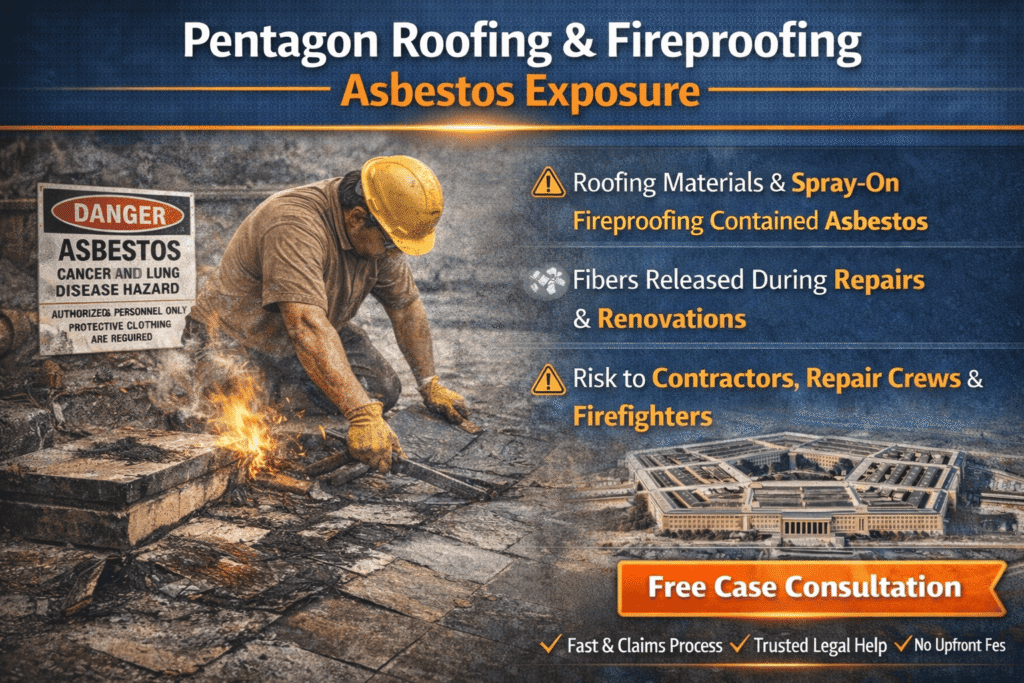
Pentagon Roofing & Fireproofing Asbestos Exposure
When the Pentagon was built in the early 1940s, asbestos was considered essential for fire protection and durability. It was widely used in roofing systems, fireproofing sprays, insulation boards, sealants, and protective coatings. These materials were designed to slow fires, protect steel and concrete, and withstand extreme temperatures.
Over decades of weather exposure, aging, repairs, and renovation projects, these asbestos‑containing roofing and fireproofing materials cracked, flaked, and were repeatedly disturbed. Cutting, drilling, scraping, and removing these materials released invisible asbestos fibers into the air. Workers, service members, civilian employees, and contractors were exposed—often while the building remained occupied. Many later developed mesothelioma, lung cancer, asbestosis, and other asbestos‑related diseases.
🏠 What Is Pentagon Roofing & Fireproofing Asbestos Exposure?
Roofing and fireproofing exposure occurs when asbestos‑containing materials used for fire resistance and weather protection are disturbed. At the Pentagon, asbestos was built into roofing layers and sprayed or coated onto structural components as fireproofing.
Exposure happened when asbestos materials were:
- Installed or repaired
- Cut, drilled, or scraped
- Removed during renovations
- Damaged by leaks, storms, or heat
- Left to deteriorate with age
Because asbestos fibers are microscopic, people often inhaled them without knowing it.
🧱 Where Asbestos Was Used in Roofing & Fireproofing
Asbestos was used in many roof and fire‑safety materials, including:
- Roofing Felt & Shingles: Asbestos‑reinforced layers
- Flashing & Sealants: Asbestos‑containing mastics
- Roof Coatings: Fire‑resistant asbestos paints
- Fireproofing Sprays: Applied to steel and concrete
- Fire‑Resistant Boards: Asbestos cement panels
- Expansion Joints: Asbestos rope and packing
Disturbing these materials released asbestos dust into work areas.
🔨 How Roofing and Fireproofing Work Released Asbestos
Common tasks that disturbed asbestos included:
- Tearing off old roofing layers
- Cutting roof openings for equipment
- Scraping fireproofing from beams
- Repairing leaks and flashing
- Removing fire‑resistant panels
- Cleaning debris after roof work
Wind and open roof areas allowed fibers to spread into surrounding spaces and ventilation intakes.
👷 Who Was Most at Risk
High‑risk groups included:
- Roofers and waterproofing crews
- Construction and renovation workers
- Fireproofing applicators and removers
- Maintenance and facilities staff
- Engineers and inspectors
- Custodial crews cleaning debris
- Office workers in nearby areas
Fibers often traveled beyond work zones through air currents and ventilation systems.
🫁 Diseases Linked to Roofing & Fireproofing Asbestos Exposure
Asbestos fibers lodge in lung tissue and organ linings, causing progressive disease.
Common illnesses include:
- Mesothelioma – Cancer of lung or abdominal lining
- Lung Cancer – Increased risk with asbestos exposure
- Asbestosis – Permanent lung scarring
- Pleural Disease – Thickening or fluid around lungs
⏳ Why Symptoms Appear Decades Later
Asbestos diseases often take 20–50 years to appear. Many people exposed during Pentagon roofing and fireproofing work in the 1950s–1990s were not diagnosed until decades later.
Early symptoms may include:
- Shortness of breath
- Chest or abdominal pain
- Chronic cough
- Fatigue and weight loss
🏗️ Roofing and Fireproofing Renovation Projects
Major projects replaced or upgraded:
- Aging roof systems
- Fire‑resistant coatings and sprays
- Sealants and flashing
- Structural fireproofing layers
These projects often disturbed asbestos materials across large areas of the building.
⚠️ Airborne Spread During Roof Work
Once released, asbestos fibers can:
- Remain airborne for hours
- Be pulled into ventilation intakes
- Travel through ducts and corridors
- Settle on desks, floors, and clothing
This meant exposure was not limited to roof crews alone.
📜 Branches and Workers Affected
All branches and worker groups at the Pentagon faced risk.
Army
Army staff worked in offices beneath asbestos‑containing roofs and fireproofing.
Navy
Navy personnel occupied spaces affected by roof and fireproofing renovations.
Air Force
Air Force offices relied on buildings protected by asbestos fireproofing systems.
Marines
Marine staff worked near renovation zones disturbing asbestos materials.
Coast Guard
Coast Guard personnel worked in older areas with asbestos‑containing roof systems.
National Guard
Guard liaisons and support staff occupied spaces under asbestos‑based fireproofing.
⚠️ Secondary Exposure from Roofing Work
Asbestos fibers clung to clothing, shoes, and tools. Workers carried fibers home, exposing spouses and children. Many family members later developed asbestos‑related diseases without ever working at the Pentagon.
⚖️ Your Legal Rights After Exposure
Victims may qualify for:
- VA disability benefits (for veterans)
- Asbestos trust fund claims
- Lawsuits against asbestos manufacturers
- Wrongful death claims for families
Claims are filed against asbestos product makers—not the government.
🤝 How a Lawyer Can Help
An asbestos lawyer can:
- Identify exposure sources from roofing and fireproofing work
- Research renovation and maintenance records
- Match materials to manufacturers
- File trust fund and lawsuit claims
- Seek maximum compensation
Most lawyers work on contingency—you pay nothing unless you win.
📄 Types of Compensation Available
- Medical expenses
- Lost wages and future income
- Travel for treatment
- Pain and suffering
- Wrongful death benefits
❓ FAQs – Pentagon Roofing & Fireproofing Asbestos Exposure
1. Can office workers be exposed during roof work?
Yes. Fibers entered ventilation systems and interior spaces.
2. Do I sue the government?
No. Claims target asbestos manufacturers.
3. What if I don’t remember roofing brands?
Lawyers use historical renovation and building records.
4. Can family members file claims?
Yes, for secondary exposure or wrongful death.
5. How long do I have to file?
Depends on state law and diagnosis date.
🛑 What To Do If You Were Exposed
- Tell your doctor about possible asbestos exposure
- Gather employment or service records
- List dates you worked at the Pentagon
- Contact an asbestos lawyer
📞 Get Help Today
If you or a loved one was exposed to asbestos through roofing and fireproofing at the Pentagon and now has mesothelioma or lung disease, you may be entitled to compensation.
Cal 800.291.0963
Free case review. No obligation. No cost unless you win.
Your service mattered. Your work mattered. And you deserve justice.