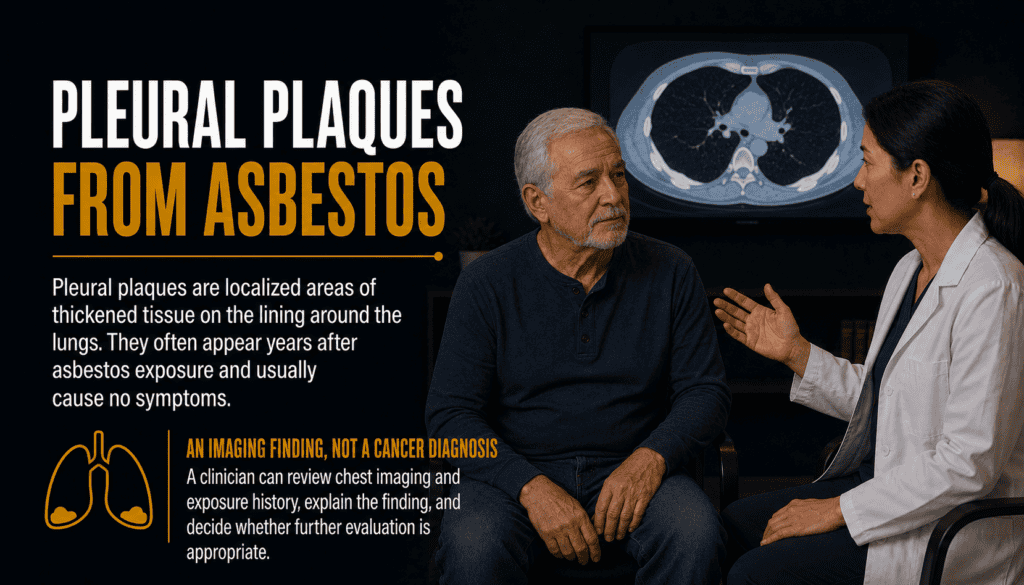
🫁 Pleural Thickening from Asbestos
Understanding a Serious Lung Condition Caused by Asbestos
Pleural thickening refers to the fibrosis—or scarring—of the pleura, the protective lining around the lungs. When caused by asbestos exposure, it can lead to reduced lung capacity, chest pain, and breathing difficulties. Unlike pleural plaques, pleural thickening often affects a larger area and may impair lung function over time.
Source: American Thoracic Society
🧬 What Causes Pleural Thickening?
Pleural thickening develops after long-term irritation of the pleura by asbestos fibers:
-
Inhalation of Asbestos Fibers
Microscopic fibers reach the pleural lining through the lungs. -
Chronic Inflammation
The immune system tries to clear the fibers, causing scarring and fibrotic changes. -
Diffuse or Localized Damage
Thickening can be widespread (diffuse) or limited to certain sections of the pleura. -
Delayed Onset
It usually appears 20–40 years after first exposure.
📊 Symptoms of Pleural Thickening
Unlike pleural plaques, pleural thickening can cause noticeable symptoms, especially if it restricts lung movement:
-
Shortness of breath
-
Chest tightness or discomfort
-
Chronic dry cough
-
Fatigue with minimal exertion
-
Reduced ability to exercise
In advanced cases, it may severely limit breathing and quality of life.
🧪 How Is Pleural Thickening Diagnosed?
Diagnosis typically involves a combination of imaging and clinical evaluation:
-
Chest X-ray: Shows abnormal thickening of the pleura
-
CT Scan: Offers more detail about thickness, spread, and lung involvement
-
Pulmonary Function Tests: Measure breathing capacity and lung efficiency
-
Exposure History: Work or military history confirms asbestos link
Doctors may rule out mesothelioma or other malignancies with additional testing if needed.
⚠️ Health Risks of Pleural Thickening
While not cancerous, pleural thickening can:
-
Cause progressive lung restriction
-
Worsen existing respiratory conditions
-
Indicate significant asbestos exposure
-
Lead to chronic disability in some patients
It is often a marker for potential future asbestos-related diseases, including mesothelioma.
🏥 Treatment for Pleural Thickening
There is no way to reverse pleural thickening, but treatments focus on improving breathing and comfort:
-
Bronchodilators or steroids (in select cases)
-
Pulmonary rehabilitation programs
-
Oxygen therapy for advanced impairment
-
Smoking cessation and avoiding pollutants
-
Routine monitoring to watch for worsening or cancer development
📁 Legal Compensation for Pleural Thickening
Even without a cancer diagnosis, those with pleural thickening may be eligible for compensation:
-
Asbestos Trust Funds – Set aside for those with non-malignant injuries
-
VA Benefits – For veterans exposed during military service
-
Lawsuits & Settlements – Particularly if lung function is affected
-
Disability Compensation – For work-related respiratory impairment
👨⚖️ How a Mesothelioma Lawyer Can Help
An experienced asbestos lawyer can:
-
Document your exposure sources
-
File claims with asbestos trusts or companies
-
Help veterans apply for VA disability
-
Assist in getting coverage for medical monitoring
-
Work on a contingency basis (no fees unless successful)
📞 Free Legal Help for Pleural Thickening
If you or someone you love was diagnosed with pleural thickening from asbestos, legal help may provide financial relief—even without cancer.
Call Now: 800.291.0963
• No upfront cost
• No fee unless we win
• Full exposure & job site history research included
• Support for laborers, veterans, and families
Or request help online 24/7