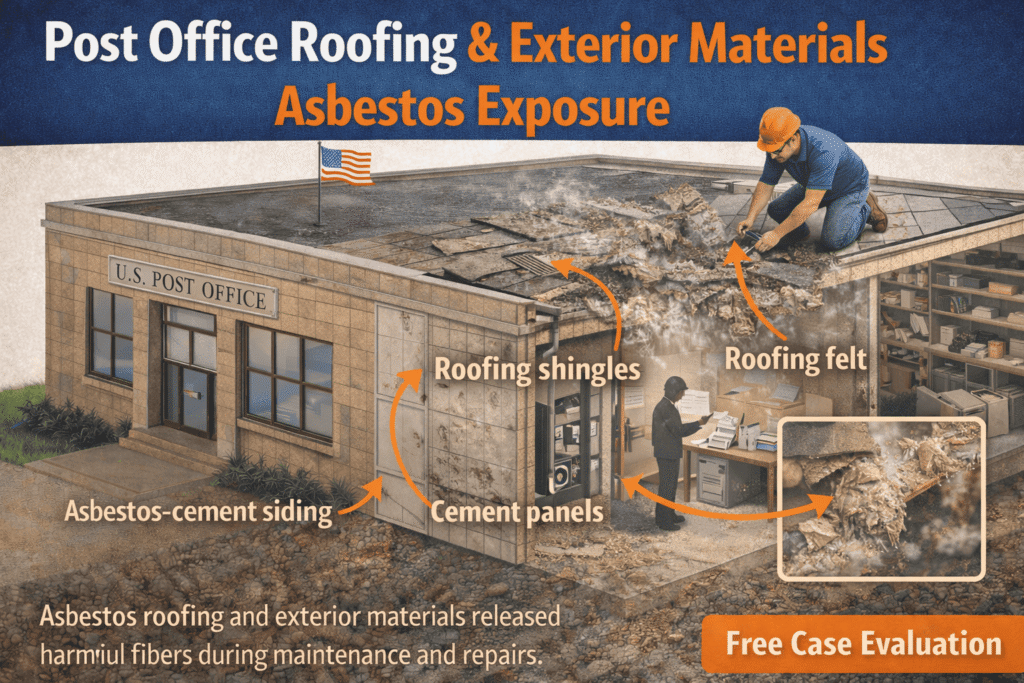
🏗️ Post Office Roofing & Exterior Materials Asbestos Exposure
Post office roofing and exterior materials contained asbestos in roofing felt, shingles, siding, cement panels, flashing, and coatings that released airborne asbestos fibers during installation, repairs, weather damage, and renovation projects—exposing maintenance staff, contractors, and nearby postal workers.
Many post office buildings constructed or expanded before the 1980s relied on asbestos-containing roofing and exterior materials for durability, fire resistance, and weather protection. These materials were designed to withstand heat, moisture, wind, and UV exposure—but over time, they deteriorated and became friable.
When roofing systems were patched, replaced, or damaged by storms, asbestos fibers were released into the air, exposing workers on rooftops, building exteriors, and even inside facilities as dust migrated through vents, doors, and windows.
🏛️ Why Post Offices Used Asbestos in Roofing & Exterior Materials
Post offices used asbestos-containing exterior materials because they provided:
-
🔥 Fire resistance for large public buildings
-
🌧️ Weather durability against rain, heat, and wind
-
🧱 Structural strength in siding and cement panels
-
⚙️ Low maintenance over long service life
-
🏢 Compliance with historic building standards
Because many post offices were designed for decades of use, asbestos materials remained in place long after their health risks were known.
🧪 Asbestos-Containing Roofing & Exterior Materials in Post Offices
Asbestos was commonly present in:
🏠 Roofing Systems
-
Asbestos roofing felt and underlayment
-
Asphalt shingles with asbestos reinforcement
-
Built-up roofing layers containing asbestos
-
Roofing mastics, sealants, and coatings
🧱 Siding & Exterior Panels
-
Asbestos cement siding
-
Exterior wall panels and boards
-
Soffits and fascia materials
🔩 Flashing, Trim & Sealants
-
Roof flashing and edge materials
-
Expansion joints and exterior sealants
-
Cementitious fillers and patching compounds
🏗️ Structural & Architectural Elements
-
Decorative exterior panels
-
Fire-resistant exterior sheathing
-
Canopies and overhangs
When intact, these materials often appeared stable—but repairs and weathering caused them to shed fibers.
⚠️ How Asbestos Exposure Occurred During Roofing & Exterior Work
Exposure occurred during tasks such as:
-
Cutting and removing old roofing materials
-
Tearing off shingles and roofing felt
-
Drilling or sawing asbestos cement siding
-
Sanding, grinding, or scraping exterior panels
-
Applying or removing roofing mastics and coatings
-
Storm damage repairs and emergency patching
-
Renovation and modernization projects
Roof tear-offs and siding removal were especially hazardous because they generated large amounts of dust in open air, often without containment.
🌫️ Airborne Asbestos Spread from Exterior Materials
Roofing and exterior asbestos exposure was amplified because:
-
🌬️ Wind carried fibers across rooftops and grounds
-
🏢 Fibers entered buildings through vents and doors
-
🧹 Debris handling re-aerosolized settled dust
-
🚶 Worker movement spread contamination
Asbestos dust settled on vehicles, uniforms, loading docks, and nearby work areas—creating exposure beyond the roof itself.
🧑🏭 Postal Workers Most at Risk
🛠️ Maintenance & Facilities Staff
Performed roof inspections and minor repairs.
🏗️ Roofing & Construction Contractors
Removed and replaced asbestos-containing materials.
🧹 Custodial & Grounds Staff
Handled debris and cleaned contaminated areas.
📬 Mail Handlers & Clerks
Worked near entrances and loading areas affected by exterior dust.
👨💼 Supervisors & Inspectors
Oversaw exterior projects and remained on site during repairs.
Because post offices often remained operational during roofing work, non-construction employees were also exposed.
🧬 Secondary (Take-Home) Asbestos Exposure
Workers exposed to asbestos from roofing and exterior materials frequently carried fibers home on:
-
Work clothing and jackets
-
Boots and gloves
-
Hair and skin
-
Personal vehicles
Family members were exposed during laundry and household contact. Many mesothelioma cases have been linked to secondary exposure from construction and maintenance work at post offices.
🫁 Health Risks Linked to Roofing & Exterior Asbestos Exposure
Long-term asbestos exposure from roofing and exterior materials is associated with:
🧠 Mesothelioma
A rare, aggressive cancer almost exclusively caused by asbestos.
🫁 Asbestosis
Progressive lung scarring causing chronic breathing difficulty.
🫁 Lung Cancer
Significantly increased risk after prolonged exposure.
Because roofing work often involved high-dust, short-term exposure, even limited periods of work could result in serious health consequences.
📜 Safety Failures Involving Post Office Roofing & Exteriors
Many postal facilities and contractors failed to:
-
Identify asbestos in roofing and siding materials
-
Warn workers of asbestos hazards
-
Use wet methods or dust suppression
-
Provide respirators or protective equipment
-
Isolate work areas or schedule work during closures
-
Perform proper asbestos abatement before repairs
These failures are central to many asbestos-related claims involving post office exterior work.
❓ Frequently Asked Questions (FAQs)
1️⃣ Did post office roofs really contain asbestos?
Yes. Roofing felt, shingles, and mastics commonly contained asbestos.
2️⃣ Was siding removal especially dangerous?
Yes. Cutting asbestos cement siding released heavy dust.
3️⃣ Could indoor workers be exposed?
Yes. Fibers entered buildings through vents and doors.
4️⃣ Can family members file secondary exposure claims?
Yes. Take-home asbestos exposure is legally recognized.
5️⃣ Can claims still be filed decades later?
Yes. Asbestos diseases have long latency periods.
⚖️ How a Lawyer Can Help Get Compensation
An experienced asbestos lawyer can help postal workers and families by:
-
Investigating post office roofing and exterior repairs
-
Identifying asbestos-containing roofing and siding products
-
Tracing manufacturers of roofing felt, shingles, and cement panels
-
Documenting occupational and secondary exposure
-
Filing mesothelioma lawsuits
-
Submitting asbestos trust fund claims
-
Coordinating claims across multiple exposure sources
-
Maximizing total compensation available
Because exterior materials involved numerous asbestos products, detailed legal investigation is essential.
📞 Free Case Evaluation – Get Help Today
If you worked on or near post office roofing or exterior repairs and developed mesothelioma or another asbestos-related illness—or were exposed through a family member—help is available.
📞 Call Now for a FREE Case Evaluation: 800-291-0963
There is no obligation, and compensation may be available.
📌 Key Takeaways
-
Post office roofing and siding contained asbestos
-
Repairs and tear-offs released airborne fibers
-
Exposure affected workers and nearby staff
-
Families faced secondary exposure risks
-
Legal options may still be available