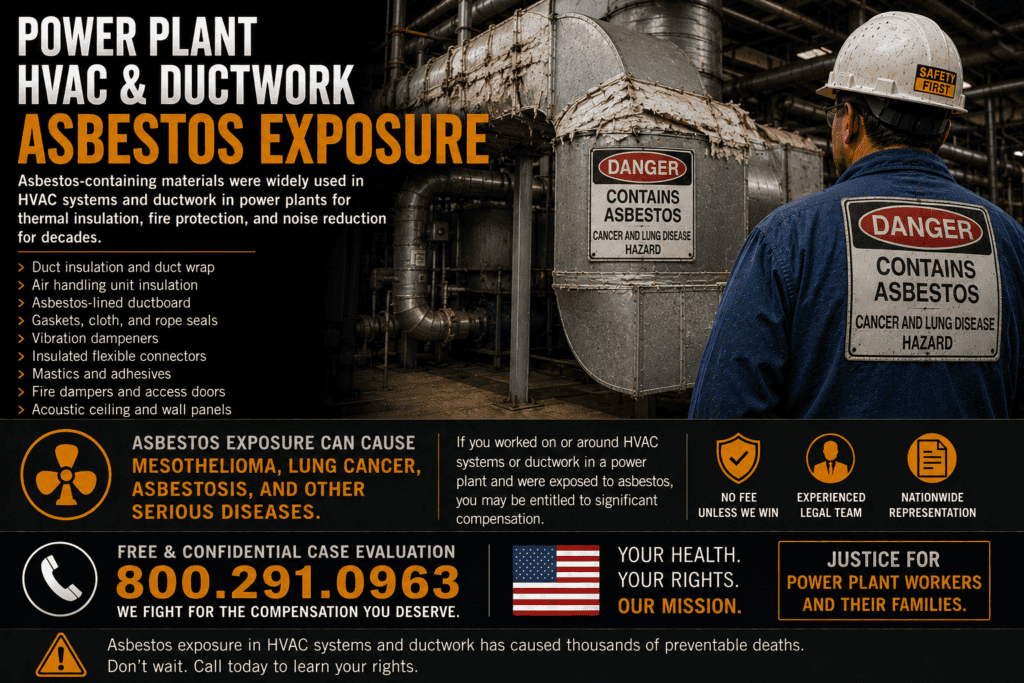
🏭 Power Plant HVAC & Ductwork Asbestos Exposure
Air handling systems carried asbestos fibers throughout plant interiors.
Heating, ventilation, and air conditioning (HVAC) systems were essential to power plant operations. These systems regulated temperature, controlled humidity, and circulated air throughout turbine halls, boiler rooms, control rooms, and maintenance areas. To manage heat, noise, and fire risk, asbestos-containing materials were widely used in HVAC ductwork, insulation, air handling units, and fire dampers.
Power plant workers were frequently exposed to asbestos through HVAC systems, often without realizing it. Asbestos insulation inside ducts deteriorated over time and released fibers that were carried by airflow throughout entire facilities. Maintenance, cleaning, upgrades, and repairs disturbed asbestos materials, spreading fibers far beyond their original locations.
Because HVAC systems connected multiple areas of a plant, asbestos exposure from ductwork often affected both direct trades and secondary workers who never handled insulation themselves. Decades later, many former power plant workers have developed mesothelioma, lung cancer, and asbestosis linked to HVAC-related asbestos exposure.
🔥 Why Asbestos Was Used in Power Plant HVAC Systems
Power plants generated extreme heat and vibration, requiring HVAC systems capable of handling high temperatures and fire hazards. Asbestos was widely used because it offered:
-
Thermal insulation for hot air ducts
-
Fire resistance in ventilation shafts
-
Noise reduction in large air handling systems
-
Durability under constant airflow and vibration
-
Protection around exhaust and intake systems
Asbestos insulation lined duct interiors, wrapped exterior duct surfaces, and was used in fireproofing materials around vents and plenums. Fire dampers and access panels also incorporated asbestos to prevent flame spread. At the time, asbestos was considered essential to plant safety and efficiency.
🧱 Where Asbestos Was Found in HVAC & Ductwork Systems
Asbestos-containing materials were present throughout HVAC systems, especially in power plants built before the late 1970s.
🔧 Duct Insulation & Lining
Air ducts were lined internally or wrapped externally with asbestos insulation. Cutting, removing, or repairing ducts released fibers directly into the airflow.
🔩 Fire Dampers & Access Panels
Fire dampers, access doors, and inspection panels often contained asbestos gaskets, seals, and insulation.
🧰 Air Handling Units & Fans
Air handling units, blowers, and fan housings were insulated with asbestos to control heat and noise. Servicing these units disturbed asbestos materials.
🛡️ Ventilation Shafts & Plenums
Vertical shafts and plenums lined with asbestos fireproofing released fibers during inspections, cleaning, and renovations.
🧱 Ceiling Tiles & Mechanical Spaces
Ceiling tiles and insulation near HVAC systems often contained asbestos, especially in control rooms and office areas.
🫁 How HVAC & Ductwork Workers Were Exposed
HVAC-related asbestos exposure was often widespread and ongoing.
🛠️ Routine Maintenance & Filter Changes
Opening duct systems, replacing filters, and servicing fans disturbed asbestos insulation and released fibers into circulating air.
🧼 Duct Cleaning & Repairs
Cleaning dust and debris from ducts dislodged asbestos fibers that had accumulated over years of operation.
🏗️ System Upgrades & Retrofits
Modernizing HVAC systems required removing asbestos-lined ductwork and insulation, creating high exposure levels.
🏠 Secondary (Plant-Wide) Exposure
Asbestos fibers released into HVAC systems were carried throughout plant interiors, exposing workers far from the original source.
🧪 Diseases Linked to HVAC & Ductwork Asbestos Exposure
Asbestos-related diseases often develop decades after exposure, making HVAC-related exposure difficult to trace.
💀 Mesothelioma
A rare, aggressive cancer affecting the lining of the lungs, abdomen, or heart. Asbestos exposure is the only known cause.
🫁 Lung Cancer
Long-term asbestos exposure significantly increases lung cancer risk, even for non-smokers.
📉 Asbestosis
A chronic lung disease caused by scarring from inhaled asbestos fibers, leading to progressive breathing impairment.
👷 Jobs at Highest Risk Around HVAC Systems
Workers most commonly exposed included:
-
HVAC technicians
-
Maintenance mechanics
-
Electricians
-
Insulators
-
Power plant operators
-
Control room personnel
-
Engineers and supervisors
-
Contractors and retrofit crews
Because HVAC systems circulated air plant-wide, nearly all workers were at risk during asbestos disturbances.
⏱️ When Exposure Was Most Common
Asbestos use in HVAC systems peaked from the 1940s through the late 1970s. Many power plants operated for decades with original asbestos-lined ductwork still in place.
Upgrades and energy-efficiency retrofits in the 1980s–2000s often disturbed legacy asbestos materials, exposing new generations of workers.
⚖️ Power Plant HVAC & Ductwork Asbestos Lawsuits & Compensation
Asbestos exposure from HVAC and ductwork systems has resulted in numerous lawsuits and asbestos trust fund claims nationwide. Workers were exposed through duct insulation, air handling units, fire dampers, and circulating fibers.
Manufacturers of asbestos HVAC insulation and fireproofing products often failed to warn workers about health risks. Legal responsibility may fall on product manufacturers, contractors, and plant operators.
Workers and families may qualify for:
-
Personal injury asbestos lawsuits
-
Asbestos trust fund claims
-
Wrongful death lawsuits
-
Veterans benefits (for military-connected power facilities)
🧑⚖️ Legal & Claims Options for HVAC & Ductwork Workers
Power Plant HVAC & Ductwork Mesothelioma Lawsuit
Workers diagnosed with mesothelioma, lung cancer, or asbestosis may pursue lawsuits against manufacturers of asbestos duct insulation, HVAC components, and fireproofing materials.
HVAC & Ductwork Asbestos Trust Fund Claims
Many asbestos suppliers established trust funds. Eligible claimants may recover compensation without filing a lawsuit.
HVAC & Ductwork Wrongful Death Lawsuits
Families may seek compensation after fatal asbestos-related illnesses caused by HVAC exposure.
HVAC & Ductwork Statute of Limitations
Deadlines vary by state and diagnosis date. Early legal review is critical to preserve eligibility.
HVAC & Ductwork Settlement & Verdict History
Significant settlements and verdicts have resulted from asbestos exposure cases involving power plant HVAC systems.
📞 Legal Help for Power Plant HVAC & Ductwork Asbestos Exposure
If you or a loved one worked around power plant HVAC or ductwork systems and were later diagnosed with mesothelioma, asbestos-related lung cancer, or asbestosis, legal help may be available.
📞 Call 800-291-0963 for a free case review
✔ No upfront costs
✔ Nationwide representation
✔ Full HVAC exposure investigation
✔ Assistance with lawsuits and asbestos trust fund claims
Air handling systems carried asbestos fibers throughout plant interiors.
🏭 Overview of Power Plant HVAC & Ductwork Asbestos Exposure
Heating, ventilation, and air conditioning (HVAC) systems were essential to power plant operations. These systems regulated temperature, controlled humidity, and circulated air throughout turbine halls, boiler rooms, control rooms, and maintenance areas. To manage heat, noise, and fire risk, asbestos-containing materials were widely used in HVAC ductwork, insulation, air handling units, and fire dampers.
Power plant workers were frequently exposed to asbestos through HVAC systems, often without realizing it. Asbestos insulation inside ducts deteriorated over time and released fibers that were carried by airflow throughout entire facilities. Maintenance, cleaning, upgrades, and repairs disturbed asbestos materials, spreading fibers far beyond their original locations.
Because HVAC systems connected multiple areas of a plant, asbestos exposure from ductwork often affected both direct trades and secondary workers who never handled insulation themselves. Decades later, many former power plant workers have developed mesothelioma, lung cancer, and asbestosis linked to HVAC-related asbestos exposure.
🔥 Why Asbestos Was Used in Power Plant HVAC Systems
Power plants generated extreme heat and vibration, requiring HVAC systems capable of handling high temperatures and fire hazards. Asbestos was widely used because it offered:
-
Thermal insulation for hot air ducts
-
Fire resistance in ventilation shafts
-
Noise reduction in large air handling systems
-
Durability under constant airflow and vibration
-
Protection around exhaust and intake systems
Asbestos insulation lined duct interiors, wrapped exterior duct surfaces, and was used in fireproofing materials around vents and plenums. Fire dampers and access panels also incorporated asbestos to prevent flame spread. At the time, asbestos was considered essential to plant safety and efficiency.
🧱 Where Asbestos Was Found in HVAC & Ductwork Systems
Asbestos-containing materials were present throughout HVAC systems, especially in power plants built before the late 1970s.
🔧 Duct Insulation & Lining
Air ducts were lined internally or wrapped externally with asbestos insulation. Cutting, removing, or repairing ducts released fibers directly into the airflow.
🔩 Fire Dampers & Access Panels
Fire dampers, access doors, and inspection panels often contained asbestos gaskets, seals, and insulation.
🧰 Air Handling Units & Fans
Air handling units, blowers, and fan housings were insulated with asbestos to control heat and noise. Servicing these units disturbed asbestos materials.
🛡️ Ventilation Shafts & Plenums
Vertical shafts and plenums lined with asbestos fireproofing released fibers during inspections, cleaning, and renovations.
🧱 Ceiling Tiles & Mechanical Spaces
Ceiling tiles and insulation near HVAC systems often contained asbestos, especially in control rooms and office areas.
🫁 How HVAC & Ductwork Workers Were Exposed
HVAC-related asbestos exposure was often widespread and ongoing.
🛠️ Routine Maintenance & Filter Changes
Opening duct systems, replacing filters, and servicing fans disturbed asbestos insulation and released fibers into circulating air.
🧼 Duct Cleaning & Repairs
Cleaning dust and debris from ducts dislodged asbestos fibers that had accumulated over years of operation.
🏗️ System Upgrades & Retrofits
Modernizing HVAC systems required removing asbestos-lined ductwork and insulation, creating high exposure levels.
🏠 Secondary (Plant-Wide) Exposure
Asbestos fibers released into HVAC systems were carried throughout plant interiors, exposing workers far from the original source.
🧪 Diseases Linked to HVAC & Ductwork Asbestos Exposure
Asbestos-related diseases often develop decades after exposure, making HVAC-related exposure difficult to trace.
💀 Mesothelioma
A rare, aggressive cancer affecting the lining of the lungs, abdomen, or heart. Asbestos exposure is the only known cause.
🫁 Lung Cancer
Long-term asbestos exposure significantly increases lung cancer risk, even for non-smokers.
📉 Asbestosis
A chronic lung disease caused by scarring from inhaled asbestos fibers, leading to progressive breathing impairment.
👷 Jobs at Highest Risk Around HVAC Systems
Workers most commonly exposed included:
-
HVAC technicians
-
Maintenance mechanics
-
Electricians
-
Insulators
-
Power plant operators
-
Control room personnel
-
Engineers and supervisors
-
Contractors and retrofit crews
Because HVAC systems circulated air plant-wide, nearly all workers were at risk during asbestos disturbances.
⏱️ When Exposure Was Most Common
Asbestos use in HVAC systems peaked from the 1940s through the late 1970s. Many power plants operated for decades with original asbestos-lined ductwork still in place.
Upgrades and energy-efficiency retrofits in the 1980s–2000s often disturbed legacy asbestos materials, exposing new generations of workers.
⚖️ Power Plant HVAC & Ductwork Asbestos Lawsuits & Compensation
Asbestos exposure from HVAC and ductwork systems has resulted in numerous lawsuits and asbestos trust fund claims nationwide. Workers were exposed through duct insulation, air handling units, fire dampers, and circulating fibers.
Manufacturers of asbestos HVAC insulation and fireproofing products often failed to warn workers about health risks. Legal responsibility may fall on product manufacturers, contractors, and plant operators.
Workers and families may qualify for:
-
Personal injury asbestos lawsuits
-
Asbestos trust fund claims
-
Wrongful death lawsuits
-
Veterans benefits (for military-connected power facilities)
🧑⚖️ Legal & Claims Options for HVAC & Ductwork Workers
Power Plant HVAC & Ductwork Mesothelioma Lawsuit
Workers diagnosed with mesothelioma, lung cancer, or asbestosis may pursue lawsuits against manufacturers of asbestos duct insulation, HVAC components, and fireproofing materials.
HVAC & Ductwork Asbestos Trust Fund Claims
Many asbestos suppliers established trust funds. Eligible claimants may recover compensation without filing a lawsuit.
HVAC & Ductwork Wrongful Death Lawsuits
Families may seek compensation after fatal asbestos-related illnesses caused by HVAC exposure.
HVAC & Ductwork Statute of Limitations
Deadlines vary by state and diagnosis date. Early legal review is critical to preserve eligibility.
HVAC & Ductwork Settlement & Verdict History
Significant settlements and verdicts have resulted from asbestos exposure cases involving power plant HVAC systems.
📞 Legal Help for Power Plant HVAC & Ductwork Asbestos Exposure
If you or a loved one worked around power plant HVAC or ductwork systems and were later diagnosed with mesothelioma, asbestos-related lung cancer, or asbestosis, legal help may be available.
📞 Call 800-291-0963 for a free case review
✔ No upfront costs
✔ Nationwide representation
✔ Full HVAC exposure investigation
✔ Assistance with lawsuits and asbestos trust fund claims