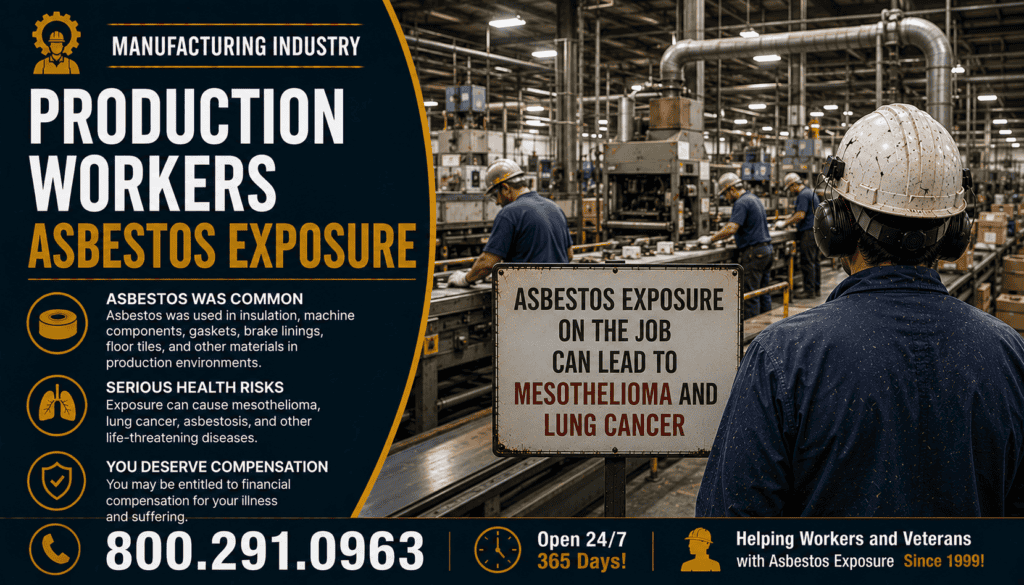
🏭 Production Workers Asbestos Exposure
Production workers formed the backbone of industrial factories, operating machinery, handling materials, monitoring systems, and supporting manufacturing processes across steel mills, automotive plants, chemical facilities, paper mills, textile mills, power plants, and manufacturing factories. Because asbestos was embedded throughout factory equipment, insulation, and building materials, production workers were routinely exposed—often without ever directly handling asbestos.
Exposure occurred continuously as asbestos fibers released from aging machinery, insulation, and factory infrastructure circulated through enclosed production floors.
⚠️ How Production Workers Were Exposed to Asbestos
Production workers were exposed through ambient factory conditions, rather than specialized maintenance tasks. Asbestos fibers became airborne through normal operations and nearby repair work.
Common exposure scenarios included:
-
Working near asbestos-insulated machinery
-
Inhaling dust released during equipment vibration and wear
-
Exposure during nearby maintenance and shutdown repairs
-
Walking through contaminated production floors
-
Handling materials coated in asbestos dust
-
Working beneath insulated piping and overhead systems
-
Exposure from deteriorating ceiling and wall materials
-
Poor ventilation trapping fibers in enclosed areas
Because exposure was ongoing, low-level daily inhalation often accumulated into significant lifetime exposure.
🧱 Asbestos Sources in Production Environments
Production workers were surrounded by asbestos-containing materials integrated into factory systems and structures.
Common asbestos sources included:
-
Machinery insulation and heat shields
-
Pipe insulation running through production areas
-
Overhead fireproofing and sprayed insulation
-
Gaskets and seals on nearby equipment
-
Electrical insulation in control panels
-
Floor tiles, mastics, and roofing materials
-
Asbestos cement panels and walls
-
Dust settled on work surfaces and clothing
Even intact asbestos materials released fibers as they aged, cracked, and vibrated during operations.
🏭 Factory Types Where Production Worker Exposure Was Common
Production workers were exposed across nearly all industrial factory settings.
High-risk facilities included:
-
Steel mills and foundries
-
Automotive and aerospace plants
-
Chemical manufacturing facilities
-
Paper and pulp mills
-
Textile mills
-
Food processing factories
-
Power generation plants
-
Industrial warehouses and assembly plants
Many workers spent years or decades in the same contaminated environments.
🫁 Health Risks from Production Worker Asbestos Exposure
Although production workers may not have directly handled asbestos, prolonged exposure significantly increased disease risk.
Documented health conditions include:
-
Pleural mesothelioma
-
Peritoneal mesothelioma
-
Lung cancer
-
Asbestosis
-
Pleural plaques and thickening
-
Chronic respiratory disease
Because asbestos-related illnesses have long latency periods, symptoms typically appear 20–50 years after exposure.
⚖️ Production Worker Mesothelioma Lawsuits
Many factory owners and asbestos manufacturers were aware of asbestos dangers but failed to protect production workers from airborne exposure.
Production worker lawsuits may involve:
-
Asbestos product manufacturers
-
Machinery and equipment suppliers
-
Insulation and fireproofing manufacturers
-
Property owners and plant operators
-
Contractors responsible for asbestos installation
Claims often focus on failure to warn, negligent exposure, and unsafe working conditions.
🏦 Asbestos Trust Fund Claims for Production Workers
Numerous asbestos manufacturers established trust funds to compensate exposed workers.
Production workers may qualify for trust fund claims related to:
-
Insulation products used throughout factories
-
Machinery gaskets and seals
-
Fireproofing and building materials
-
Electrical insulation products
Because exposure occurred from multiple sources, workers may qualify for multiple trust fund recoveries.
⏳ Statute of Limitations for Production Worker Claims
Each state sets strict deadlines for asbestos-related claims, typically beginning at diagnosis, not exposure.
Missing the filing deadline can permanently bar compensation.
👨⚖️ How an Asbestos Lawyer Helps Production Workers
Production worker cases often require reconstructing workplace-wide exposure, not just product-specific handling. An experienced asbestos lawyer can:
-
Identify asbestos sources within factory environments
-
Trace exposure across long employment histories
-
Access asbestos trust funds
-
File lawsuits against responsible parties
-
Manage deadlines and documentation
-
Maximize compensation for medical care and family needs
Most asbestos cases are handled on a contingency basis, with no upfront legal fees.
❓ Production Workers Asbestos Exposure FAQs
Can production workers develop mesothelioma without handling asbestos?
Yes. Airborne exposure in factories is well documented.
Does exposure from coworkers’ maintenance work count?
Yes. Secondary workplace exposure is legally recognized.
Can production workers file claims decades later?
Yes. Long latency periods allow delayed claims.
Are trust fund claims still available?
Yes. Many remain active nationwide.
Can families file wrongful death claims?
Yes. Families may pursue compensation after asbestos-related deaths.
📞 Free Case Evaluation – Production Workers Asbestos Exposure
If you worked as a production worker in an industrial factory and were later diagnosed with mesothelioma or another asbestos-related illness, legal compensation may still be available.
✔️ Free, confidential case evaluation
✔️ No upfront legal fees
✔️ Nationwide asbestos law support
📲 Call 800-291-0963 today to discuss your legal options.