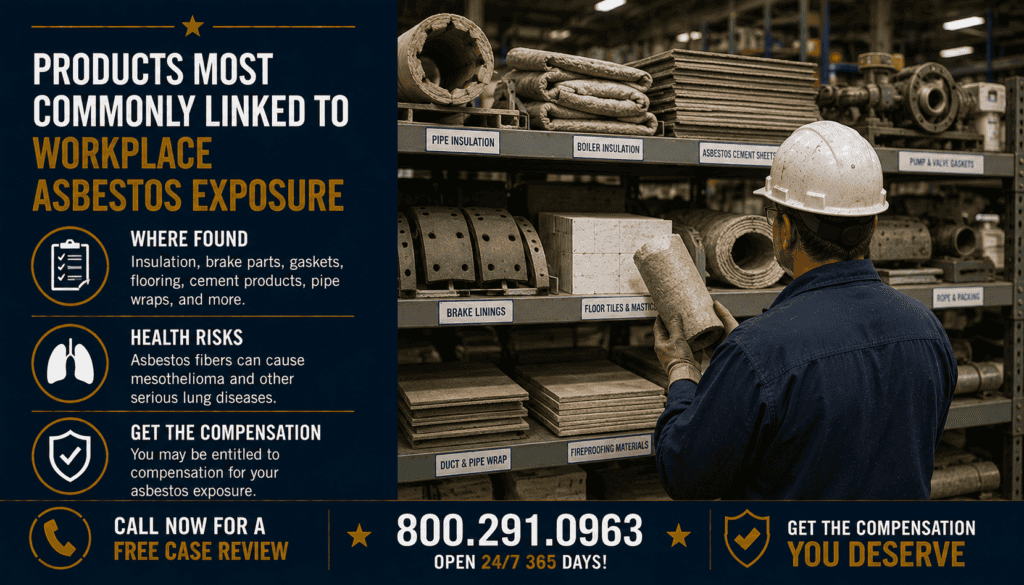
Products Most Commonly Linked to Workplace Asbestos Exposure
Asbestos was used in thousands of industrial, construction, and manufacturing products throughout the 20th century. Workers in the Navy, construction trades, power plants, refineries, automotive shops, and factories were routinely exposed to asbestos without warning — often for years. Even today, many older buildings and industrial sites still contain asbestos, exposing workers and families long after the products were installed.
Understanding which materials contained asbestos helps victims identify where exposure occurred and strengthens legal and trust-fund claims. If you or a loved one handled any of the products listed below, call 800.291.0963 to learn how this evidence can support your case.
📘 Step 1: Why Asbestos Was Used in So Many Products
Asbestos was added to thousands of products because it was:
-
Heat resistant
-
Fireproof
-
Cheap
-
Strong
-
Long-lasting
-
Easily mixed into building materials
Industries relied heavily on asbestos long after companies knew it was dangerous. Many workers were never told they were handling a cancer-causing material.
✔ Why This Matters for Compensation
Identifying which products you worked with helps attorneys:
-
Prove exposure
-
Identify responsible companies
-
Match exposure to trust-fund requirements
-
Build a stronger case
-
Increase overall compensation
Workers do not need to remember brand names — the type of product alone can be enough to trace responsible manufacturers.
🧱 Step 2: Insulation — The #1 Source of Workplace Exposure
Insulation used before the 1980s contained extremely high asbestos levels.
✔ Most Common Asbestos Insulation Types:
-
Pipe insulation
-
Boiler insulation
-
Turbine insulation
-
Pump and valve insulation
-
Block insulation
-
Spray-on insulation (“fireproofing”)
-
Duct insulation
✔ Where Workers Encountered It:
-
Ship engine rooms
-
Power plants
-
Refineries
-
Factories
-
Commercial buildings
-
Schools and hospitals
Insulation workers, pipefitters, boiler operators, and maintenance crews faced especially high exposure.
🔩 Step 3: Gaskets and Packing Materials
Asbestos gaskets were used to seal high-temperature machinery.
✔ Common Asbestos Gasket Products:
-
Flange gaskets
-
Pump gaskets
-
Valve gaskets
-
Boiler gaskets
-
Rope and sheet packing
-
High-pressure industrial seals
Gasket removal created heavy dust, especially when workers used wire brushes, grinders, or scrapers.
✔ High-Risk Jobs:
-
Machinists
-
Pipefitters
-
Millwrights
-
Mechanical technicians
-
Navy engine-room workers
🛞 Step 4: Automotive Brake and Clutch Parts
Automotive repair was a major exposure source for both professional mechanics and home hobbyists.
✔ Asbestos Parts Included:
-
Brake pads
-
Brake linings
-
Clutch facings
-
Transmission parts
-
Drum-brake components
Grinding, blowing, or sanding brakes released large amounts of asbestos fibers.
🧱 Step 5: Cement and Construction Materials
Many pre-1970s construction materials were cement-based and contained asbestos.
✔ High-Risk Products:
-
Asbestos cement board (“transite”)
-
Siding and roofing shingles
-
Wallboard and sheathing
-
Cement pipes
-
Ducting
-
Soffit board
Electricians, carpenters, roofers, plumbers, and HVAC workers were frequently exposed during installation or remodeling.
🧰 Step 6: Pipe Coverings and Thermal Insulation Wraps
Asbestos wraps were commonly used on:
-
Steam lines
-
Hot-water pipes
-
Industrial piping
-
HVAC systems
-
Chemical-processing pipes
When these coverings deteriorated, fibers became airborne.
🏭 Step 7: Power-Plant and Refinery Equipment
High-temperature operations used asbestos for insulation and fireproofing.
✔ Commonly Contaminated Equipment:
-
Boilers
-
Turbines
-
Pumps
-
Heat exchangers
-
Ovens and furnaces
-
Cooling towers
Power-plant and refinery workers often experienced some of the highest lifetime exposure in American industry.
🧱 Step 8: Building Products Used in Homes and Schools
Even non-industrial workers faced exposure.
✔ Asbestos-Containing Home and School Products:
-
Acoustic ceiling tiles
-
Floor tiles
-
Mastic and adhesives
-
Joint compound and drywall mud
-
Plaster
-
Textured paint (“popcorn ceilings”)
-
Fire doors
Teachers, custodians, maintenance staff, and construction workers were exposed during construction, renovation, and repairs.
🔥 Step 9: Fireproofing Materials
Asbestos was widely used to prevent fire damage.
✔ High-Risk Fireproofing Products:
-
Spray-on insulation
-
Fire blankets
-
Protective clothing
-
Welding aprons
-
Heat shields
-
Industrial curtains
Welders, steelworkers, firefighters, and shipyard crews frequently handled these materials.
📦 Step 10: Flooring, Roofing, and Adhesive Materials
Asbestos was added to flooring because it was durable and heat resistant.
✔ Contaminated Flooring Products:
-
Vinyl asbestos tile (VAT)
-
Sheet flooring
-
Mastic glues
-
Underlayment
✔ Roofing Products:
-
Shingles
-
Tar paper
-
Flashing
-
Roofing felt
-
Sealants and coatings
Roofers and flooring installers encountered high dust levels during removal.
🔍 Step 11: Factory and Industrial Machinery
Many machines used asbestos as internal components.
✔ Machinery Containing Asbestos:
-
Industrial dryers
-
Press equipment
-
Injection-molding machines
-
Textile machinery
-
Foundry equipment
-
Conveyor systems
Machine operators and maintenance workers often inhaled dust when repairing or cleaning equipment.
📘 Step 12: Why These Products Matter for Legal and Trust-Fund Claims
Every asbestos product you handled helps build a stronger case.
✔ Product Evidence Helps:
-
Identify liable companies
-
File multiple trust-fund claims
-
Increase total compensation
-
Link your work history to known asbestos materials
-
Meet legal and medical proof requirements
You do not need perfect recall — attorneys can use databases, job-site lists, and historical records to match your exposure to specific manufacturers.
📞 Where to Get Help
If you worked around insulation, gaskets, brake parts, pipe coverings, construction materials, or other asbestos-containing products, this information may significantly strengthen your legal and trust-fund compensation.
We help victims:
-
Identify products they used
-
Connect exposure to responsible companies
-
File multiple asbestos trust claims
-
Pursue higher lawsuit settlements
-
Build strong exposure timelines
-
Gather employment and coworker evidence
📞 Call 800.291.0963 to learn how product exposure can increase your mesothelioma compensation.
📝 Summary
The most common asbestos-containing products include:
-
Insulation
-
Gaskets and packing
-
Brake and clutch parts
-
Cement and siding materials
-
Pipe coverings and wraps
-
Power-plant and refinery equipment
-
Acoustic tiles, flooring, and drywall products
-
Fireproofing materials
-
Roofing and adhesive products
-
Factory machinery components
These materials caused millions of workers to unknowingly inhale asbestos for decades — and they remain strong evidence in mesothelioma claims today.
Call 800.291.0963 for help identifying which workplace products support your claim.