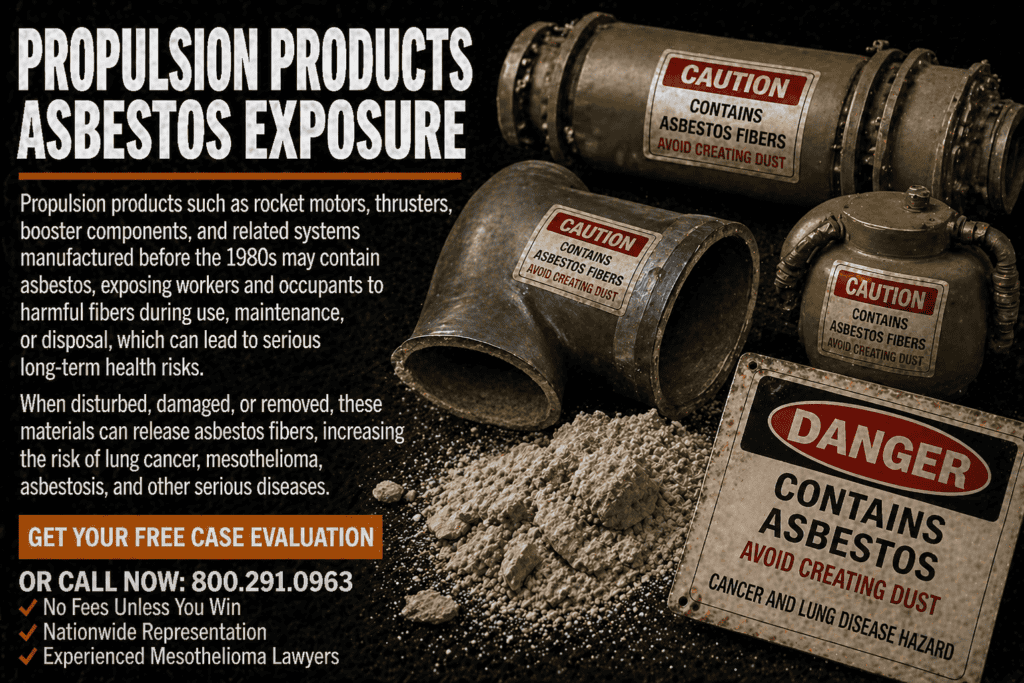
🚀 Propulsion Products Asbestos Exposure Mesothelioma Lawsuit
If you or a loved one has been diagnosed with mesothelioma or asbestos-related lung cancer due to exposure from asbestos-containing propulsion products, you may qualify to file a propulsion products mesothelioma lawsuit. Our experienced legal team helps shipyard workers, aerospace engineers, mechanics, veterans, and families pursue financial compensation by identifying the companies responsible for their asbestos exposure — often through negligent manufacturing practices and a failure to provide proper safety warnings. We carefully build strong legal cases based on occupational and environmental exposure history, including asbestos exposure from marine propulsion systems, naval turbine insulation, engine gaskets and seals, propulsion boilers, aerospace propulsion components, and industrial drive systems used in ships, submarines, power plants, aerospace facilities, and military bases.
Through propulsion product asbestos lawsuits, victims may recover compensation for medical expenses, lost income, pain and suffering, long-term care, and wrongful death. At Mesothelioma Help Center, we guide families through every step of the legal process — with no upfront fees, and no payment unless we win. Our attorneys have decades of experience securing asbestos verdicts, settlements, and trust fund claims, helping victims hold negligent propulsion product manufacturers and suppliers accountable and obtain the justice they deserve.
📚 Here’s What You’ll Learn When You Read This Page:
-
Asbestos was widely used in propulsion systems for insulation, fire resistance, and heat management.
-
Workers were exposed while manufacturing, installing, repairing, or overhauling asbestos-containing propulsion components.
-
Exposure was common in shipyards, power plants, aerospace facilities, naval bases, and industrial plants.
-
Victims of propulsion product asbestos exposure have filed lawsuits and trust fund claims.
📊 Facts About Asbestos in Propulsion Products
• Propulsion systems in ships, submarines, and aerospace vehicles relied heavily on asbestos for heat protection and fireproofing.
• Asbestos Exposure: Extremely high in engine rooms, turbine housings, and propulsion system maintenance bays.
• Asbestos-Related Disease Risk: Severe for shipyard workers, propulsion engineers, mechanics, boiler operators, and aerospace technicians.
• Asbestos improved propulsion system safety, prevented catastrophic failures, and increased thermal durability.
• Similar Occupations: Naval engineers, aerospace workers, machinists, marine mechanics, boiler operators, and power plant staff.
🏭 History of Asbestos Use in Propulsion Products
From the 1930s through the 1980s, asbestos was extensively used in propulsion systems for naval, industrial, and aerospace applications. Its superior heat resistance, insulating properties, and fireproof qualities made it an essential material in systems that operated under intense thermal and mechanical stress. Asbestos was commonly found in marine propulsion turbines, boiler linings, high-pressure piping, gaskets, seals, insulation blankets, aerospace propulsion units, and exhaust components.
In shipyards and naval bases, propulsion system components — including turbine casings, condensers, and exhaust manifolds — were routinely insulated with asbestos materials to prevent heat damage and maintain efficiency. Aerospace propulsion systems also incorporated asbestos to shield rocket motors, nozzles, and exhaust ducts from extreme temperatures during flight and launch.
Unfortunately, maintenance and repair work on propulsion systems — including grinding, cutting, gasket replacement, and insulation removal — often released dangerous asbestos fibers into the air. Workers inhaled these microscopic particles, which lodged in the lungs and pleura, leading to mesothelioma, lung cancer, and asbestosis decades later. Even today, many naval vessels, aerospace components, and industrial facilities built before the 1980s still contain asbestos propulsion materials, posing ongoing risks.
👷♂️ Number of U.S. Workers Exposed to Asbestos from Propulsion Products
| Occupational Group | Estimated Number of Workers Exposed |
|---|---|
| Shipyard & Marine Propulsion Crews | Over 1,100,000 exposed during ship construction and maintenance. |
| Aerospace & Rocket Propulsion Engineers | Around 700,000 exposed while assembling and testing propulsion systems. |
| Boiler & Turbine Technicians | Approximately 650,000 exposed during propulsion system overhauls. |
| Construction & Power Plant Workers | Nearly 550,000 exposed while installing propulsion equipment and insulation. |
| Naval & Military Personnel | About 500,000 exposed aboard ships, submarines, and military bases. |
| Mechanics & Maintenance Crews | Roughly 400,000 exposed during engine and propulsion repairs. |
Total Estimated Exposure: Over 3.9 million U.S. workers were exposed to asbestos from propulsion products.
⚙️ Asbestos Propulsion Products
Asbestos was incorporated into a wide range of propulsion system components across naval, industrial, and aerospace applications. These materials enhanced safety and performance — but they also released deadly asbestos fibers during installation, maintenance, and demolition.
🚢 Marine Propulsion Systems
Ship propulsion systems, including turbines, boilers, condensers, and reduction gears, were heavily insulated with asbestos. Maintenance work in engine rooms released fibers into confined spaces.
🚀 Aerospace Propulsion Components
Rocket motors, exhaust ducts, and thermal shields often contained asbestos materials to withstand extreme launch temperatures. Handling or replacing these parts exposed engineers and technicians.
🔥 Boiler and Turbine Insulation
Boilers and turbines used in propulsion systems were lined with asbestos insulation to manage heat. Repairs and inspections disturbed brittle insulation materials, releasing asbestos dust.
🔩 Gaskets, Seals, and Packing
Asbestos gaskets and seals were used to prevent leaks and maintain pressure in propulsion systems. Replacements and removals released hazardous fibers into work environments.
⚓ Engine Room Insulation & Lagging
Engine compartments aboard ships and submarines were lined with asbestos blankets and lagging. Vibration and heat caused materials to degrade, increasing exposure during maintenance.
🛠️ Auxiliary Propulsion Equipment
Generators, compressors, and drive units connected to propulsion systems contained asbestos insulation. Workers performing repairs or retrofits often disturbed these materials.
🛠️ Types of Workers & Asbestos Exposure from Propulsion Products
Propulsion system work exposed numerous trades and occupations to asbestos. Many were unaware of the risks and lacked adequate respiratory protection.
⚓ Shipyard & Marine Propulsion Crews
Installed, repaired, and maintained propulsion systems aboard ships and submarines. Confined engine rooms trapped airborne fibers during insulation removal and component replacement.
🚀 Aerospace & Rocket Propulsion Engineers
Handled asbestos materials in rocket engines, exhaust systems, and thermal shielding. Fabrication and test operations released hazardous dust in aerospace facilities.
🔥 Boiler & Turbine Technicians
Serviced asbestos-lined propulsion boilers and turbines. Routine maintenance involved removing deteriorated insulation and replacing asbestos seals.
🏗️ Construction & Power Plant Workers
Installed asbestos propulsion components in industrial plants and energy facilities. Cutting and fitting insulation materials released fibers into work areas.
🎖️ Naval & Military Personnel
Operated and maintained propulsion systems aboard ships, submarines, and military vehicles. Daily operations disturbed asbestos insulation and gaskets.
🔧 Mechanics & Maintenance Crews
Performed routine repairs on propulsion systems in marine, industrial, and aerospace settings. Grinding, scraping, and gasket removal generated significant fiber exposure.
❓ FAQs About Propulsion Products and Mesothelioma Lawsuits
Who qualifies?
Anyone diagnosed with mesothelioma or asbestos-related cancer after exposure to asbestos propulsion products may qualify for legal claims and asbestos trust fund compensation.
How did exposure happen?
Exposure occurred during installation, repair, insulation removal, or gasket replacement in propulsion systems, releasing microscopic asbestos fibers into the air.
Are veterans eligible?
Yes. Veterans exposed to asbestos propulsion components aboard ships, submarines, or aerospace vehicles may qualify for VA benefits and lawsuits against manufacturers and suppliers.
What’s the filing deadline?
Most states allow 1–3 years from the date of diagnosis or death to file a lawsuit. Acting quickly preserves your legal rights and strengthens your case.
Do I pay anything upfront?
No. Our asbestos attorneys work on a contingency basis — you pay nothing unless compensation is successfully recovered.
🏭 Manufacturers of Asbestos Propulsion Products
Many propulsion product manufacturers and suppliers used asbestos in turbines, boilers, gaskets, and insulation materials. These companies exposed millions of workers and military personnel to deadly asbestos fibers.
-
Marine Propulsion Companies: Produced asbestos-lined propulsion turbines, reduction gears, and condensers.
-
Aerospace & Defense Contractors: Manufactured asbestos-containing rocket engines, exhaust ducts, and insulation systems.
-
Industrial Equipment Manufacturers: Supplied boilers, turbines, and propulsion components for power plants and factories.
-
Military & Government Suppliers: Installed asbestos propulsion systems aboard ships, submarines, and aerospace vehicles.
📈 Propulsion Products Mesothelioma Cases
From the 1930s through the 1980s, asbestos propulsion products were critical to naval, industrial, and aerospace power systems. Their heat-resistant and insulating properties made them indispensable — but they also exposed countless workers to asbestos dust. Decades later, thousands developed mesothelioma and other asbestos-related diseases.
Who Qualifies
Individuals diagnosed with mesothelioma after working with or near asbestos propulsion products — including shipyard workers, aerospace engineers, boiler technicians, and mechanics — may qualify for compensation. Family members exposed secondhand may also be eligible.
Statistics
-
Thousands of mesothelioma cases are directly linked to asbestos propulsion exposure.
-
High-risk sites include shipyards, aerospace facilities, power plants, and naval bases.
-
Settlements often exceed six figures, with additional compensation available from asbestos trust funds.
🫁 Propulsion Products Asbestos Lung Cancer Cases
Propulsion products were also a significant cause of asbestos-related lung cancer. Cutting, grinding, or removing asbestos components released fibers that remained airborne for hours, significantly increasing disease risk after years of exposure.
Who Qualifies
Workers diagnosed with asbestos-related lung cancer after handling or disturbing propulsion components — including shipyard personnel, aerospace engineers, and turbine operators — may qualify for compensation. Family members exposed secondhand may also be eligible.
Statistics
-
Thousands of asbestos-related lung cancer lawsuits have been linked to propulsion system exposure.
-
Many claims result in six-figure settlements or trust fund payouts for medical treatment and long-term care.
📜 History of Mesothelioma and Asbestos Lung Cancer From Propulsion Products
-
1930s–1970s: Asbestos propulsion materials were widely used for insulation, fireproofing, and performance.
-
1980s: Federal safety regulations restricted asbestos use, but older ships and aerospace systems continued to expose workers.
-
Today: Many diagnosed individuals were exposed decades earlier while repairing or maintaining asbestos propulsion systems.
⚖️ How a Mesothelioma Lawyer Can Help Propulsion Industry Workers
If you or a loved one worked with asbestos-containing propulsion products and later developed mesothelioma, asbestos lung cancer, or asbestosis, legal support is available. Propulsion product lawsuits have secured billions in compensation for victims.
-
Investigate Job Sites and Exposure Records: Attorneys trace asbestos use in shipyards, aerospace facilities, and power plants.
-
File Trust Fund Claims and Lawsuits: Lawyers secure compensation for medical bills, lost wages, and treatment.
-
Represent Families of Deceased Workers: Wrongful death lawsuits provide justice for families.
-
Work on a No-Win, No-Fee Basis: No upfront costs — attorneys are paid only if compensation is recovered.
-
Assist Veterans: Attorneys help veterans file VA claims linked to asbestos propulsion exposure.
📞 Legal Help for Propulsion Products Asbestos Exposure
If you or a loved one worked with asbestos propulsion products and developed mesothelioma, lung cancer, or asbestosis — you may be entitled to significant financial compensation.
📍 Call Now: 800.291.0963
-
No upfront cost
-
No fees unless we win
-
Comprehensive exposure investigation
-
Help for shipyard workers, aerospace engineers, boiler technicians, and families
Or request legal help online 24/7: