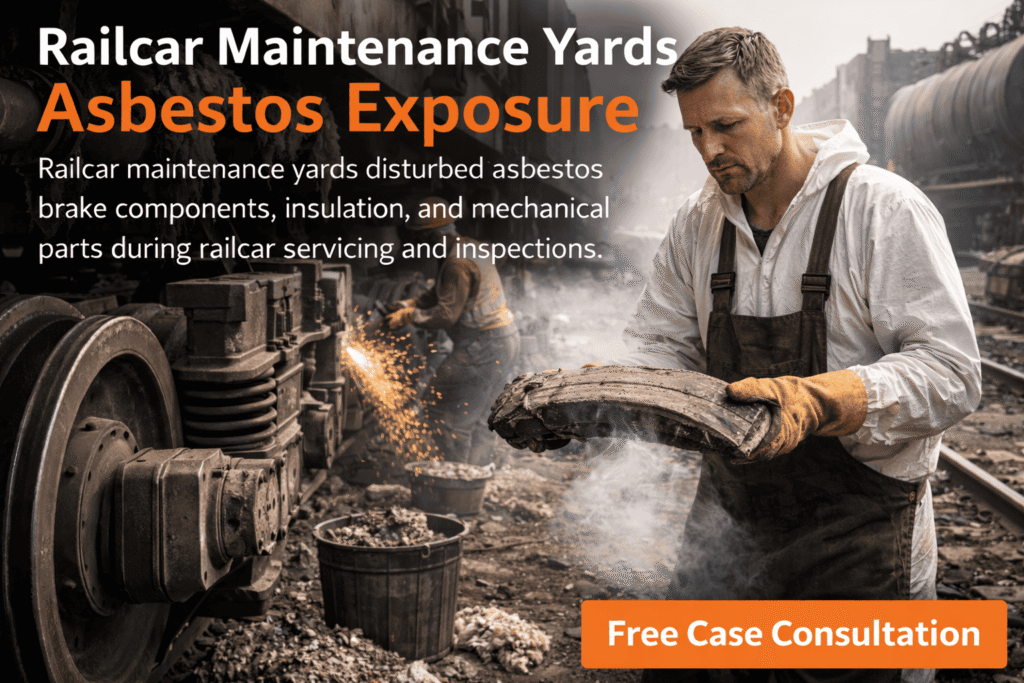
🚆 Railcar Maintenance Yards Asbestos Exposure
For decades, railcar maintenance yards were central hubs of asbestos exposure across the railroad industry. These large-scale facilities serviced freight cars, passenger cars, tank cars, and specialty rail equipment—many of which contained asbestos in brakes, insulation, gaskets, flooring, and mechanical components. Routine inspections, repairs, and overhauls disturbed asbestos materials daily, releasing fibers into the air.
Maintenance yards were often expansive, high-traffic environments where multiple repair operations occurred simultaneously. Grinding brakes, removing insulation, replacing gaskets, and cleaning railcars generated airborne asbestos dust that spread across work zones. Because many yards lacked adequate ventilation controls, fibers accumulated and lingered—exposing workers throughout entire shifts. Protective equipment was rarely provided, and workers were seldom warned about asbestos hazards.
Years or decades later, thousands of former railroad employees who worked in railcar maintenance yards have been diagnosed with mesothelioma, asbestos-related lung cancer, and asbestosis directly linked to occupational exposure.
📌 What You’ll Learn From This Page
-
🧱 Why asbestos was widely used in railcars and yard operations
-
🛠️ How routine yard maintenance released asbestos fibers
-
👷 Which railroad workers faced the highest exposure risks
-
⚠️ Health conditions linked to yard-related asbestos exposure
-
⚖️ Legal and compensation options for affected workers
🧱 Why Asbestos Was Used in Railcars and Yard Equipment
Asbestos was widely used throughout railcars because of its resistance to heat, friction, fire, and vibration. Railroads relied on asbestos materials to reduce wear and improve safety across many railcar systems.
Common asbestos-containing materials found in railcars and yards included:
-
🛑 Brake shoes, pads, and linings
-
🧩 Gaskets, seals, and packing materials
-
🔥 Pipe insulation and thermal wraps
-
🧯 Fireproofing materials and coatings
-
🧰 Flooring, wall panels, and ceiling materials in passenger cars
As railcars aged, these materials became brittle and friable, increasing the likelihood that asbestos fibers would be released during maintenance.
🛠️ Maintenance Tasks That Released Asbestos Fibers
Railcar maintenance required constant hands-on work. Many common tasks directly disturbed asbestos-containing components.
High-risk tasks included:
-
🪚 Grinding and sanding brake components
-
🛠️ Removing and replacing brake shoes and pads
-
🔧 Scraping gaskets from railcar connections
-
🧹 Cleaning asbestos dust from railcars and shop floors
-
🧽 Using compressed air to blow out brake assemblies
Because multiple crews often worked simultaneously, asbestos fibers released in one area frequently spread throughout the entire yard.
🏭 Where Asbestos Exposure Occurred in Railcar Maintenance Yards
Asbestos exposure occurred across many locations within railcar maintenance yards, including:
-
🛤️ Open-air repair tracks
-
🏚️ Covered service bays and sheds
-
🛑 Brake repair stations
-
🧰 Mechanical and inspection pits
-
🚂 Passenger car refurbishment areas
Even workers not directly performing repairs were exposed simply by working nearby.
👷 Railroad Workers Most at Risk
Many railroad job roles faced elevated asbestos exposure due to daily work in railcar maintenance yards.
High-risk occupations included:
-
👨🔧 Carman and railcar repairmen
-
🛑 Brake workers
-
🧰 Maintenance mechanics
-
🧹 Yard laborers and cleaners
-
🚂 Inspectors and switchmen working nearby
Workers often experienced cumulative exposure over decades, significantly increasing long-term health risks.
⚠️ Health Risks Linked to Railcar Yard Asbestos Exposure
Asbestos fibers inhaled during yard operations can lodge in the lungs or surrounding tissues, causing progressive damage over time.
Common asbestos-related illnesses include:
-
🩺 Mesothelioma – An aggressive cancer affecting the lining of the lungs or abdomen
-
🫁 Asbestos-related lung cancer – Increased cancer risk from prolonged exposure
-
😮💨 Asbestosis – Chronic lung scarring that restricts breathing
Because asbestos diseases have long latency periods, many workers are diagnosed decades after leaving the railroad industry.
🧬 Why Yard-Related Asbestos Diseases Appear Years Later
Once inhaled, asbestos fibers remain in the body indefinitely. Over time, they cause inflammation and genetic damage that slowly leads to disease.
Common delayed symptoms include:
-
Persistent coughing
-
Shortness of breath
-
Chest pain or tightness
-
Fatigue and unexplained weight loss
By the time symptoms appear, conditions like mesothelioma are often advanced.
⚖️ How a Mesothelioma Lawyer Can Help Rail Yard Workers
An experienced mesothelioma lawyer understands how asbestos exposure occurred in railcar maintenance yards and can help victims pursue compensation.
A lawyer can assist by:
-
📂 Investigating rail yard work history and job duties
-
🏭 Identifying asbestos-containing railcar components and manufacturers
-
🧾 Filing asbestos trust fund claims
-
🏛️ Pursuing personal injury lawsuits
-
🕊️ Filing wrongful death claims for families
Most asbestos cases are handled on a contingency basis—no upfront legal fees required.
💰 Compensation Options for Railcar Yard Exposure
Railroad workers exposed to asbestos in maintenance yards may qualify for compensation through:
-
🏦 Asbestos trust funds
-
⚖️ Lawsuit settlements or jury verdicts
-
👨👩👧 Compensation for surviving family members
Compensation can help cover medical treatment, lost income, travel costs, and long-term family support.
❓ Frequently Asked Questions (FAQs)
❓ Did railcar maintenance yards really contain asbestos?
Yes. Brakes, insulation, gaskets, flooring, and coatings in railcars commonly contained asbestos.
❓ Is brake dust in rail yards dangerous?
Yes. Brake dust often contained asbestos fibers that could be inhaled during maintenance.
❓ Can rail yard asbestos exposure cause mesothelioma?
Yes. Long-term inhalation of asbestos fibers is a known cause of mesothelioma.
❓ How long after exposure do symptoms appear?
Symptoms typically appear 20–50 years after exposure.
❓ Can families file claims if a worker has passed away?
Yes. Families may pursue wrongful death claims and asbestos trust compensation.
📞 Free Mesothelioma Case Evaluation
If you or a loved one worked in railcar maintenance yards and later developed mesothelioma or lung disease, help is available now.
📲 Call 800-291-0963
✅ No upfront costs
✅ No fees unless compensation is recovered
✅ Nationwide legal assistance
✅ Full exposure investigation included