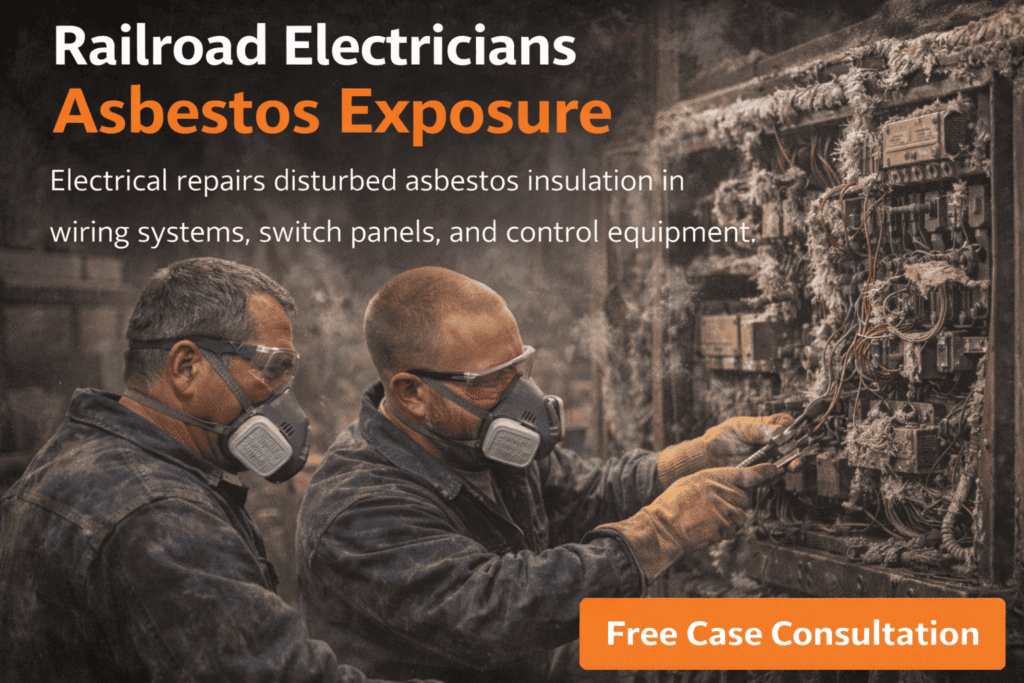
🚆 Railroad Electricians Asbestos Exposure
Electrical system repairs exposed railroad electricians to asbestos insulation, panels, wiring, and fireproofing materials.
Railroad electricians were routinely exposed to asbestos while installing, repairing, and maintaining electrical systems across locomotives, railcars, yards, roundhouses, signal buildings, and railroad facilities. Asbestos was widely used in electrical components because of its heat resistance, fireproofing ability, and insulating properties.
Electricians encountered asbestos while servicing control panels, switchgear, wiring insulation, transformers, signal systems, and motor controls. Many of these components were enclosed in asbestos-lined cabinets or surrounded by asbestos fireproofing. Cutting conduit, pulling wire, drilling panels, and replacing electrical components released airborne asbestos fibers, often in confined spaces.
Because electricians worked throughout railroad systems and frequently handled aging electrical equipment, exposure was repeated and cumulative. Many railroad electricians were later diagnosed with mesothelioma, asbestos-related lung cancer, or asbestosis decades after their careers ended.
🔥 Why Asbestos Was Used in Railroad Electrical Systems
Railroad electrical systems operated under high heat and fire-risk conditions. Asbestos was used because it provided:
-
Fire resistance for electrical panels and enclosures
-
Heat insulation for wiring and motor components
-
Arc protection in switchgear and breakers
-
Electrical insulation in control systems
-
Fireproofing around substations and signal equipment
-
Durability in harsh industrial environments
Even after asbestos hazards were known, older electrical equipment remained in service for decades, continuing worker exposure.
🧱 Where Asbestos Was Found in Electricians’ Work
Asbestos-containing materials were present throughout railroad electrical systems.
🔧 Electrical Panels & Switchgear
Panels, breakers, arc shields, and switchgear were lined with asbestos materials.
🔩 Wiring & Conduit Systems
Wire insulation, cloth coverings, and conduit seals contained asbestos fibers.
🧰 Motors, Generators & Transformers
Electrical machinery used asbestos insulation and heat shields disturbed during repairs.
🛡️ Signal Houses & Control Rooms
Signal equipment buildings used asbestos insulation, panels, and fireproofing.
🧱 Buildings & Infrastructure
Walls, ceilings, pipe insulation, and fireproofing in facilities contained asbestos.
🫁 How Railroad Electricians Were Exposed
Exposure occurred during routine electrical tasks.
🛠️ Electrical Repairs & Upgrades
Opening panels, replacing components, and drilling released asbestos fibers.
🧼 Wire Pulling & Conduit Work
Disturbing old wiring insulation released friable asbestos materials.
🏗️ Facility Maintenance & Renovation
Upgrading lighting, power systems, and controls disturbed asbestos-containing construction materials.
🏠 Secondary (Take-Home) Exposure
Asbestos fibers clung to work clothes and boots, exposing family members at home.
🧪 Diseases Linked to Railroad Electrician Asbestos Exposure
Asbestos-related diseases often develop 20–50 years after exposure.
💀 Mesothelioma
A rare, aggressive cancer caused almost exclusively by asbestos exposure. Electricians face elevated risk due to confined workspaces.
🫁 Lung Cancer
Long-term asbestos inhalation significantly increases lung cancer risk.
📉 Asbestosis
A chronic lung disease caused by scarring from inhaled asbestos fibers, leading to progressive breathing impairment.
👷 Why Railroad Electricians Face Elevated Risk
Risk factors include:
-
Frequent work inside enclosed electrical cabinets
-
Repeated disturbance of asbestos panels and insulation
-
Long careers across multiple contaminated facilities
-
Lack of warnings or respiratory protection
-
Exposure to both equipment and building asbestos
Many electricians were unaware asbestos was present in electrical materials they serviced.
⏱️ When Railroad Electrician Asbestos Exposure Was Most Common
Exposure peaked from the 1920s through the late 1970s, especially during railroad electrification and modernization projects.
Many electricians continued facing exposure into the 1980s and 1990s while maintaining older asbestos-containing electrical systems.
⚖️ Railroad Electrician Asbestos Lawsuits & Compensation
Railroad electrician asbestos exposure has resulted in numerous lawsuits and asbestos trust fund claims nationwide. Claims typically target manufacturers of asbestos electrical components, insulation, and fireproofing.
Depending on employment status, claims may be pursued under:
-
Federal Employers’ Liability Act (FELA)
-
Asbestos personal injury lawsuits
-
Asbestos trust fund claims
-
Wrongful death lawsuits
Electricians and families may qualify for:
-
Personal injury asbestos lawsuits
-
Asbestos trust fund compensation
-
Wrongful death claims
🧑⚖️ Legal & Claims Options for Railroad Electricians
Railroad Electrician Mesothelioma Lawsuit
Electricians diagnosed with mesothelioma may pursue claims against asbestos product manufacturers and, in some cases, under FELA.
Railroad Electrician Asbestos Trust Fund Claims
Many suppliers of asbestos electrical products established trust funds that continue paying claims.
Railroad Electrician Wrongful Death Lawsuits
Families may seek compensation after fatal asbestos-related illness.
Railroad Electrician Statute of Limitations
Strict filing deadlines apply based on diagnosis date, death date, and state or federal law. Early legal review is critical.
Railroad Electrician Settlement & Verdict History
Electrician asbestos cases have produced significant settlements and jury verdicts nationwide.
📞 Legal Help for Railroad Electricians Asbestos Exposure
If you or a loved one worked as a railroad electrician and were later diagnosed with mesothelioma, asbestos-related lung cancer, or asbestosis, legal help may be available.
📞 Call 800-291-0963 for a free case review
✔ No upfront costs
✔ Nationwide representation
✔ Full electrician exposure investigation
✔ Assistance with lawsuits and asbestos trust fund claims