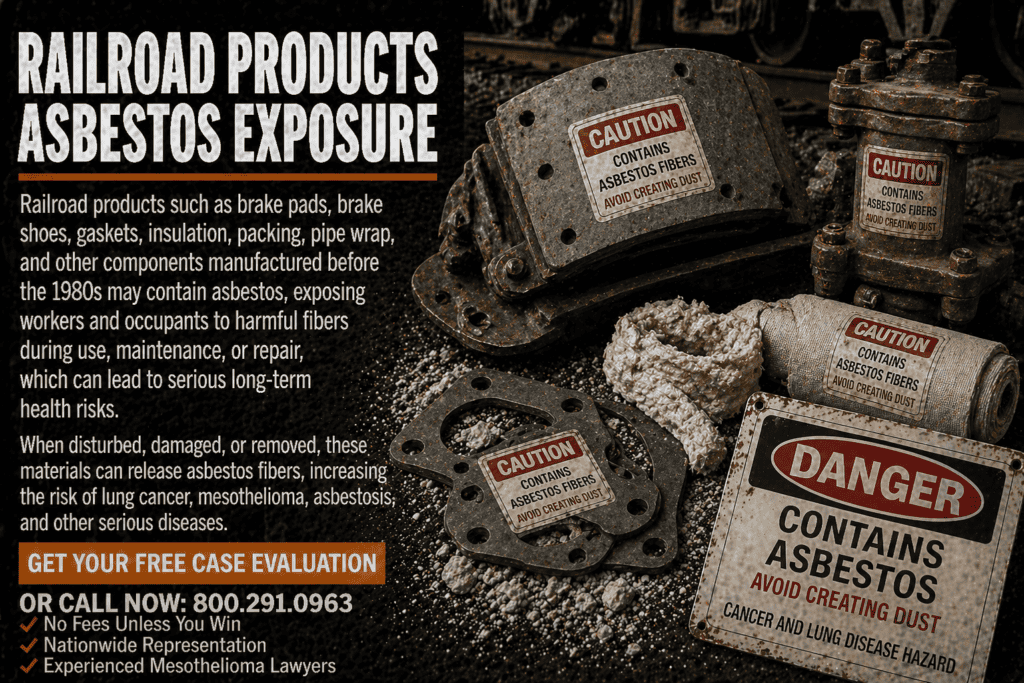
🚂 Railroad Products Asbestos Exposure Mesothelioma Lawsuit
If you or a loved one has been diagnosed with mesothelioma or asbestos-related lung cancer due to exposure from asbestos-containing railroad products, you may qualify to file a railroad products mesothelioma lawsuit. Our experienced legal team helps workers, veterans, and families pursue financial compensation by identifying the companies responsible for their asbestos exposure—often through negligent practices and a failure to provide proper safety warnings. We carefully build strong legal cases based on occupational and environmental exposure history, including asbestos exposure from locomotive boilers, brake shoes, clutches, gaskets, insulation, fireboxes, cement, and engine components used in locomotives, railcars, repair shops, railyards, stations, and maintenance depots across the country.
Through railroad product asbestos lawsuits, victims may recover compensation for medical expenses, lost income, pain and suffering, long-term care, and wrongful death. At Mesothelioma Help Center, we guide families through every step of the legal process—with no upfront fees, and no payment unless we win. Our attorneys have decades of experience securing asbestos verdicts, settlements, and trust fund claims, helping victims hold negligent railroad manufacturers and suppliers accountable and obtain the justice they deserve.
📘 Here’s What You’ll Learn When You Read This Page:
-
🚆 Railroad components containing asbestos were widely used in locomotives, freight cars, passenger trains, and repair facilities throughout the 20th century.
-
🛠️ Workers were exposed while repairing, maintaining, sanding, cutting, and replacing asbestos-containing parts and insulation.
-
🏭 Exposure was common in rail yards, locomotive shops, freight terminals, steel foundries, and train manufacturing plants.
-
⚖️ Victims of railroad asbestos exposure have filed lawsuits and asbestos trust fund claims.
📊 Facts About Asbestos in Railroad Products
• 🪵 Asbestos was used in nearly every major railroad system component from the 1900s to the 1980s.
• 🚨 Asbestos Exposure: Extremely high in locomotive boiler rooms, brake shops, maintenance sheds, and roundhouses.
• 💢 Asbestos-Related Disease Risk: Severe for engineers, mechanics, conductors, machinists, insulators, and shop workers.
• 🔥 Heat resistance and vibration control requirements made asbestos a key material in railroad construction.
• 👷 Similar Occupations: Locomotive mechanics, brakemen, boilermakers, pipefitters, electricians, and car repair crews.
📜 History of Asbestos Use in Railroad Products
From the late 19th century through the 1980s, asbestos was considered an indispensable material for railroad manufacturing and maintenance. It was valued for its exceptional resistance to heat, friction, and fire — crucial for components like brakes, boilers, clutches, gaskets, and insulation in high-temperature and high-stress environments.
Unfortunately, this widespread use resulted in dangerous exposure for generations of railroad workers. During brake replacements, boiler repairs, gasket removals, and insulation handling, asbestos fibers were released into the air and inhaled by workers. Many roundhouses, locomotive cabs, and repair shops had poor ventilation, compounding the exposure risks.
🧮 Number of U.S. Workers Exposed to Asbestos from Railroad Products
| Occupational Group | Estimated Number of Workers Exposed |
|---|---|
| Locomotive Engineers & Conductors | Over 900,000 exposed during train operations and maintenance. |
| Machinists & Maintenance Crews | Around 800,000 replaced asbestos brakes, gaskets, and insulation. |
| Boilermakers & Pipefitters | Approximately 700,000 handled asbestos in boilers and steam systems. |
| Car Shop & Depot Workers | Nearly 600,000 repaired asbestos components on railcars and freight units. |
| Electricians & Signal Workers | About 450,000 encountered asbestos in control panels and electrical housings. |
| Military & Industrial Rail Workers | Roughly 400,000 exposed while operating or maintaining rail transport systems. |
📈 Total Estimated Exposure:
Over 3.8 million U.S. railroad workers were exposed to asbestos.
🚉 Asbestos Railroad Products
Asbestos was present in a wide range of railroad equipment and components designed to withstand heat, friction, and vibration. These materials released harmful fibers when cut, scraped, replaced, or disturbed.
🔥 Locomotive Boilers & Fireboxes
Asbestos lined boiler interiors and fireboxes for heat insulation. Repairs and overhauls frequently released dust into roundhouses and engine sheds.
🛞 Brake Shoes & Clutches
Asbestos provided friction resistance in braking systems and clutches. Sanding, grinding, or replacing worn parts released heavy concentrations of airborne fibers.
🔧 Gaskets & Seals
Asbestos gaskets sealed steam lines, pipes, and exhaust systems. Cutting or scraping these components during repairs released hazardous fibers.
🏭 Insulation & Cement
Used around pipes, engines, and structural parts. Removal during upgrades or retrofits created dangerous dust clouds.
🚋 Electrical Panels & Switchgear
Contained asbestos insulation to prevent fire and overheating. Repairs disturbed fragile materials, exposing electricians and engineers.
🧑🏭 Types of Workers & Asbestos Exposure from Railroad Products
👨🔧 Locomotive Engineers & Conductors
Worked in cabs where asbestos insulation surrounded boilers and steam lines. Daily operations stirred up fibers that accumulated in enclosed spaces.
🔩 Machinists & Maintenance Crews
Removed and replaced asbestos components such as gaskets, brakes, and insulation. Exposure was highest during overhauls and part fabrication.
🔥 Boilermakers & Pipefitters
Handled asbestos insulation around steam lines, valves, and pressure systems. Cutting or replacing materials created airborne fibers.
🚆 Car Shop & Depot Workers
Repaired railcars and passenger coaches lined with asbestos insulation and sealing compounds. Dust lingered during sanding and removal.
⚡ Electricians & Signal Workers
Serviced control boxes and panels containing asbestos insulation. Drilling, rewiring, or dismantling old equipment exposed workers to fibers.
🎖️ Military & Industrial Rail Personnel
Maintained and operated rail transport systems used on military bases and industrial sites. Asbestos exposure was widespread in confined engine rooms.
❓ FAQs About Railroad Products and Mesothelioma Lawsuits
Who qualifies?
Anyone diagnosed with mesothelioma or asbestos-related cancer after exposure to asbestos railroad products may qualify for compensation.
How did exposure happen?
Exposure occurred during maintenance, repair, removal, or installation of asbestos components in locomotives, railcars, and rail infrastructure.
Are veterans eligible?
Yes. Veterans who worked on military rail transport systems or in railway repair shops may qualify for VA benefits and lawsuits.
What’s the filing deadline?
Most states allow 1–3 years from diagnosis or death to file a lawsuit. Acting quickly preserves your legal rights.
Do I pay anything upfront?
No. Our attorneys work on a contingency basis — you pay nothing unless we win.
🏭 Manufacturers of Asbestos Railroad Products
🏗️ Railroad Equipment Manufacturers
Produced asbestos-containing locomotives, boilers, brakes, and engine parts. Major companies included Pullman Company, Baldwin Locomotive Works, and American Car & Foundry.
🛠️ Component & Material Suppliers
Supplied asbestos brake linings, insulation, and gaskets to railroads nationwide, exposing countless workers during installation and maintenance.
⚓ Military & Industrial Rail Contractors
Built and maintained asbestos-lined rail systems for military logistics and industrial facilities, contributing to widespread exposure.
📂 Railroad Products Mesothelioma Cases
From the 1900s through the 1980s, asbestos was integral to nearly every part of the railroad industry. Decades later, many workers developed mesothelioma and other asbestos diseases from handling these materials.
👤 Who Qualifies
Individuals diagnosed after working with or near asbestos railroad products — including machinists, engineers, boilermakers, and depot workers — may qualify for compensation. Family members exposed secondhand may also be eligible.
📈 Statistics
Thousands of mesothelioma cases are directly linked to asbestos railroad exposure.
High-risk sites include locomotive shops, roundhouses, rail yards, and repair depots.
Settlements often exceed six figures, with additional trust fund compensation available.
🫁 Railroad Products Asbestos Lung Cancer Cases
Asbestos components in locomotives, brakes, and boilers were a major source of asbestos-related lung cancer. Sanding, scraping, cutting, and replacing these materials released microscopic fibers into the air.
👤 Who Qualifies
Workers diagnosed with asbestos-related lung cancer after exposure to railroad products — including conductors, machinists, and mechanics — may qualify for compensation.
📈 Statistics
Thousands of lung cancer lawsuits have been linked to railroad asbestos exposure.
Many claims result in six-figure settlements and trust fund payouts.
🧭 History of Mesothelioma and Asbestos Lung Cancer From Railroad Products
🕰️ 1900s–1970s: Asbestos was widely used in railroad construction and maintenance for heat resistance and durability.
📉 1980s: Regulations restricted asbestos use, but older trains and infrastructure continued to expose workers.
📆 Today: Many diagnosed individuals were exposed decades earlier while working with asbestos railroad products.
⚖️ How a Mesothelioma Lawyer Can Help Railroad Workers
-
🔎 Investigate Job Sites and Exposure Records: Trace exposure history across rail yards, shops, and depots.
-
📝 File Trust Fund Claims and Lawsuits: Secure compensation for medical bills, lost wages, and more.
-
👪 Represent Families: Wrongful death claims provide justice for families of deceased workers.
-
🤝 No-Win, No-Fee Representation: No payment unless compensation is recovered.
-
🎖️ Assist Veterans: Help with VA claims linked to asbestos exposure in rail service.
📞 Legal Help for Railroad Products Asbestos Exposure
If you or a loved one worked with asbestos railroad products and developed mesothelioma, lung cancer, or asbestosis — you may be entitled to significant compensation.
Call Now: 800.291.0963
-
✅ No upfront cost
-
✅ No fees unless we win
-
✅ Comprehensive exposure investigation
-
✅ Help for railroad workers, mechanics, machinists, engineers, and families
Or request legal help online 24/7: