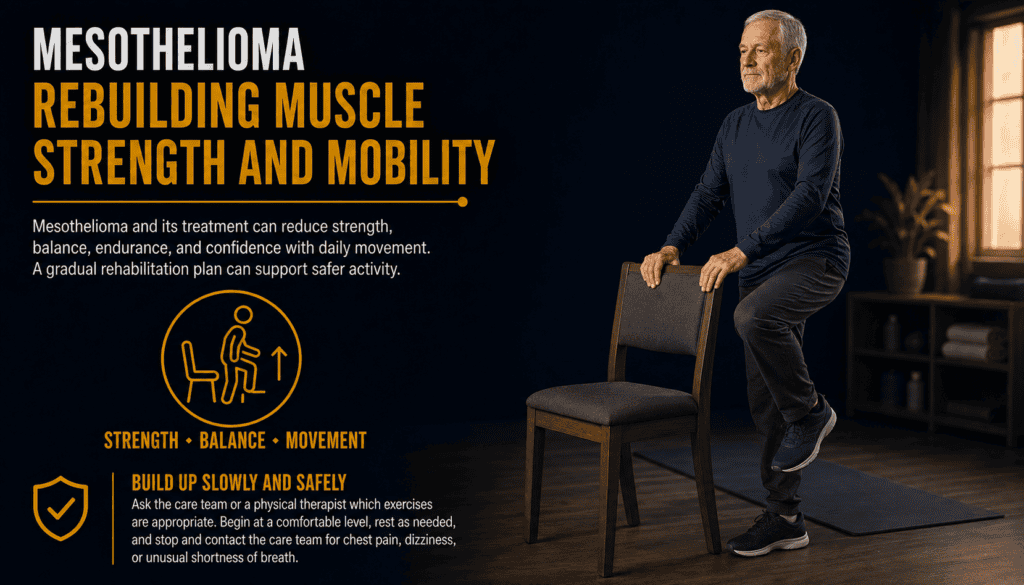
💪 Rebuilding Muscle Strength and Mobility
After mesothelioma treatment, your body may feel weaker, stiffer, or less coordinated due to months of limited movement or fatigue. Regaining muscle strength and flexibility takes time — but with the right approach, you can rebuild endurance, balance, and energy for daily activities.
This guide helps you use targeted physical therapy and gradual exercise programs to restore balance, flexibility, and vitality while honoring your recovery pace.
📞 Need help finding a post-treatment rehab program? Call 800.291.0963 for free physical recovery and wellness guidance today.
🌿 Step 1: Understanding Post-Treatment Muscle Loss
Muscle loss (atrophy) is common after cancer therapy. Chemotherapy, radiation, or long hospital stays can weaken muscles and joints. Knowing why it happens helps you rebuild safely and effectively.
Causes of muscle weakness:
-
🩺 Reduced activity during treatment or recovery.
-
💊 Medication side effects that cause fatigue.
-
🫁 Decreased lung function limiting endurance.
-
💧 Nutritional deficits reducing energy and strength.
-
🧠 Anxiety or depression leading to inactivity.
Goal:
To restore strength and movement through structured, progressive rehabilitation.
🧩 Step 2: Partner With a Physical or Occupational Therapist
Working with a rehabilitation specialist ensures your exercises are safe, tailored, and effective for your individual condition.
Your therapy team may include:
-
🧑⚕️ Physical therapist: Designs exercises to rebuild strength, mobility, and stamina.
-
👩⚕️ Occupational therapist: Helps you regain independence in daily activities.
-
🩺 Pulmonary therapist: Supports lung strength through breathing exercises.
-
💞 Rehabilitation nurse: Tracks progress and helps manage fatigue.
Pro Tip:
Ask your doctor for a referral to a cancer rehabilitation program — many hospitals and cancer centers offer these specifically for survivors.
🏃 Step 3: Start With Gentle, Low-Impact Movement
Recovery begins with small, consistent steps. Gentle activity improves circulation and prepares your muscles for gradual strengthening.
Examples of beginner-friendly movements:
-
🚶 Short daily walks — begin with 5–10 minutes and increase slowly.
-
🧘 Light stretching to reduce stiffness and improve flexibility.
-
🪑 Seated leg lifts or arm raises for safe resistance training.
-
🫁 Deep breathing with gentle upper-body movement.
-
💧 Pool or water-based therapy to reduce strain on joints.
Goal:
To reactivate your muscles safely while preventing injury or overexertion.
💪 Step 4: Gradual Strength-Building Exercises
Once your body adapts to gentle motion, introduce gradual strength training using resistance bands, light weights, or body weight.
Recommended strengthening activities:
-
🏋️ Resistance bands: Strengthen major muscle groups with adjustable tension.
-
🪑 Chair squats: Build leg and core stability without strain.
-
💪 Wall push-ups: Increase upper-body strength safely.
-
🧍 Heel raises: Improve balance and lower-leg strength.
-
🕊️ Core tightening: Gentle abdominal exercises support posture and breathing.
Pro Tip:
Focus on proper breathing — inhale during rest, exhale during exertion — to keep oxygen flowing to your muscles.
🌸 Step 5: Improve Flexibility and Joint Mobility
Flexibility training prevents stiffness, improves posture, and restores natural movement patterns after long periods of inactivity.
Stretching tips:
-
🧘 Hold each stretch for 10–20 seconds without bouncing.
-
🩵 Focus on large muscle groups — back, legs, and shoulders.
-
🚶 Stretch after light activity, not before, to avoid strain.
-
💨 Breathe slowly to enhance relaxation during stretches.
-
🕯️ Incorporate yoga or tai chi for gentle flexibility and mindfulness.
Goal:
To restore freedom of movement while easing discomfort and improving stability.
🧠 Step 6: Rebuild Balance and Coordination
Treatment side effects or fatigue can affect balance and coordination. Targeted exercises help prevent falls and increase confidence in movement.
Simple balance exercises:
-
🦶 Stand on one leg (with support nearby).
-
🪑 Sit-to-stand repetitions to strengthen legs and hips.
-
🧘 Balance board or foam pad exercises (under supervision).
-
🚶 Heel-to-toe walking for stability and focus.
-
💞 Practice turning slowly and maintaining posture.
Pro Tip:
Perform balance exercises in a safe area — near a wall, sturdy chair, or rail — to reduce fall risk.
💧 Step 7: Support Recovery With Nutrition and Hydration
Muscles need fuel to rebuild. Eating balanced meals and staying hydrated helps your body recover faster and sustain strength gains.
Muscle-rebuilding nutrition:
-
🍗 Lean proteins (chicken, eggs, fish, beans).
-
🥦 Iron-rich foods (spinach, lentils, fortified cereals).
-
🍊 Vitamin C and antioxidants for tissue repair.
-
🌾 Complex carbs for sustained energy.
-
💧 Water and electrolyte drinks to prevent dehydration.
Goal:
To combine physical training with nutrient support for optimal muscle recovery.
🩵 Step 8: Manage Fatigue and Avoid Overexertion
Energy conservation is key to rebuilding safely. Overdoing exercise can lead to setbacks or injury.
Energy-saving strategies:
-
🕰️ Alternate activity with rest periods throughout the day.
-
🛋️ Use assistive tools like walkers or canes during early recovery.
-
📅 Track energy highs and lows — schedule exercise during peak times.
-
🧘 End sessions with deep breathing or guided relaxation.
-
💞 Celebrate small improvements — they add up over time.
Goal:
To progress steadily without physical or emotional burnout.
🌿 Step 9: Maintain Motivation and Long-Term Progress
Consistency is more important than intensity. Long-term mobility and strength come from daily dedication, patience, and faith in your recovery journey.
Motivation tips:
-
🎯 Set achievable weekly goals (e.g., walk 1 extra block).
-
🧠 Track progress in a recovery journal.
-
💬 Join survivor fitness or rehabilitation support groups.
-
🌤️ Spend time outdoors for fresh air and sunlight.
-
🙏 Begin or end each session with a prayer of gratitude for renewed strength.
Goal:
To sustain a balanced, motivating routine that keeps body and spirit strong.
🤝 Where to Get Help
Our advocates can connect you with oncology physical therapists, rehabilitation centers, and post-treatment exercise programs designed specifically for mesothelioma survivors. These programs help you rebuild strength, mobility, and independence with professional support.
📞 Call 800.291.0963 to speak with a Mesothelioma Help Center advocate today.
🧭 Summary
Rebuilding muscle strength and mobility after mesothelioma therapy takes patience and persistence. With professional guidance, gradual exercise, and balanced nutrition, survivors can restore flexibility, endurance, and confidence in movement — one day at a time.
You are not alone — strength and recovery are just one call away.
800.291.0963